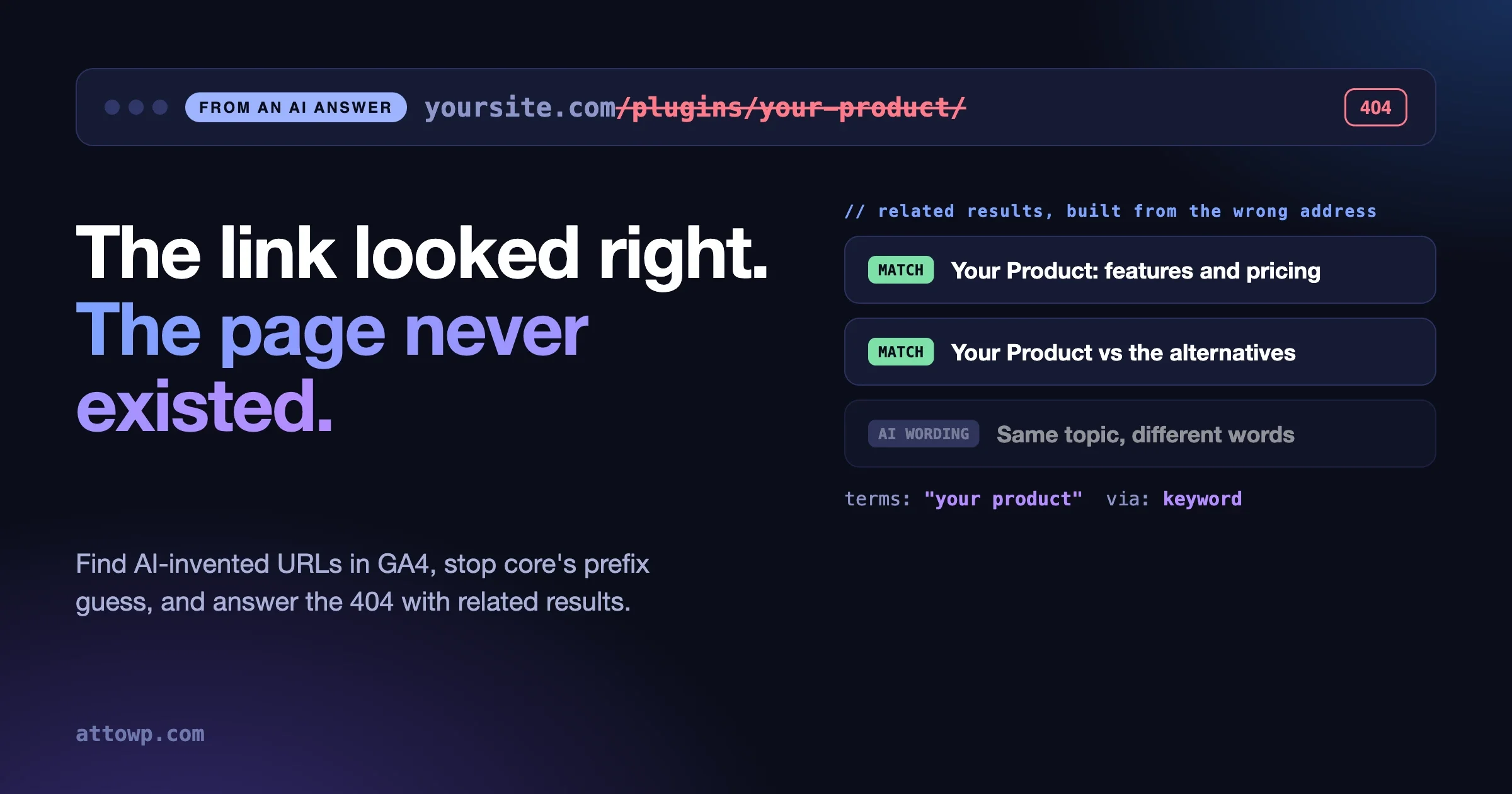
AI Assistants Send Wrong Links: Fix Your WordPress 404
AI assistants invent plausible URLs. Find them in GA4, stop core's loose 404 guess, and show related results with keyword search plus the AI Client.
AI assistants invent plausible URLs. Find them in GA4, stop core's loose 404 guess, and show related results with keyword search plus the AI Client.
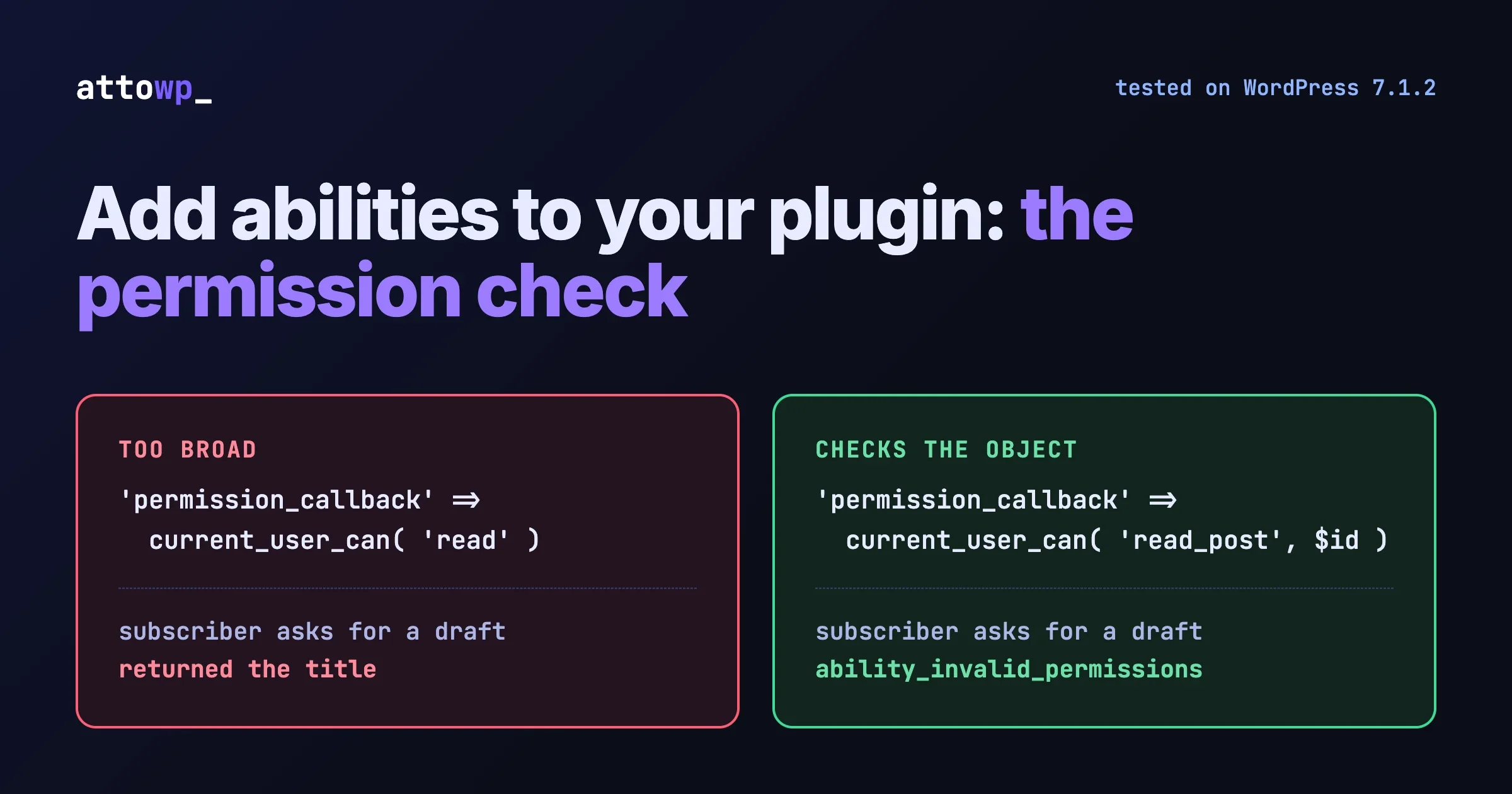
Register an ability with the WordPress Abilities API: a tested example, the permission callback mistake shown with real output, and what to return.
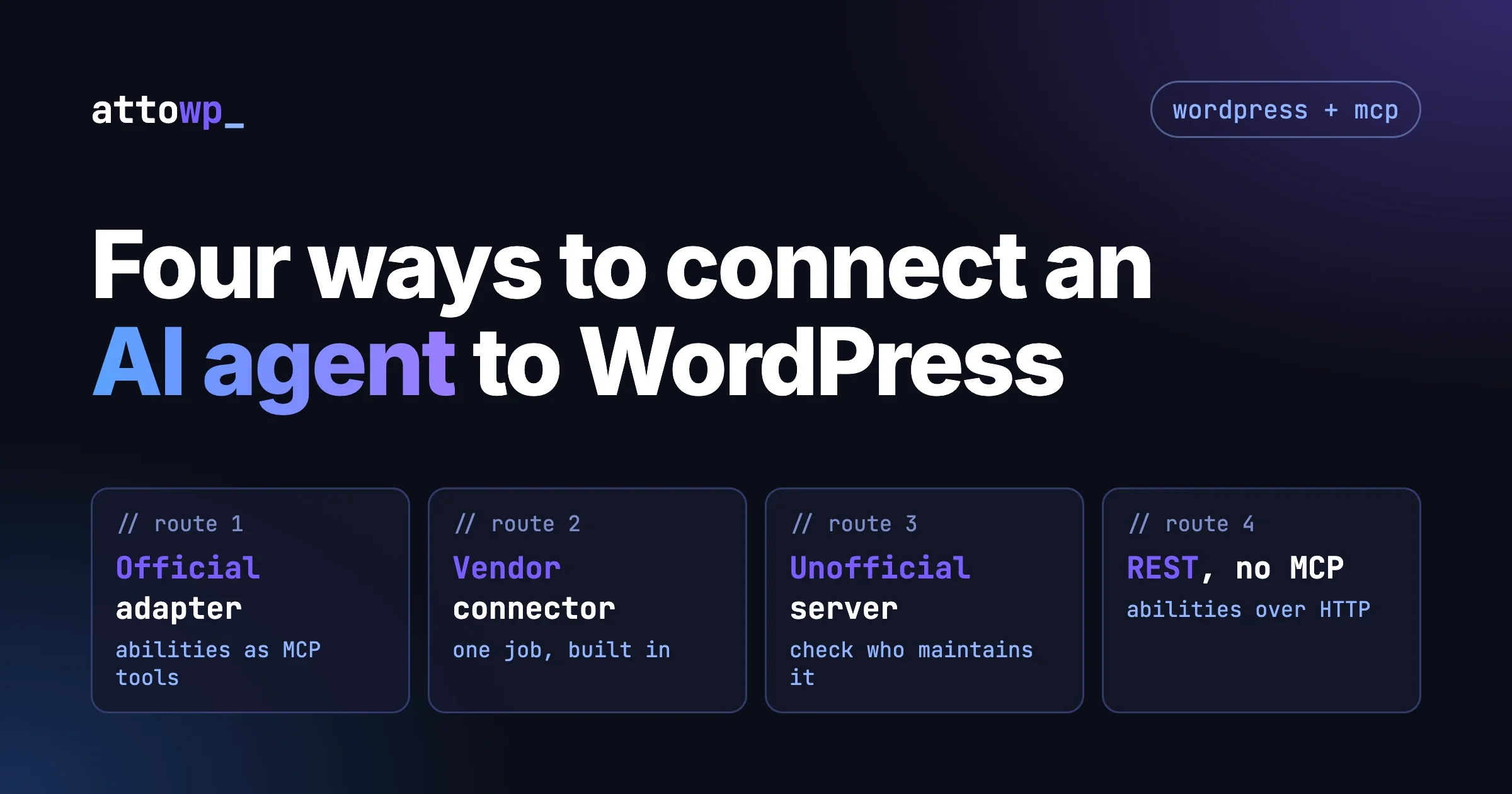
WordPress MCP compared: the official MCP Adapter, Elementor MCP, unofficial servers and the Abilities REST API, plus a rule for choosing.
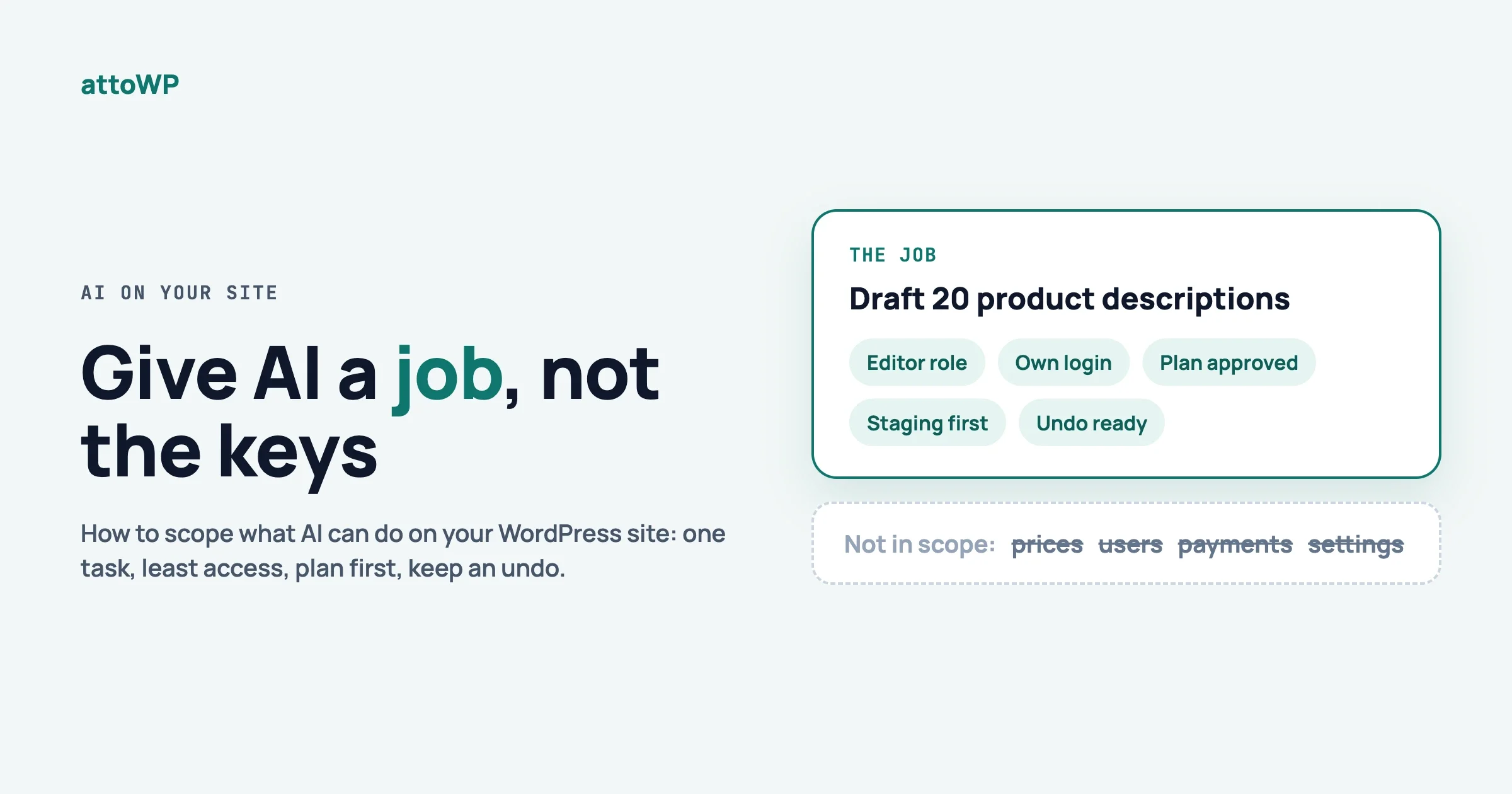
A five-step way to scope what AI can do on your WordPress site: one written job, a limited user, plan before action, staging first, and an undo. Includes what WooCommerce and common plugins allow today.
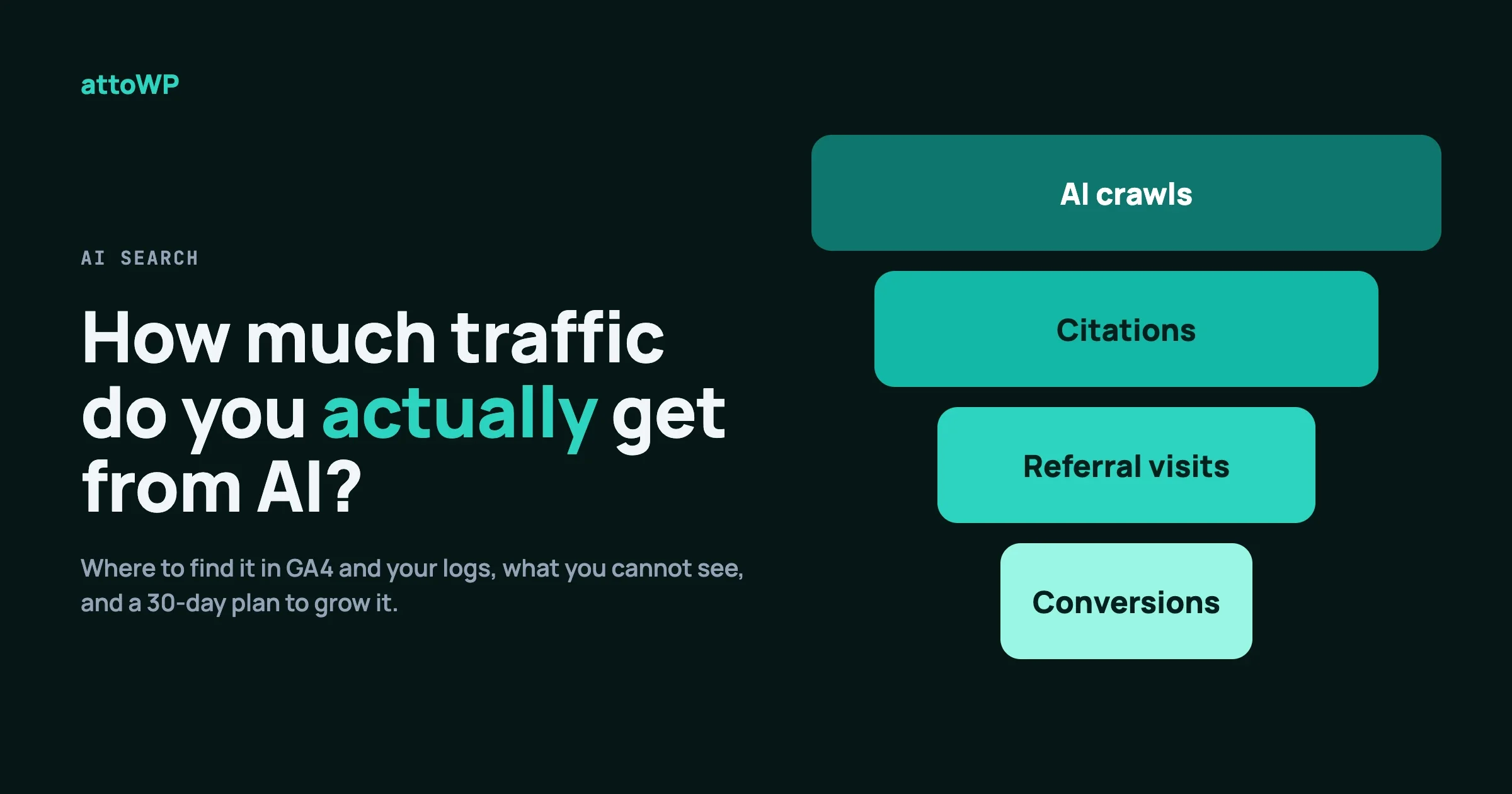
How to measure the traffic AI assistants send you with GA4, server logs and Search Console, how to read it, and how to improve it and win visitors back from outside Google.
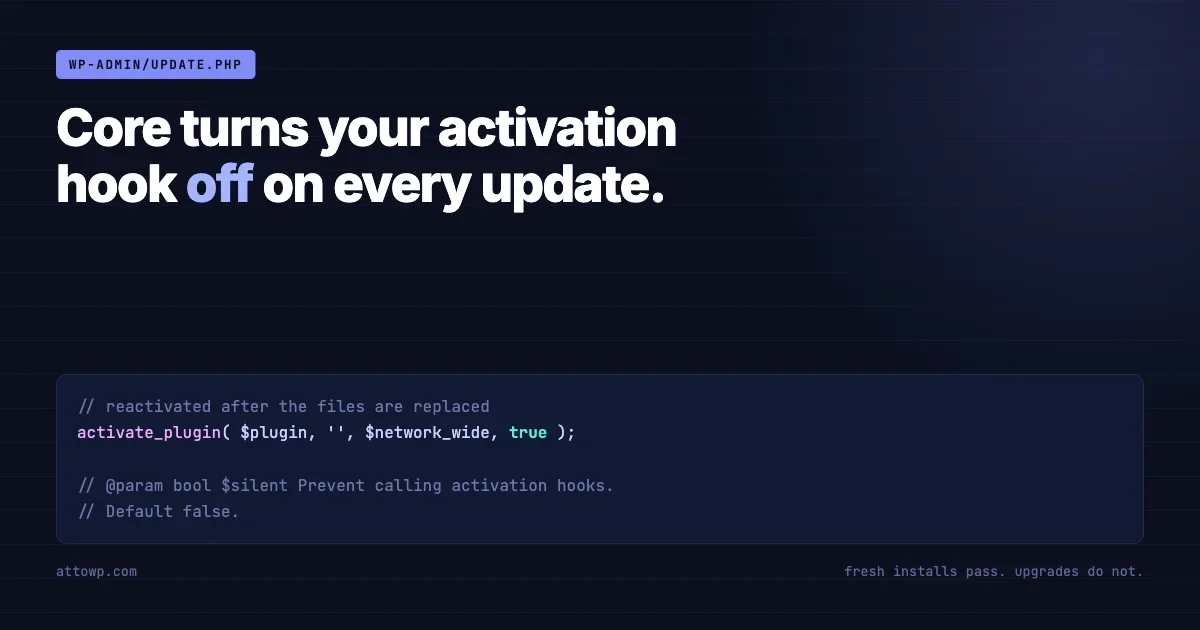
WordPress suppresses activation hooks on every update, deliberately. The class of plugin bug that produces, why every test environment hides it, and where to put the work instead.
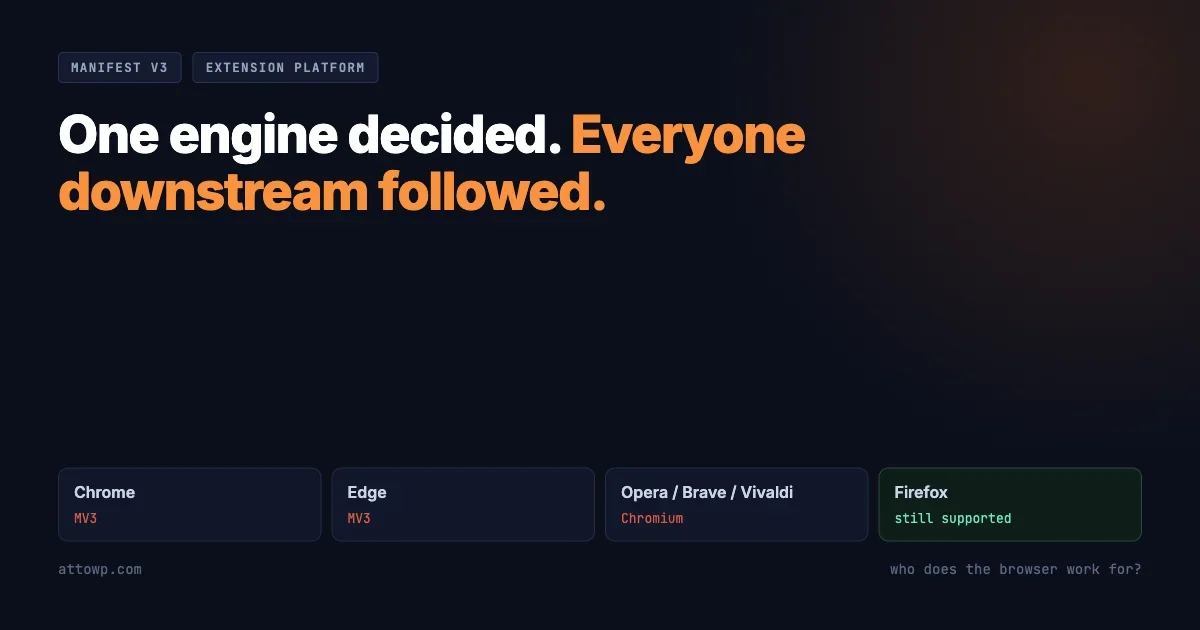
Edge is moving to Manifest V3 and Firefox is the only major browser left supporting uBlock Origin. The technical change, the strongest case for it, the case against, and the adjacency with Chrome's agent APIs.
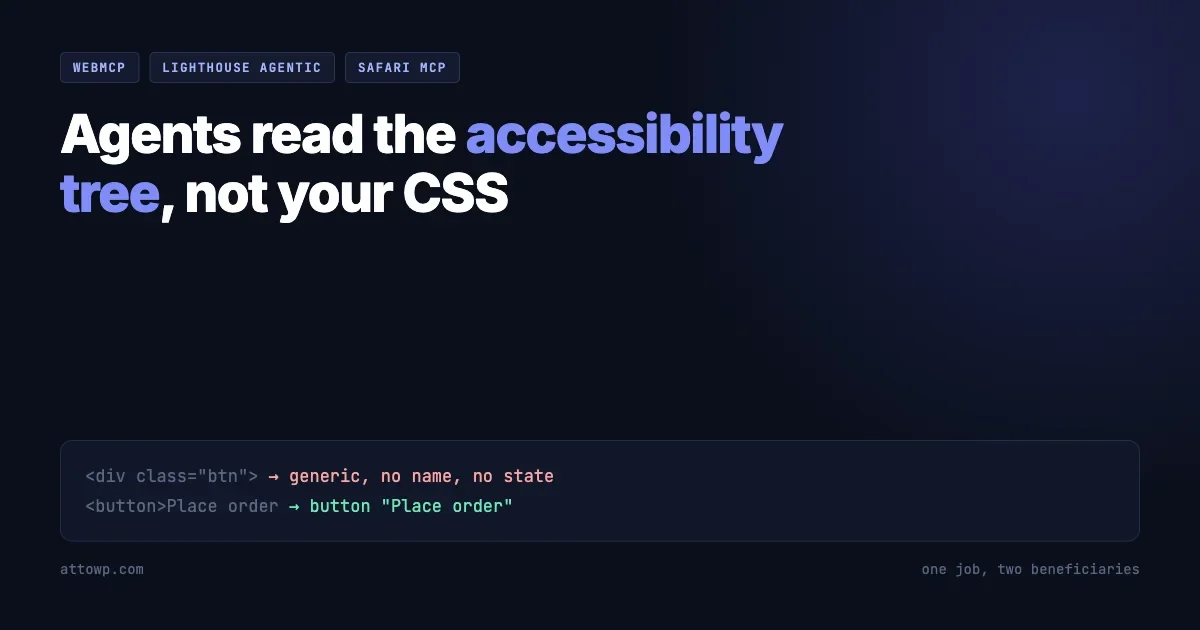
Chrome opened a WebMCP origin trial and shipped Lighthouse agentic audits. Safari shipped an MCP server. The line buried in Chrome's docs that matters most: agents use the accessibility tree as their primary data model.
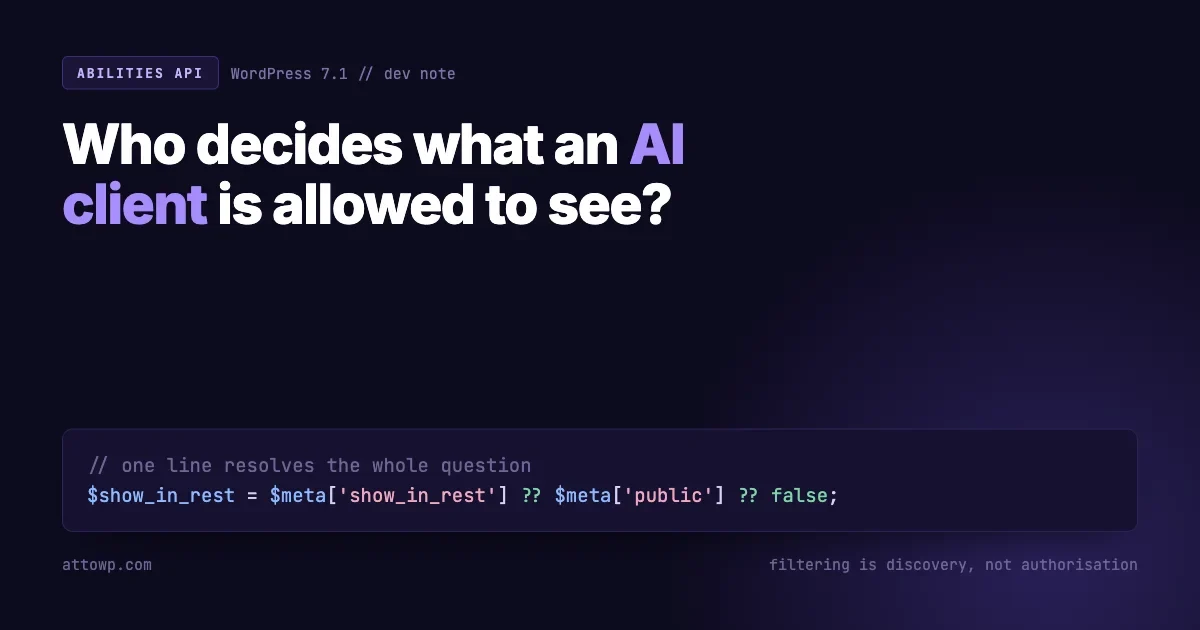
WordPress 7.1 adds a unified public exposure flag and a shared filtering pipeline to wp_get_abilities(). The resolution order, the two callbacks, the two global filters, the REST metadata trap, and why filtering is discovery and not authorisation.
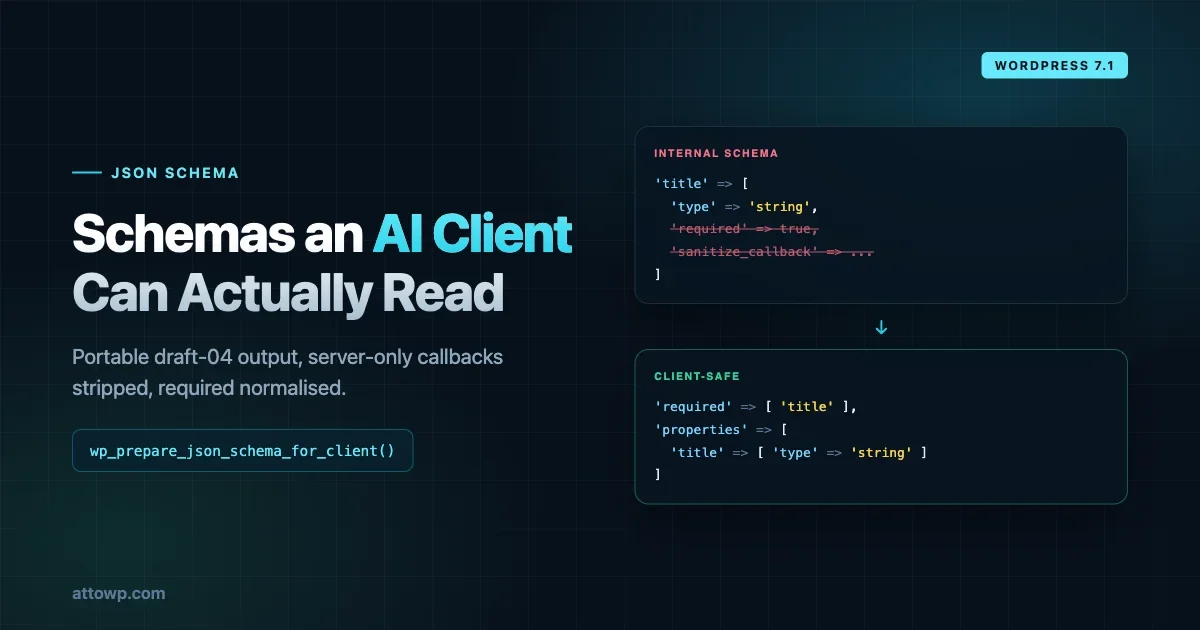
WordPress 7.1 adds wp_prepare_json_schema_for_client(), turning internal schemas into portable draft-04 output. What it strips, the two profiles, and the Abilities API changes that ship alongside it.
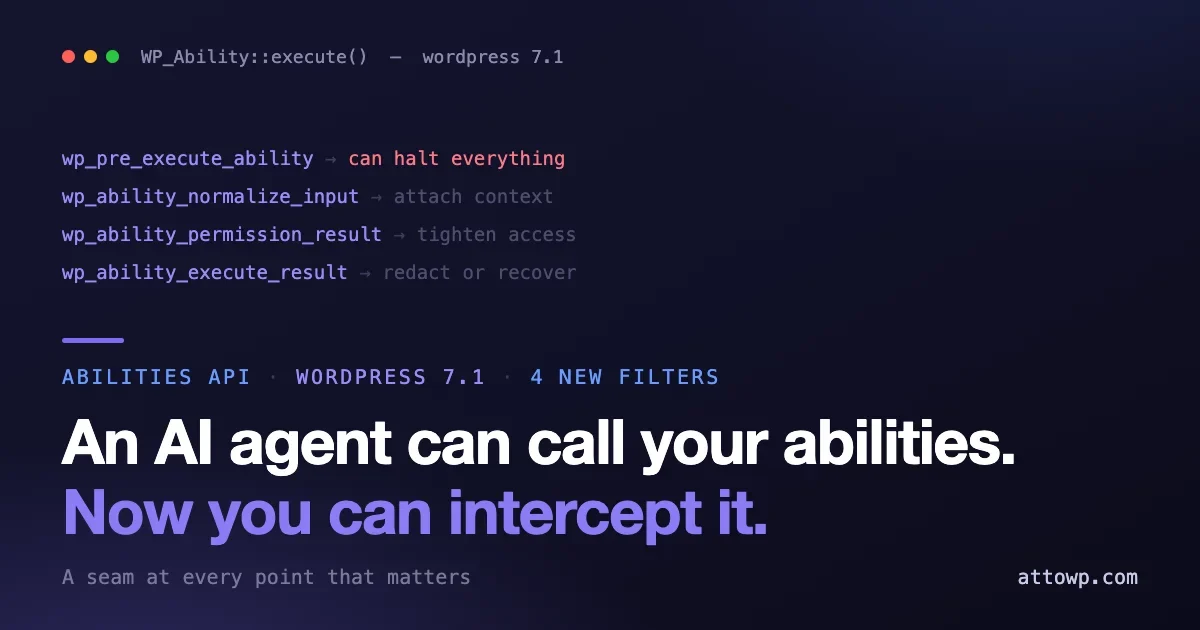
WordPress 7.1 adds four filters around the Abilities API execution pipeline, so you can short-circuit a call, enrich its input, override the permission result, or transform what comes back. What each one is, where it fires, and the patterns that matter once an AI agent is the caller.
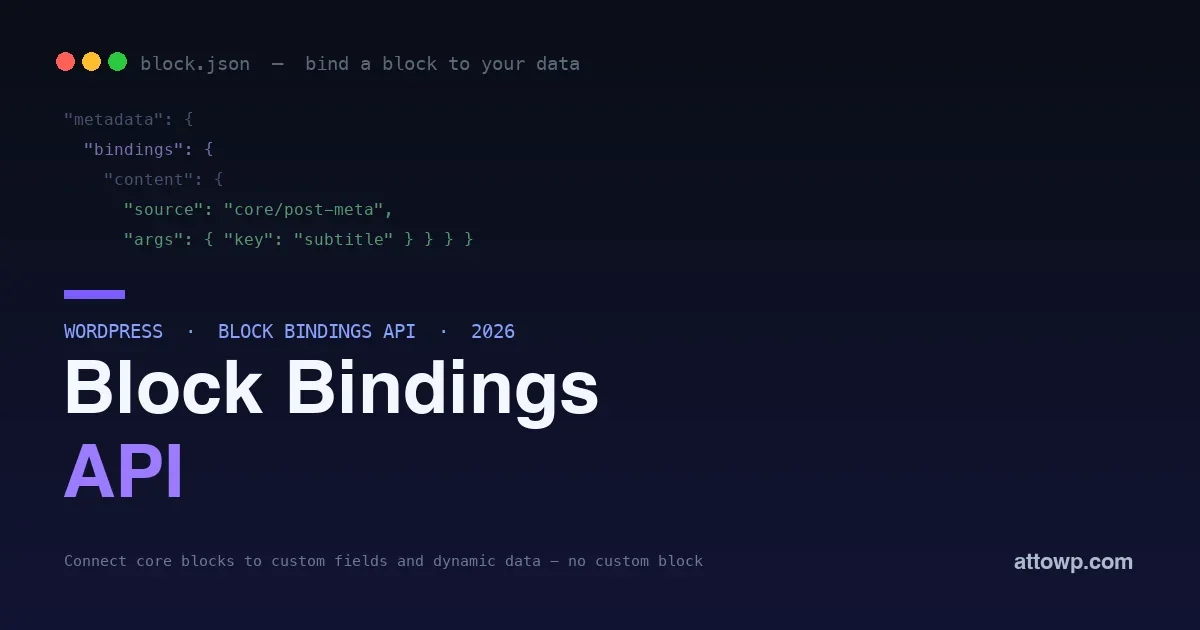
Displaying dynamic data used to mean building a custom block just to output one value. The Block Bindings API connects core blocks to post meta and custom data sources - no custom block, no shortcode. How it works, with real code.
Making a block interactive used to mean jQuery or bundling your own React. The Interactivity API is WordPress's standard, framework-free way to add front-end interactivity to server-rendered blocks - with directives and a store. How it works, with real code.
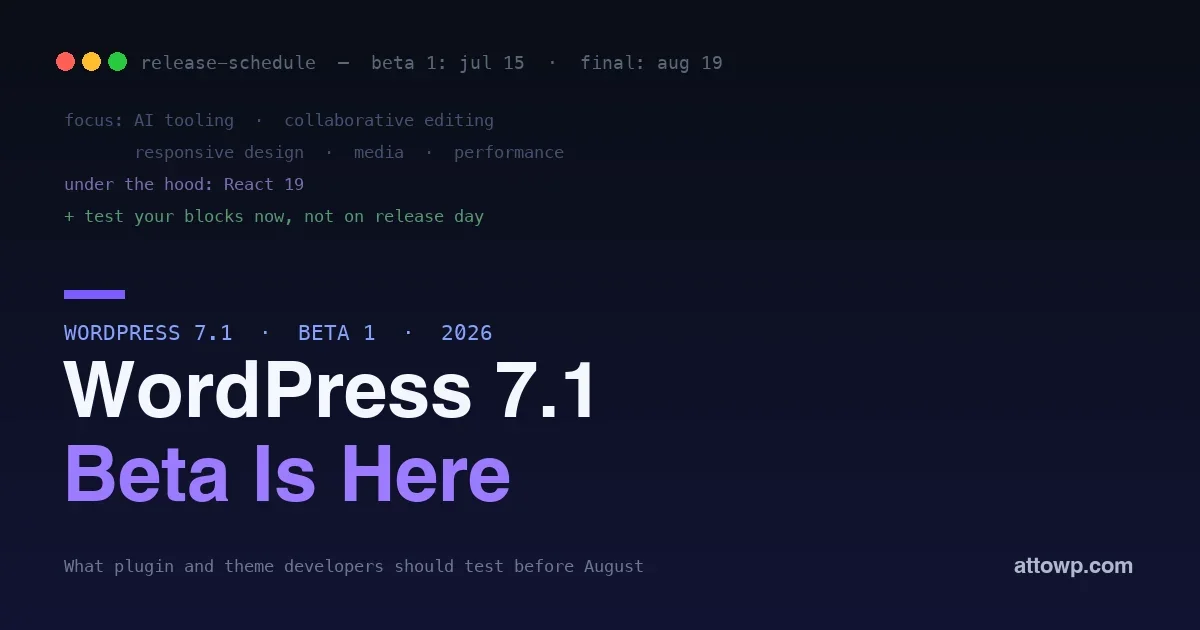
WordPress 7.1 Beta 1 landed July 15, with the final release August 19. What is in it - AI tooling, collaboration, responsive design, media, and an enforced iframed editor - and exactly how to test your plugins and themes before release day.
AI won the code-generation race, and it was the wrong race. The real 2026 bottleneck is verification: reading, trusting, and being sure AI code is correct and secure. Why generation scales and review does not, and how that changes the way teams should work.
A hands-on tutorial: install the WordPress MCP Adapter, expose one Ability as an MCP tool, and connect Claude Code so an AI agent can discover and run your site's functionality - in about twenty minutes.
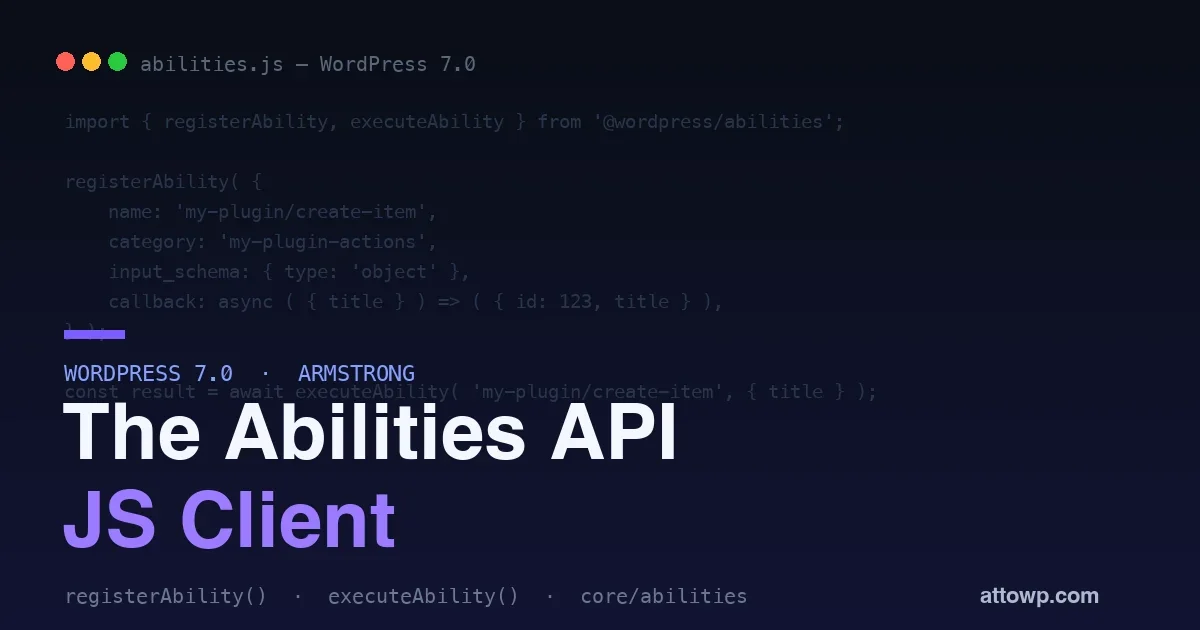
WordPress 7.0 'Armstrong' shipped the client-side Abilities API. Here is what @wordpress/abilities and @wordpress/core-abilities let you build - registering, executing, and querying AI-ready abilities in JavaScript, with real code.
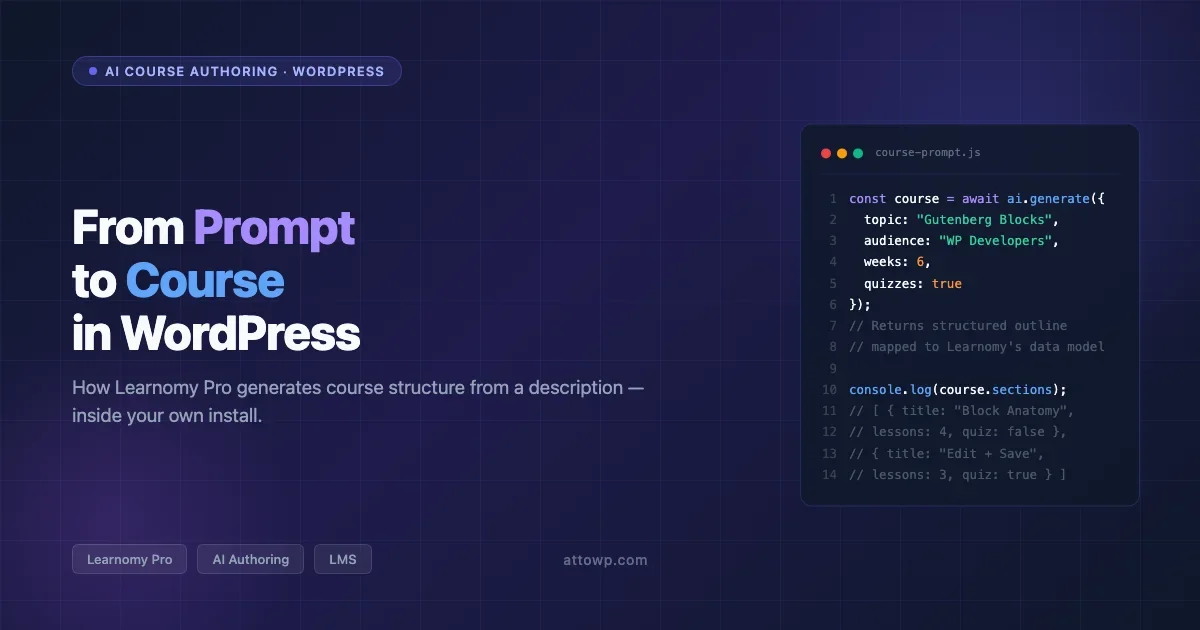
Learnomy Pro's AI Authoring generates course outlines from a prompt inside WordPress, so your course structure, student data, and payment records stay on your own infrastructure — accessible to AI agents via the REST API.
A June 2026 analysis asked whether Claude-assisted commits raised rsync's defect rate. We dig into what the data actually shows, the confounders that complicate the story, and what it means for WordPress plugin teams using AI daily.
webMCP proposes turning websites into structured tool surfaces for AI agents instead of DOM-scraping targets. Here is what it means for WordPress: the opportunity, the attack surface, and a practical readiness checklist for developers.