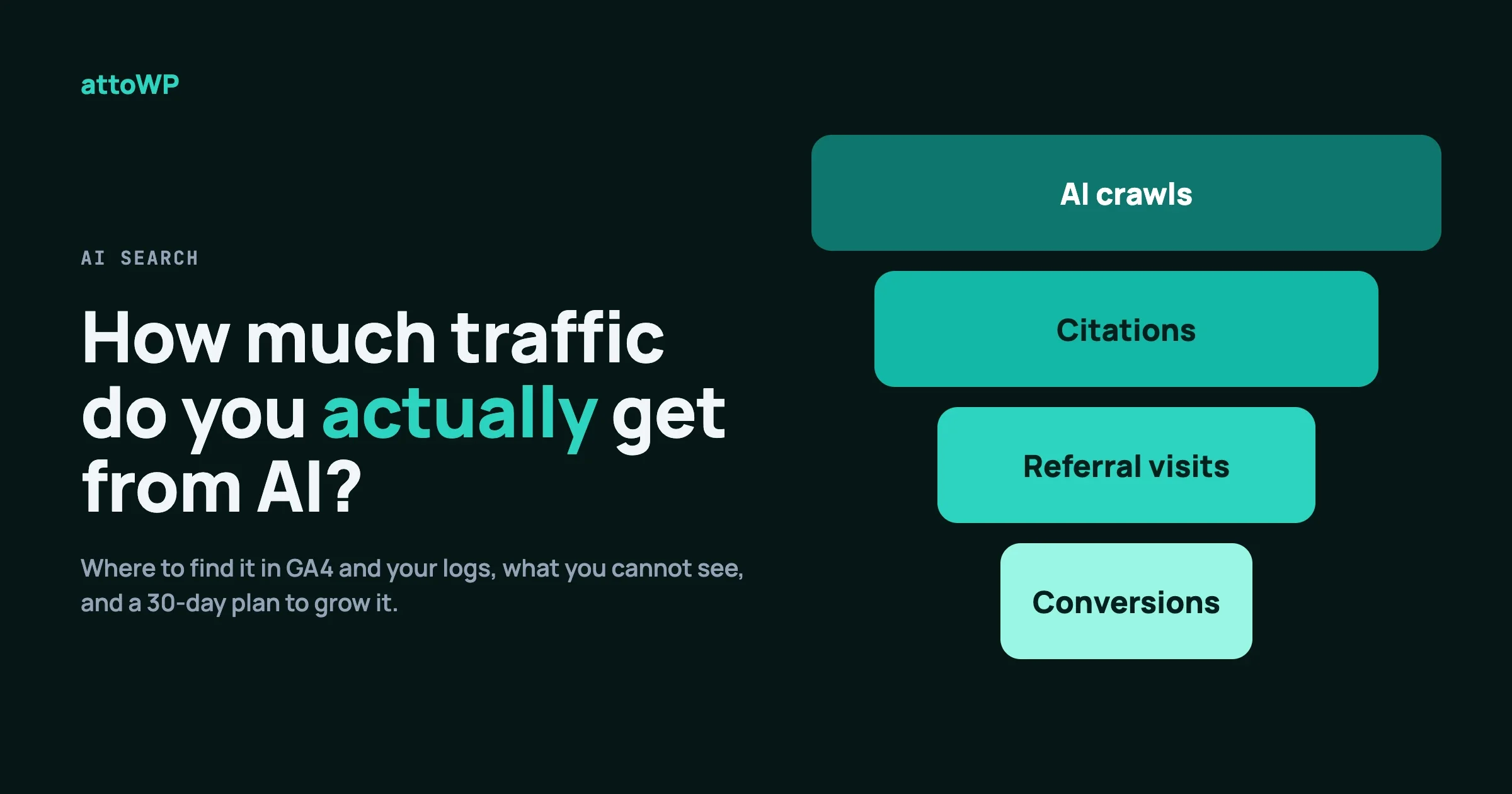
How Much Traffic Do You Actually Get From AI?
How to measure the traffic AI assistants send you with GA4, server logs and Search Console, how to read it, and how to improve it and win visitors back from outside Google.
How to measure the traffic AI assistants send you with GA4, server logs and Search Console, how to read it, and how to improve it and win visitors back from outside Google.
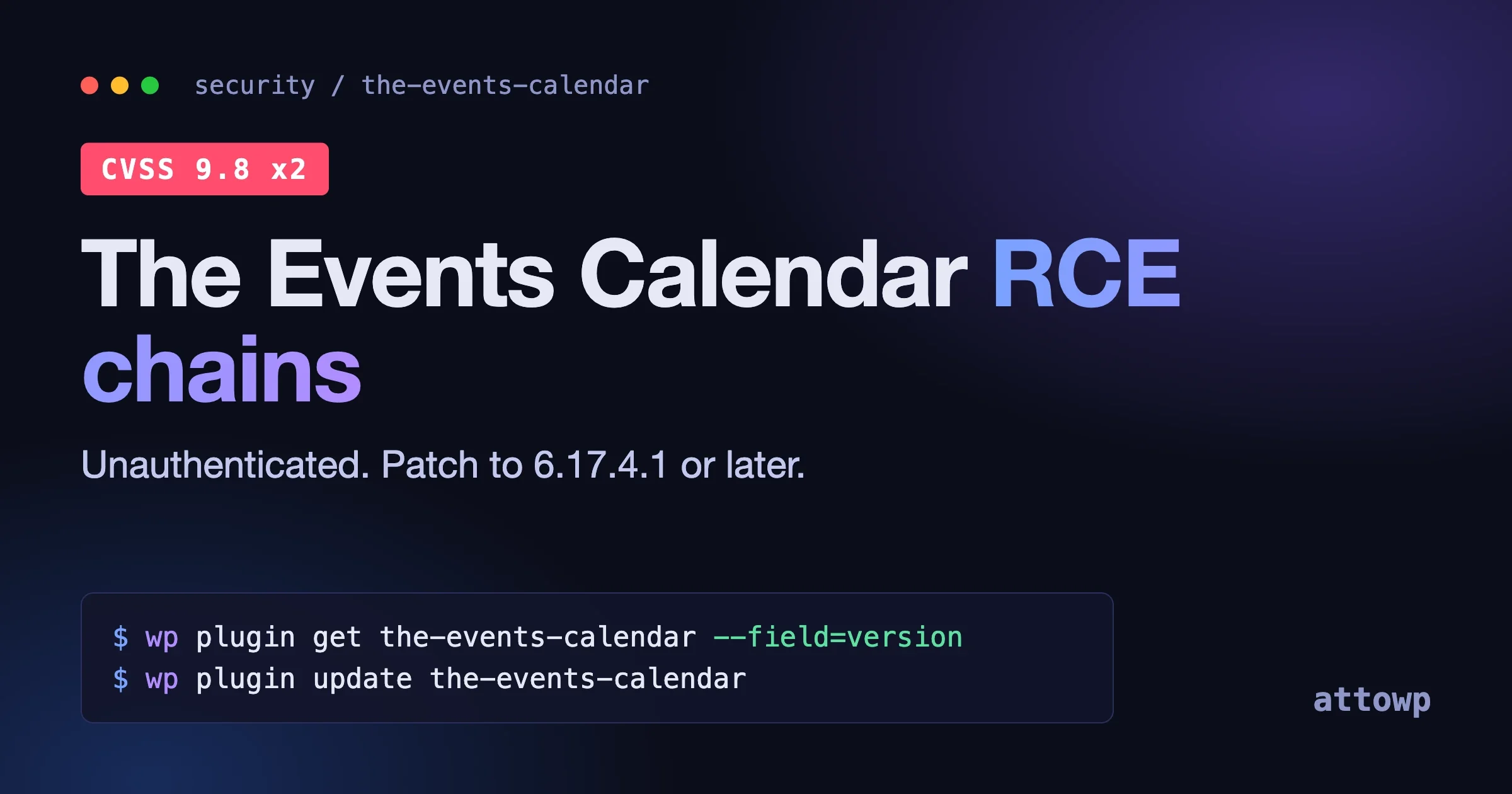
Two unauthenticated RCE chains in The Events Calendar (CVE-2026-78006 and CVE-2026-78159) start from an event comment. Who is exposed, WP-CLI checks for one site or a fleet, the patch, and what to hunt for.
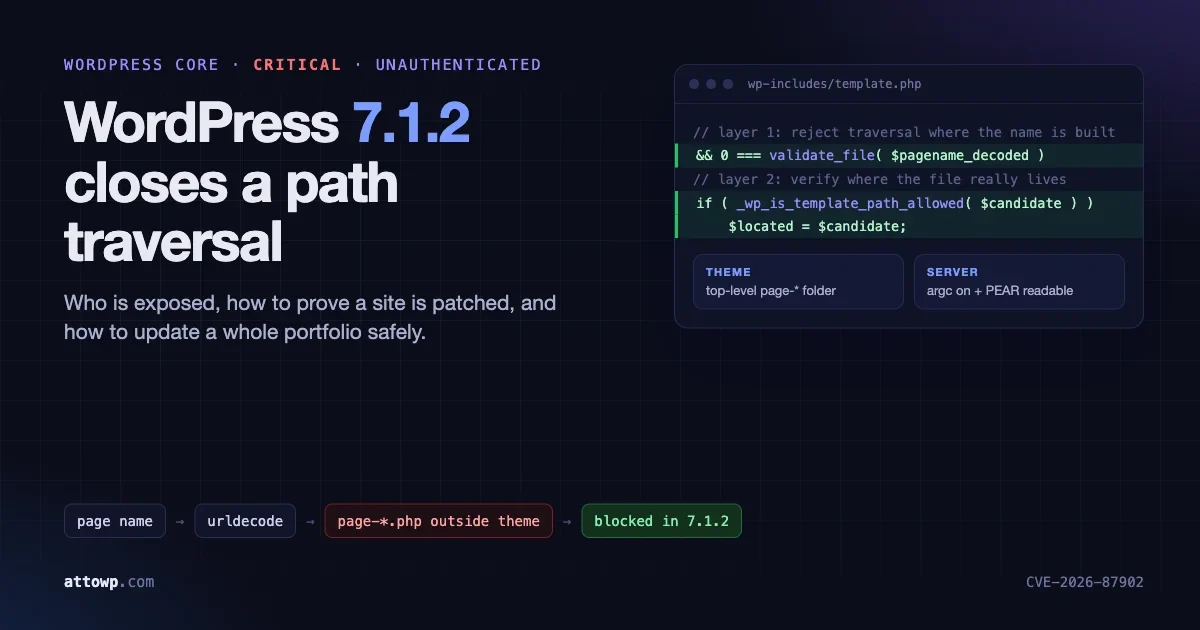
WordPress 7.1.2 patches an unauthenticated path traversal in page template resolution that can become remote code execution. Which themes and servers are exposed, how to prove a site is patched, and how to update safely, including Composer and Docker.
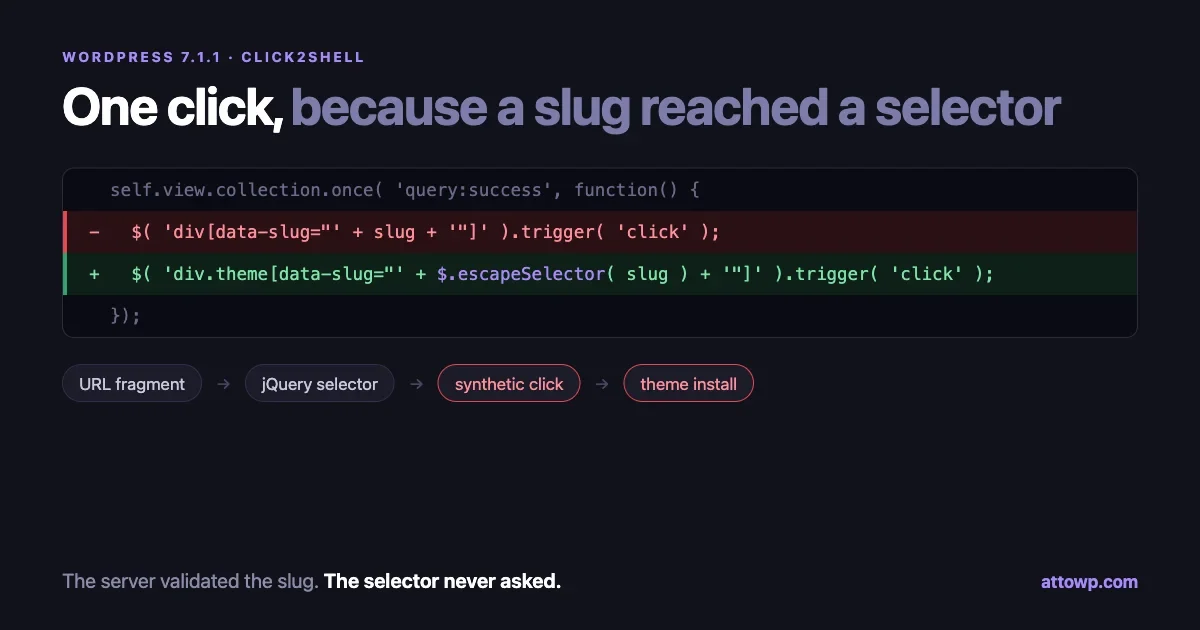
WordPress 7.1.1 fixed Click2Shell with two lines: escape a theme slug before it reaches a jQuery selector. Why server-side validation did not help, why the selector failed silently instead of throwing, and how to find the same shape in your own plugin JavaScript.
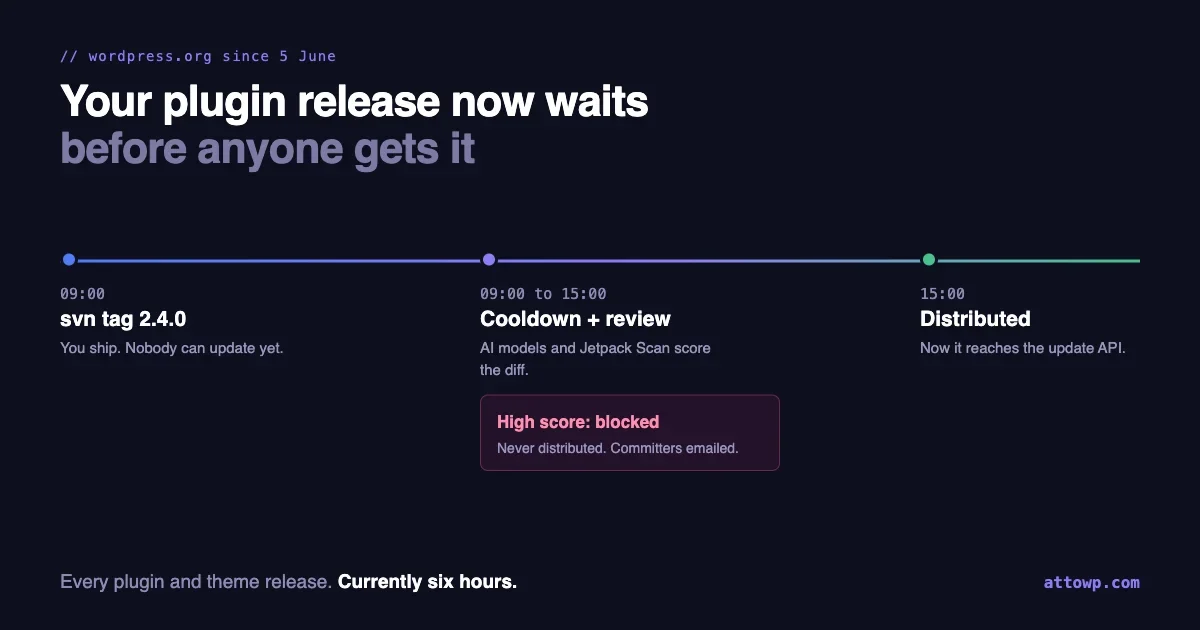
Since 5 June every plugin and theme release on WordPress.org waits in a cooldown, currently six hours, while AI models and Jetpack Scan review it. High-risk releases are blocked automatically. What that changes for announcing, hotfixing and shipping security fixes.
AI Overviews are cutting click-through rates for WordPress publishers. Here is the data, the schema tactics, the owned-audience moves, and the opt-out controls that keep your traffic alive.
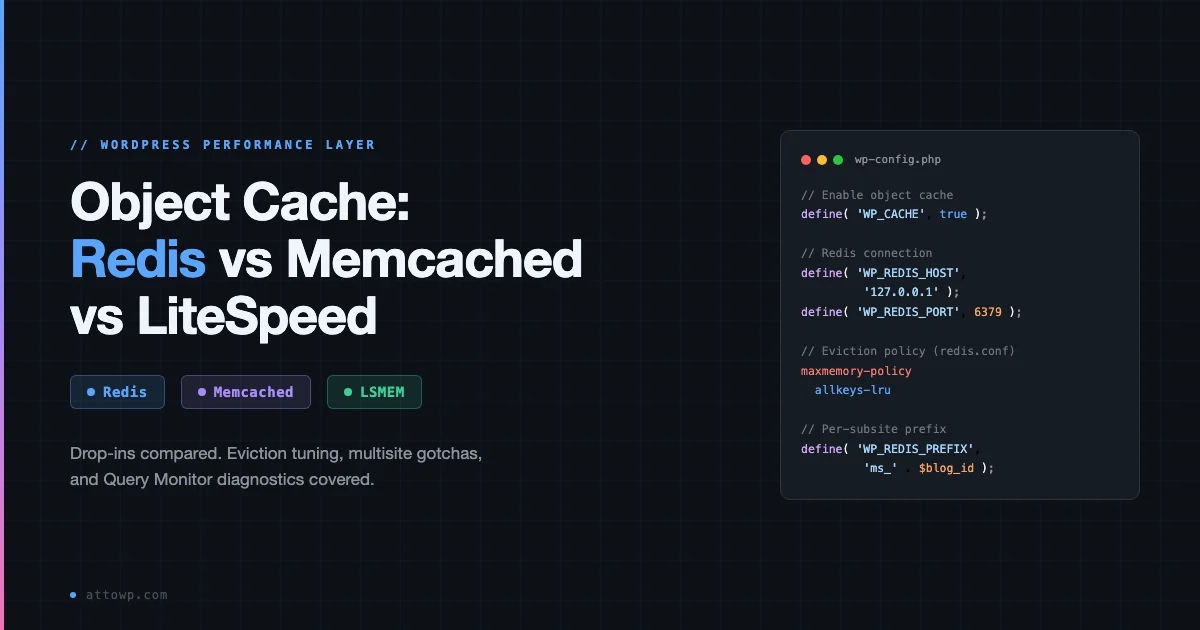
A developer-focused comparison of Redis, Memcached, and LiteSpeed LSMEM as WordPress object cache drop-ins. Covers eviction policy tuning, persistent vs ephemeral groups, multisite key namespace gotchas, and monitoring with Query Monitor.
A practical guide to WordPress performance monitoring tools — New Relic APM setup, Datadog distributed tracing, and Query Monitor slow query identification. Covers transaction tracing, real user monitoring, and alerting thresholds for production WordPress sites.
Compare UptimeRobot, Pingdom, Better Uptime, StatusCake, and WP Health Check for WordPress monitoring. Covers keyword checks, alerting setup, SSL monitoring, SLA tracking, and incident response runbooks.
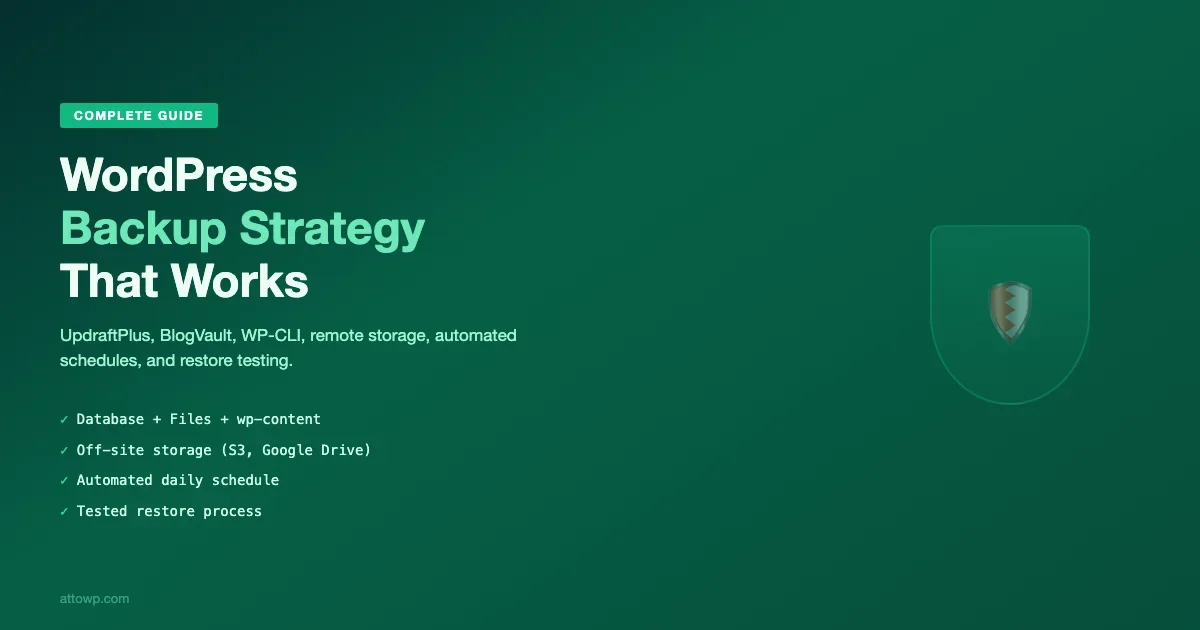
A complete WordPress backup strategy covering plugin options, WP-CLI exports, remote storage destinations, and restore testing so you are actually protected when disaster hits.
Most WordPress AI plugins are quietly violating GDPR right now. Missing data processing agreements, impossible erasure requests, unlawful cross-border transfers - here is the full legal picture and what to do about it.
A technical guide to the 6 essential HTTP security headers for WordPress sites - X-Frame-Options, HSTS, X-Content-Type-Options, Content-Security-Policy, Permissions-Policy, and Referrer-Policy. Includes exact code for Apache and nginx, plus how to check which headers your site is missing.
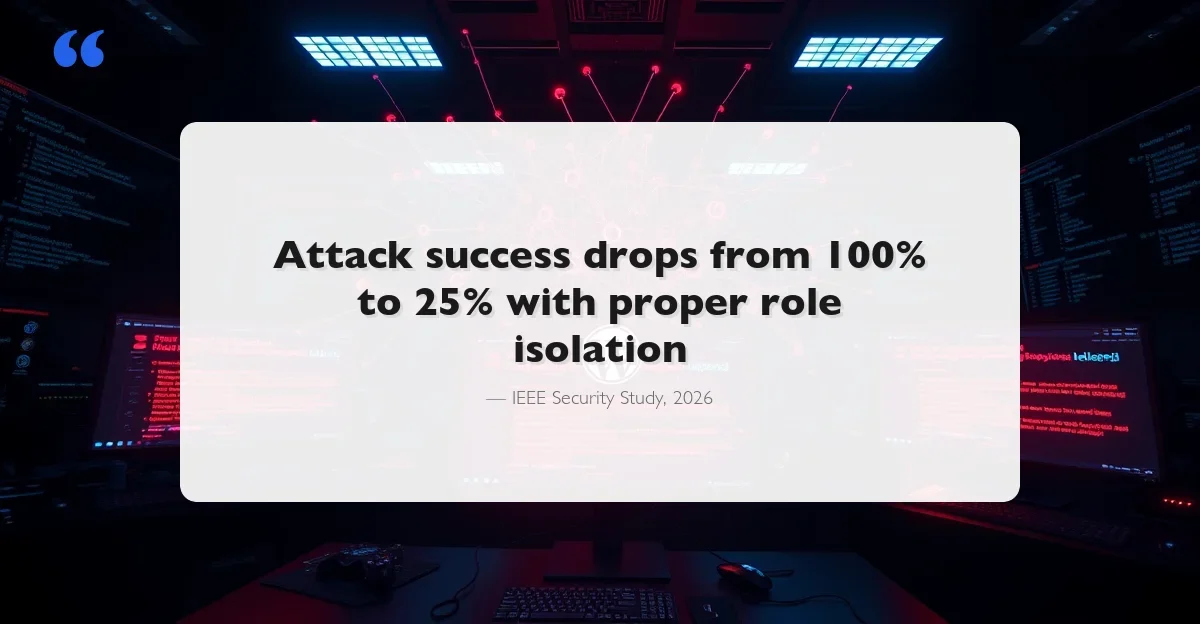
WordPress AI plugins are vulnerable to prompt injection attacks. Learn real attack scenarios from a 2026 IEEE study, OWASP mitigation strategies with PHP code examples, and a complete security checklist for LLM-powered plugins.

A practical WordPress security hardening checklist covering authentication, file permissions, login protection, database prefixes, and plugin hygiene - tested against current attack patterns.

Master schema markup for WordPress with this complete technical guide. Learn JSON-LD implementation, essential schema types, code examples, testing tools, and advanced techniques for better search visibility.
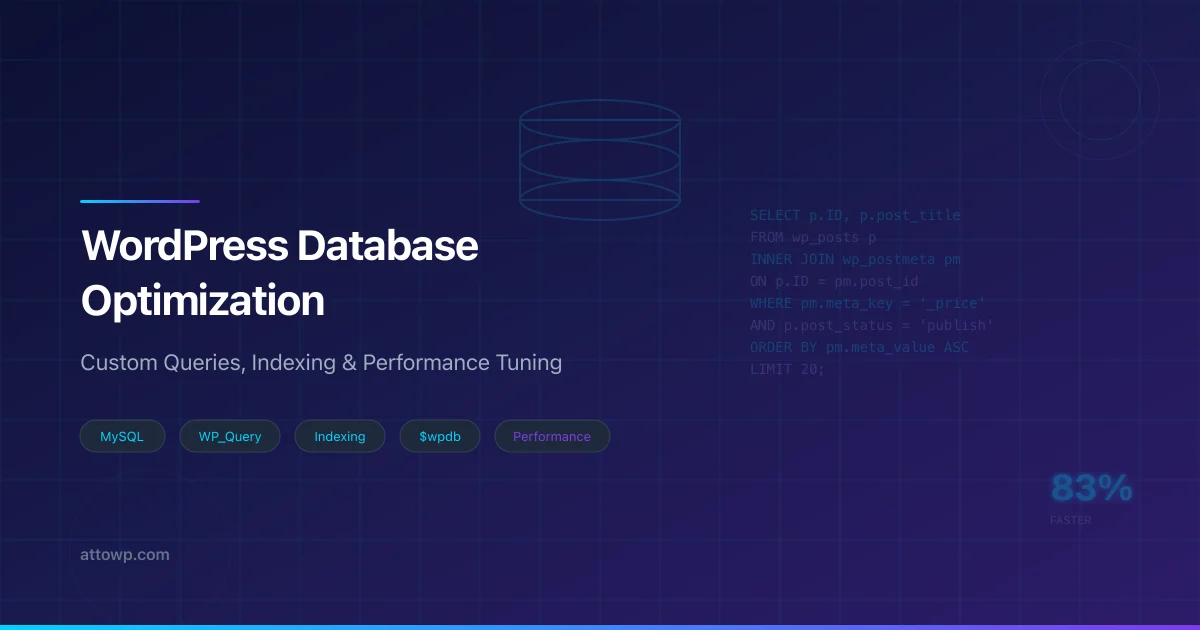
Master WordPress database optimization with custom SQL queries, MySQL indexing strategies, WP_Query tuning, and automated maintenance scripts. Reduce your TTFB by up to 83%.
Master WordPress performance optimization in 2026 with this comprehensive guide covering server-level tuning (PHP 8.3, OPcache, Redis), multi-layer caching strategies, Core Web Vitals optimization, image formats (WebP/AVIF), critical CSS, JavaScript deferral, database cleanup, and WP-CLI automation scripts. Includes production-ready code examples and a prioritized optimization checklist.

Zero trust security for web applications - the architecture, key principles, IAM integration, microsegmentation, and practical steps for teams moving away from perimeter-based models.