WordPress Core Internals Are Not an API
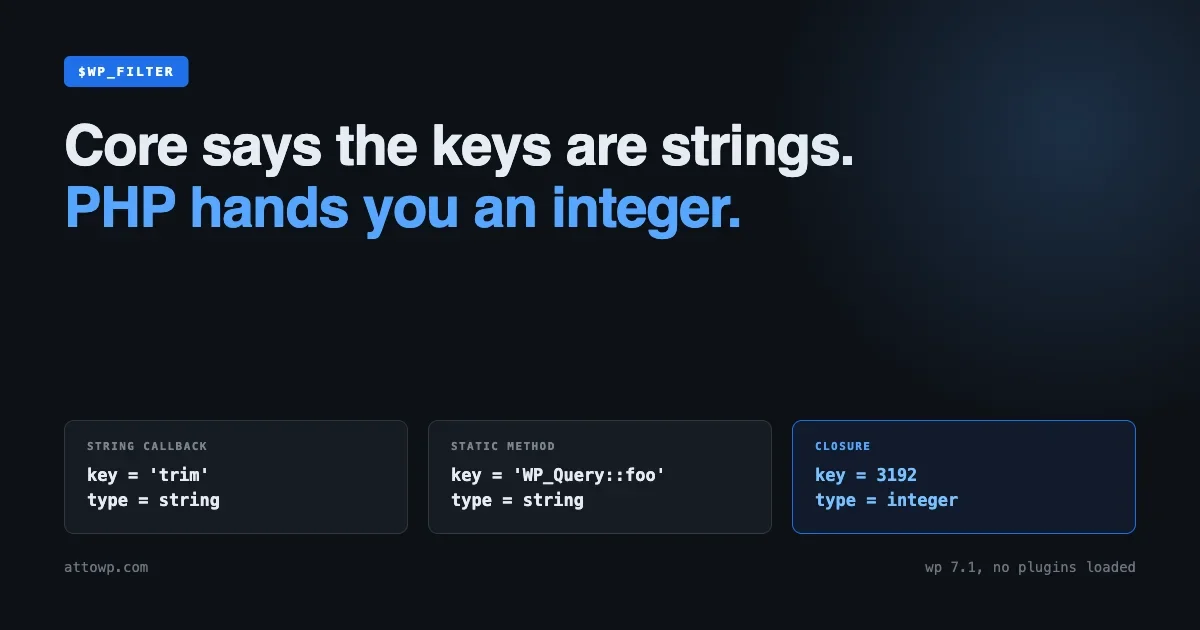
Core annotates the hook registry's keys as strings and PHP hands you integers. Reproduce it in thirty seconds, then the four-question test for telling a contract from an internal.
Core annotates the hook registry's keys as strings and PHP hands you integers. Reproduce it in thirty seconds, then the four-question test for telling a contract from an internal.
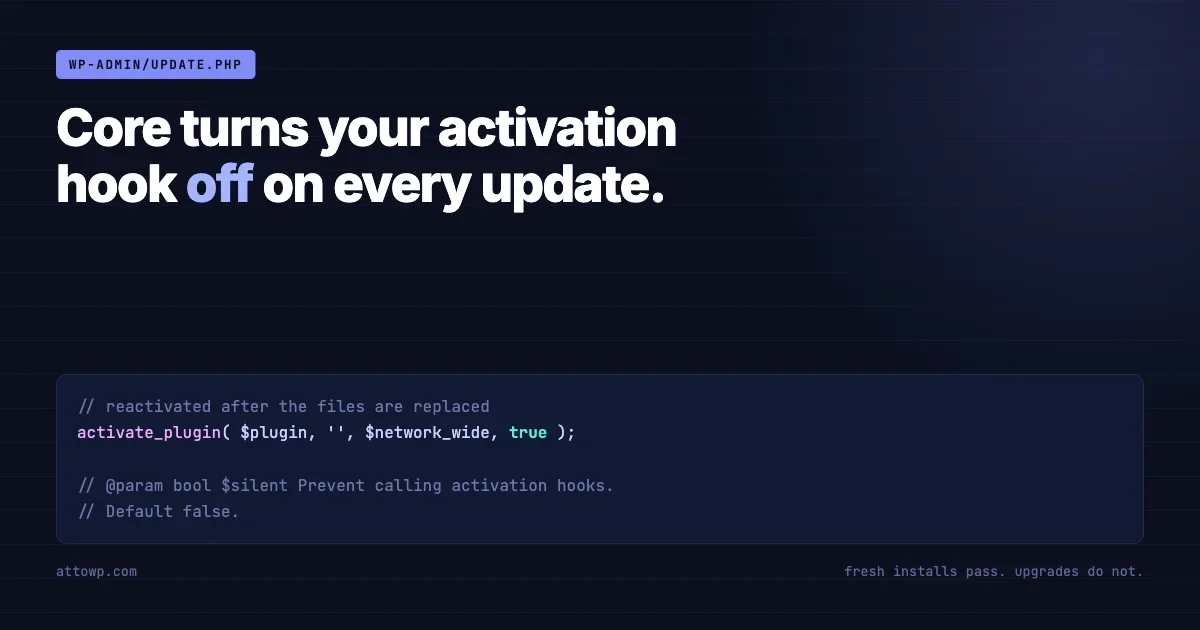
WordPress suppresses activation hooks on every update, deliberately. The class of plugin bug that produces, why every test environment hides it, and where to put the work instead.
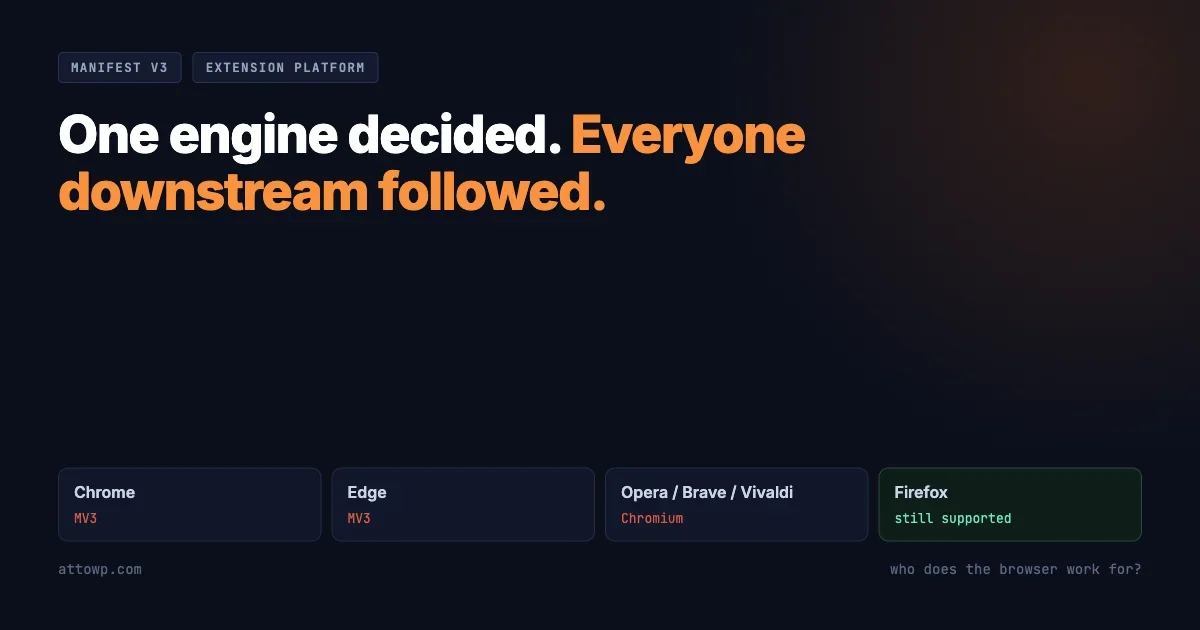
Edge is moving to Manifest V3 and Firefox is the only major browser left supporting uBlock Origin. The technical change, the strongest case for it, the case against, and the adjacency with Chrome's agent APIs.
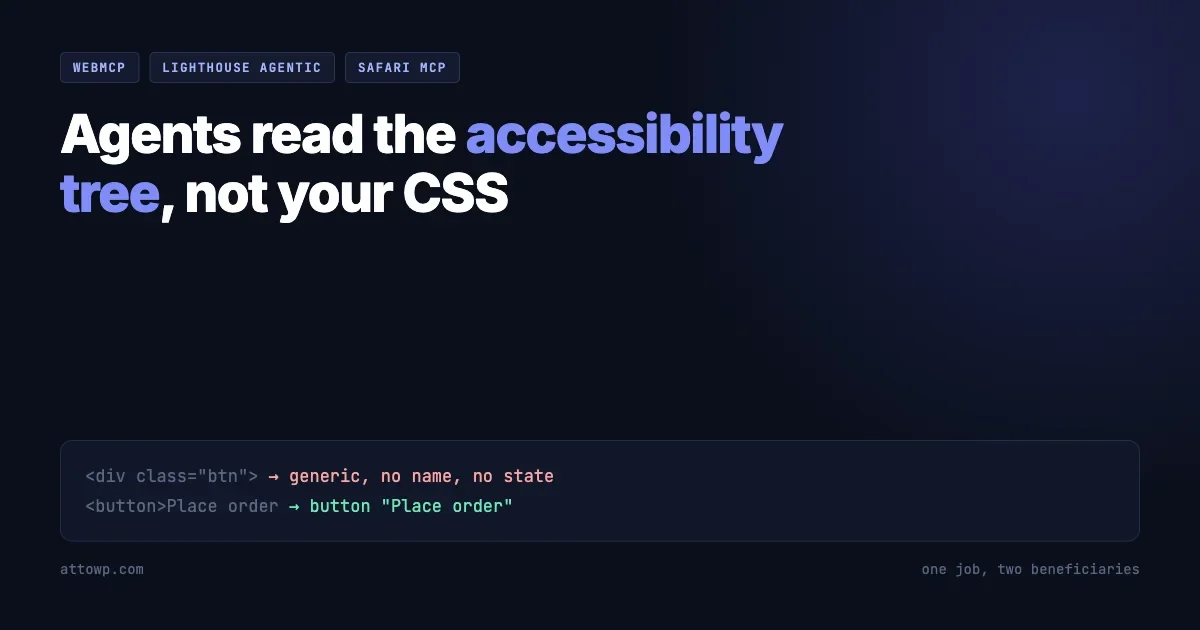
Chrome opened a WebMCP origin trial and shipped Lighthouse agentic audits. Safari shipped an MCP server. The line buried in Chrome's docs that matters most: agents use the accessibility tree as their primary data model.
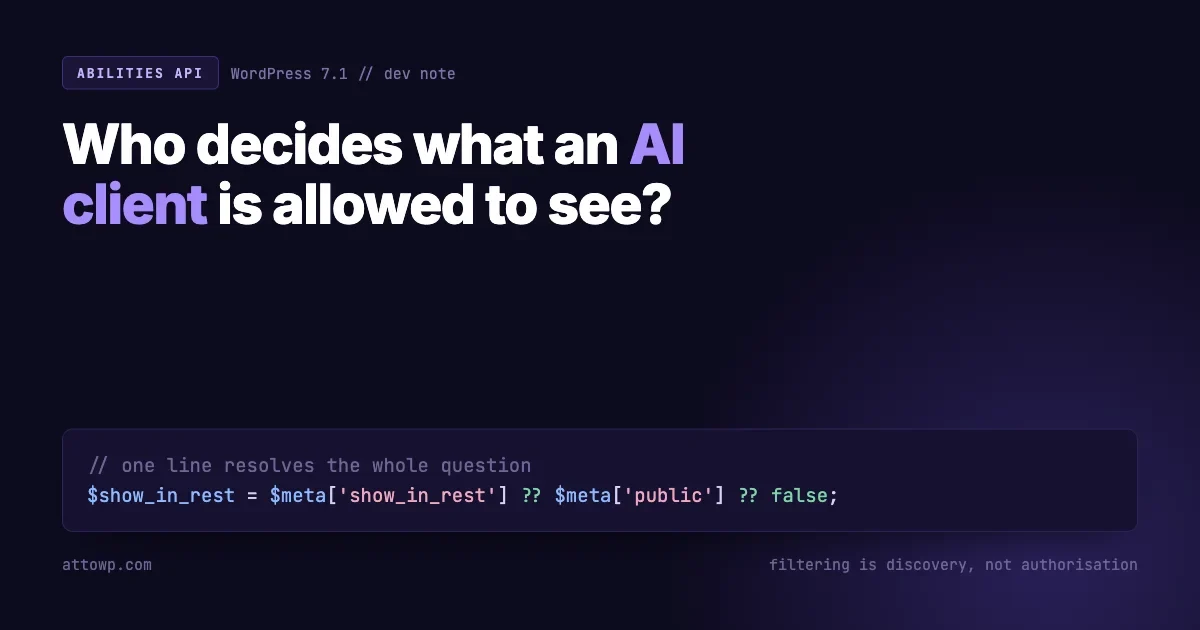
WordPress 7.1 adds a unified public exposure flag and a shared filtering pipeline to wp_get_abilities(). The resolution order, the two callbacks, the two global filters, the REST metadata trap, and why filtering is discovery and not authorisation.
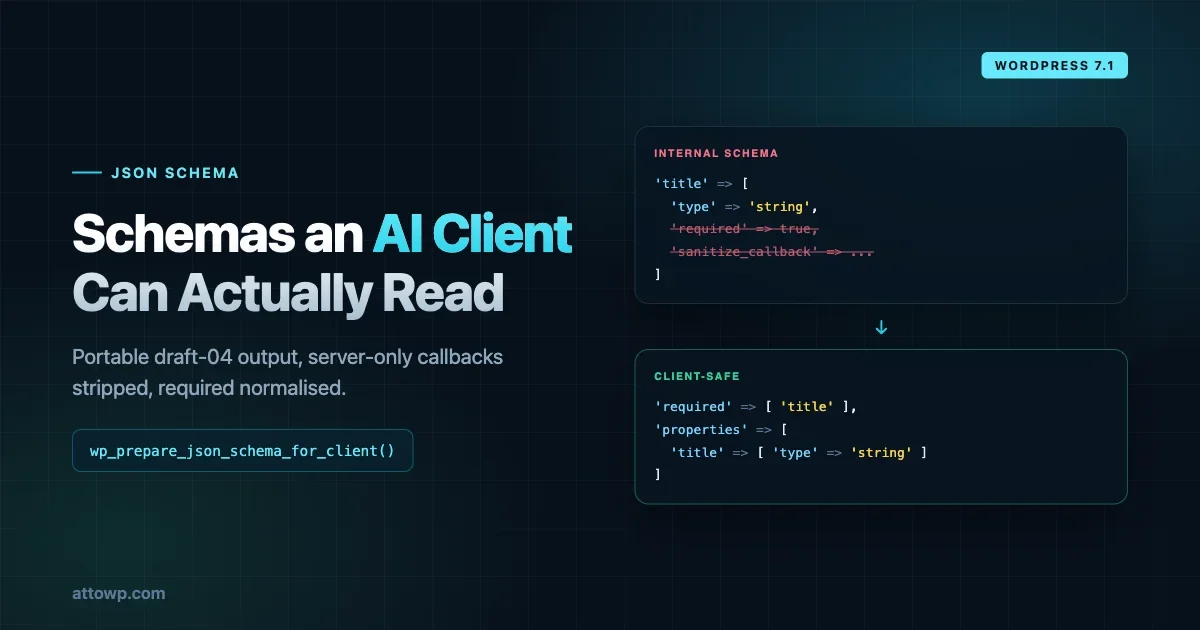
WordPress 7.1 adds wp_prepare_json_schema_for_client(), turning internal schemas into portable draft-04 output. What it strips, the two profiles, and the Abilities API changes that ship alongside it.
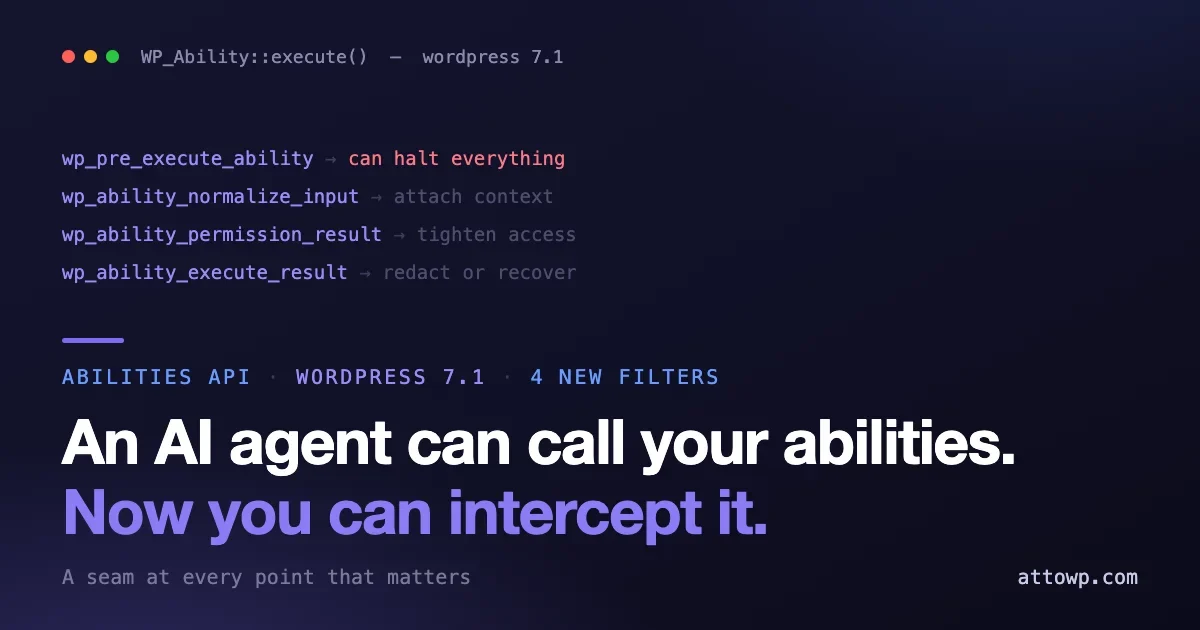
WordPress 7.1 adds four filters around the Abilities API execution pipeline, so you can short-circuit a call, enrich its input, override the permission result, or transform what comes back. What each one is, where it fires, and the patterns that matter once an AI agent is the caller.
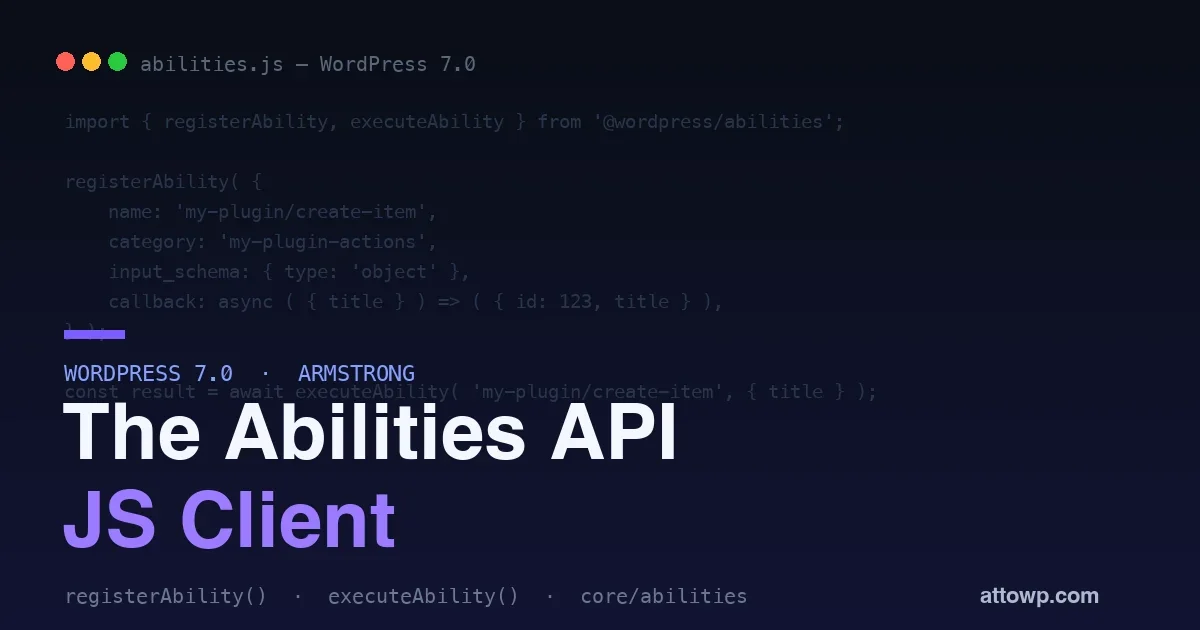
WordPress 7.0 'Armstrong' shipped the client-side Abilities API. Here is what @wordpress/abilities and @wordpress/core-abilities let you build - registering, executing, and querying AI-ready abilities in JavaScript, with real code.
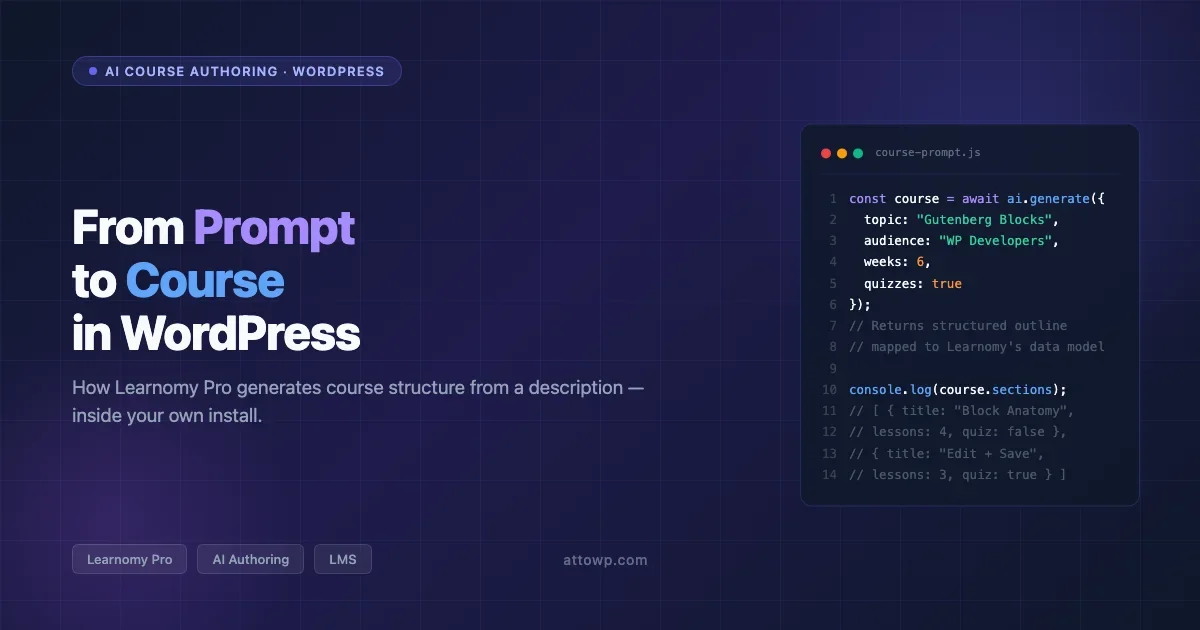
Learnomy Pro's AI Authoring generates course outlines from a prompt inside WordPress, so your course structure, student data, and payment records stay on your own infrastructure — accessible to AI agents via the REST API.
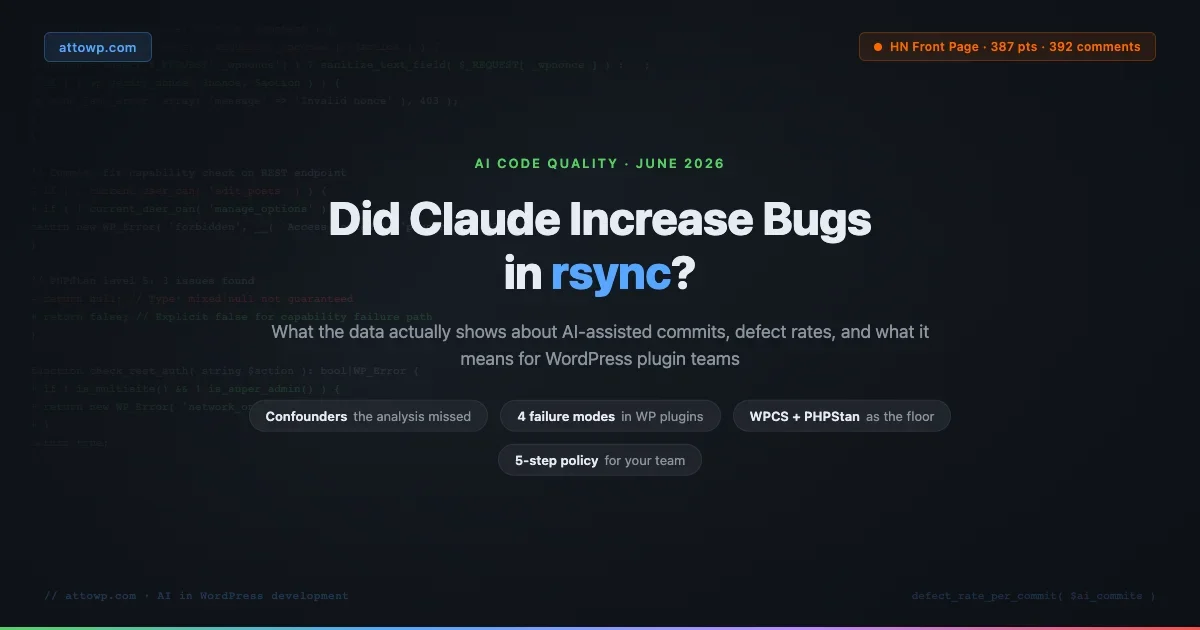
A June 2026 analysis asked whether Claude-assisted commits raised rsync's defect rate. We dig into what the data actually shows, the confounders that complicate the story, and what it means for WordPress plugin teams using AI daily.
webMCP proposes turning websites into structured tool surfaces for AI agents instead of DOM-scraping targets. Here is what it means for WordPress: the opportunity, the attack surface, and a practical readiness checklist for developers.
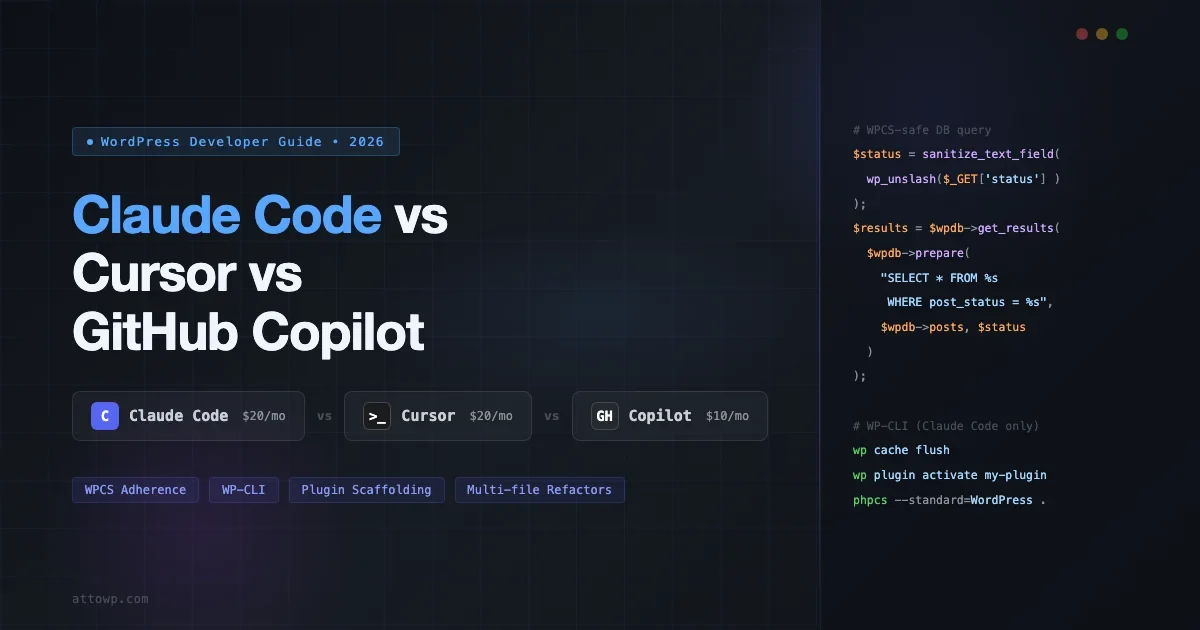
Claude Code vs Cursor vs GitHub Copilot compared for WordPress developers in 2026. WPCS adherence, WP-CLI integration, plugin scaffolding, and real tradeoffs.
<p>WordPress announced @wordpress/build, the next-generation plugin build tool that replaces @wordpress/scripts. Here is what changes, what stays the same, and how to migrate your plugin when it ships.</p>
<p>The operational shifts that separate a solo WordPress freelancer from a functioning agency, productizing services, first-hire decisions, pricing for margin, systems that survive time off, and the trap of hiring before processes exist.</p>
<p>The WordPress stories that mattered in March 2026, AI agents writing posts on WordPress.com, WP 7.0 Connectors API and Pattern Overrides, WordCamp Asia fallout, and the plugin ecosystem shifts nobody is talking about.</p>
<p>How React actually works inside WordPress, building Gutenberg blocks with @wordpress/scripts, creating admin screens with @wordpress/components, state management with data stores, and when to reach for the Interactivity API instead.</p>
<p>How to write WordPress project proposals that win work and prevent scope creep, with a full proposal template, discovery checklist, pricing models, and what to put in the Statement of Work.</p>
<p>A practical workflow for running AI-assisted code reviews on WordPress plugins using Claude and GitHub Copilot, covering security audits, WPCS compliance, PHPStan integration, prompt patterns that work, and where AI still gets it wrong.</p>
A practical CI/CD pipeline for WordPress with GitHub Actions, covering PHPCS linting, PHPUnit tests, SSH-based deployment, WP-CLI remote commands, staging to production promotion, and secrets management.

A practical guide to blocking AI crawlers on WordPress - robots.txt rules, .htaccess IP bans, and server-level controls to stop GPTBot, ClaudeBot, and others.