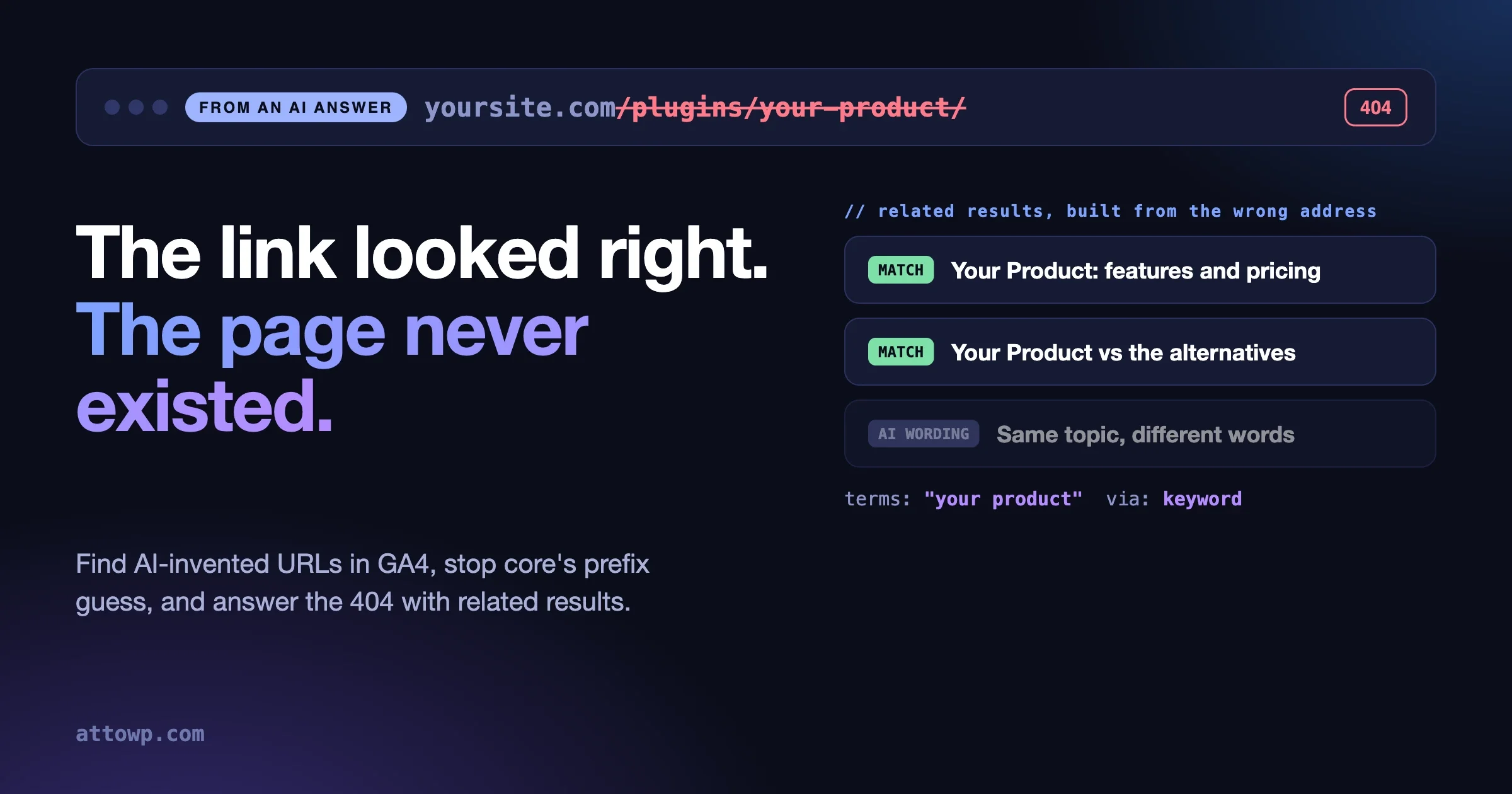
AI Assistants Send Wrong Links: Fix Your WordPress 404
AI assistants invent plausible URLs. Find them in GA4, stop core's loose 404 guess, and show related results with keyword search plus the AI Client.
AI assistants invent plausible URLs. Find them in GA4, stop core's loose 404 guess, and show related results with keyword search plus the AI Client.
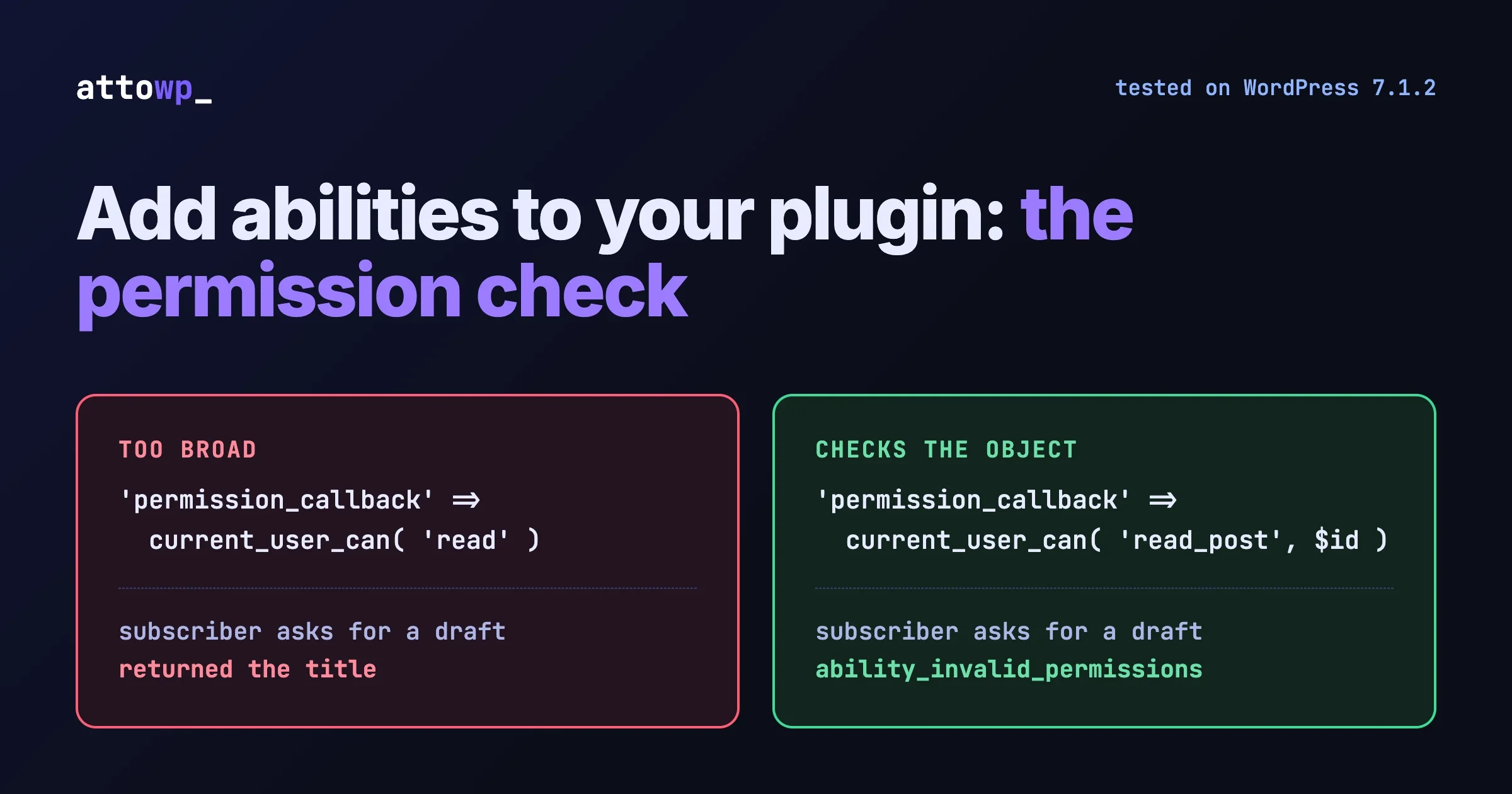
Register an ability with the WordPress Abilities API: a tested example, the permission callback mistake shown with real output, and what to return.
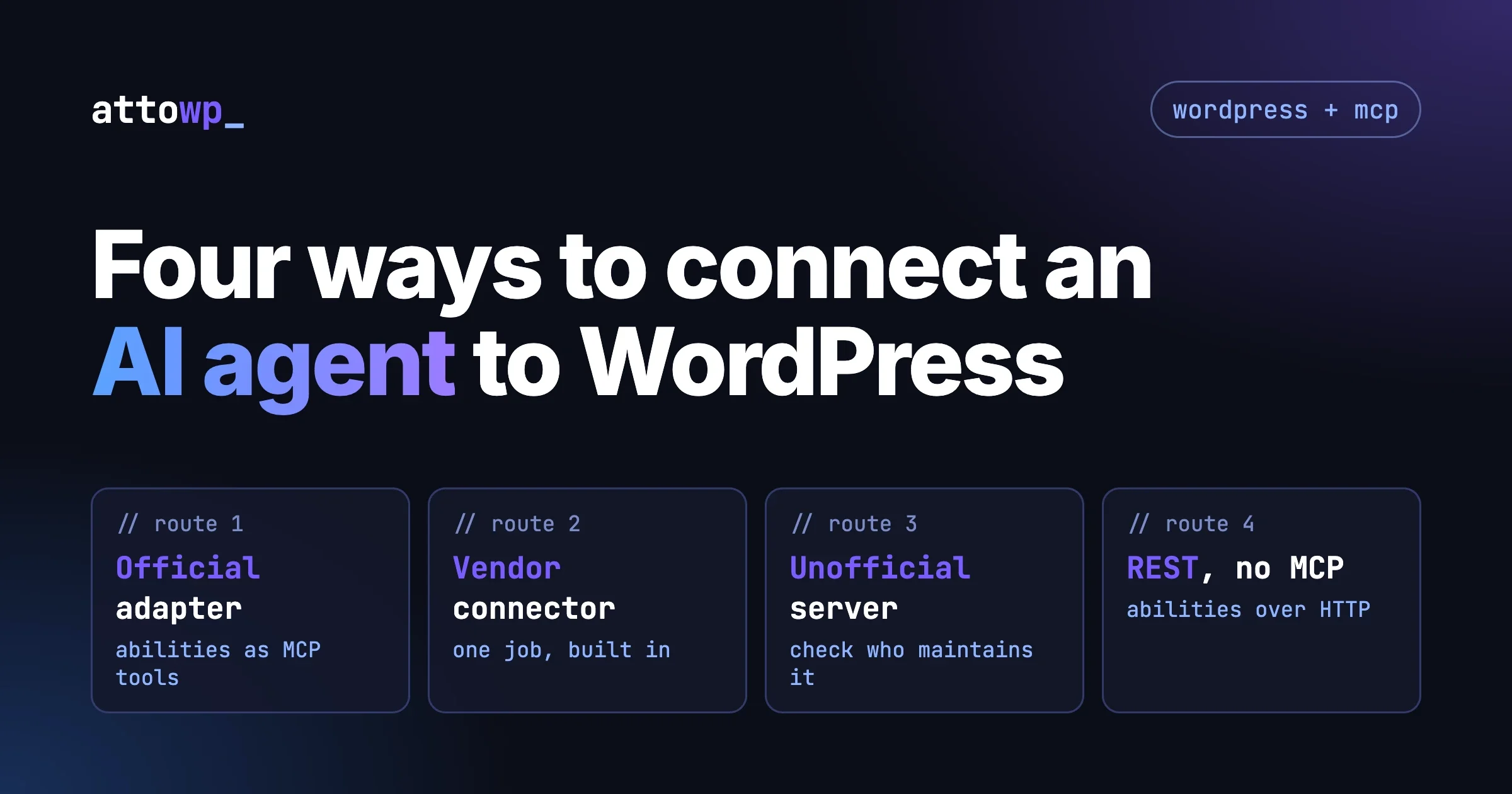
WordPress MCP compared: the official MCP Adapter, Elementor MCP, unofficial servers and the Abilities REST API, plus a rule for choosing.
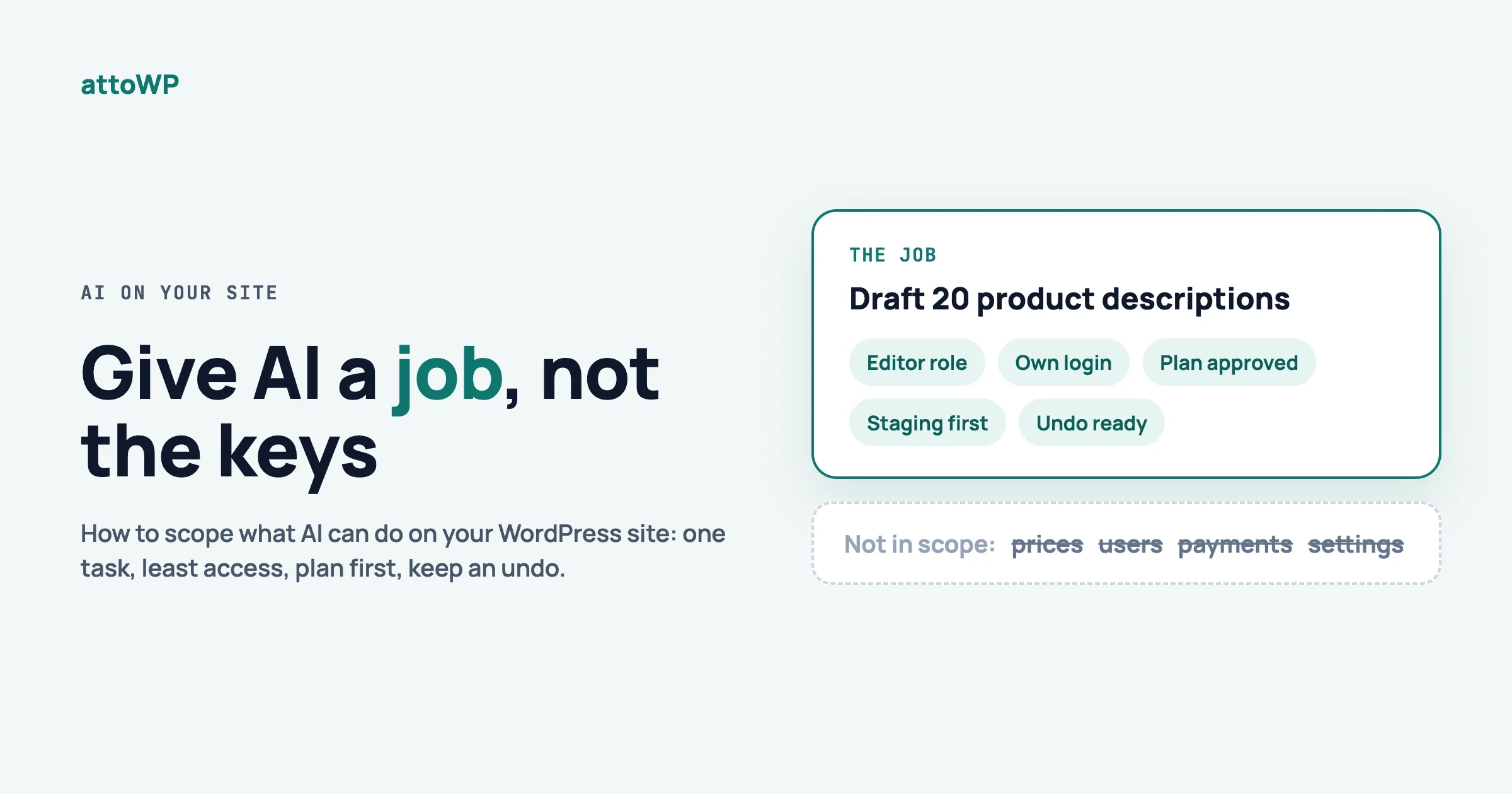
A five-step way to scope what AI can do on your WordPress site: one written job, a limited user, plan before action, staging first, and an undo. Includes what WooCommerce and common plugins allow today.
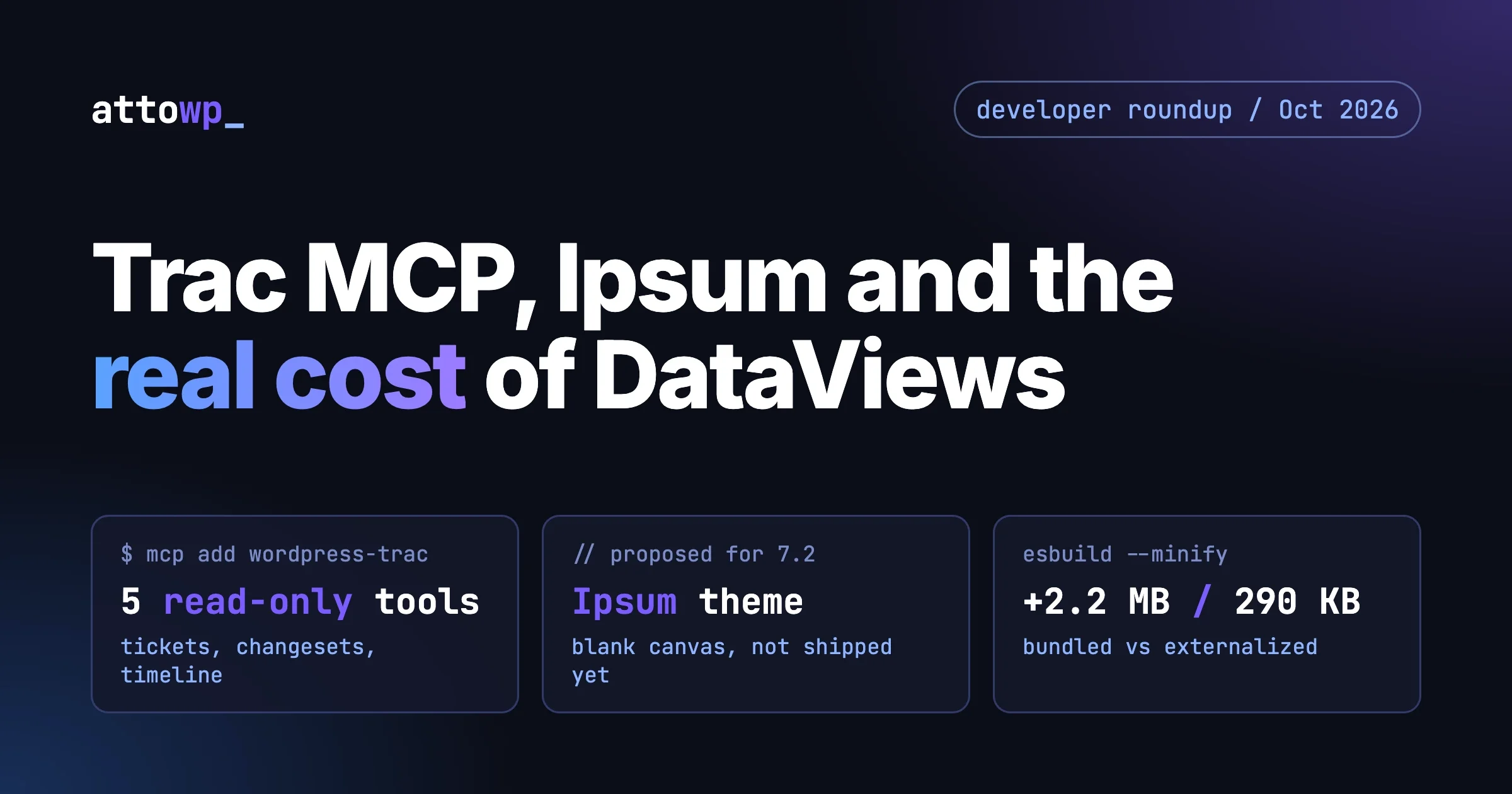
WordPress core Trac now has an MCP server, Ipsum is the proposed 7.2 default theme, and @wordpress/dataviews adds about 2.2 MB when fully bundled. What each means for developers, with the build measured.
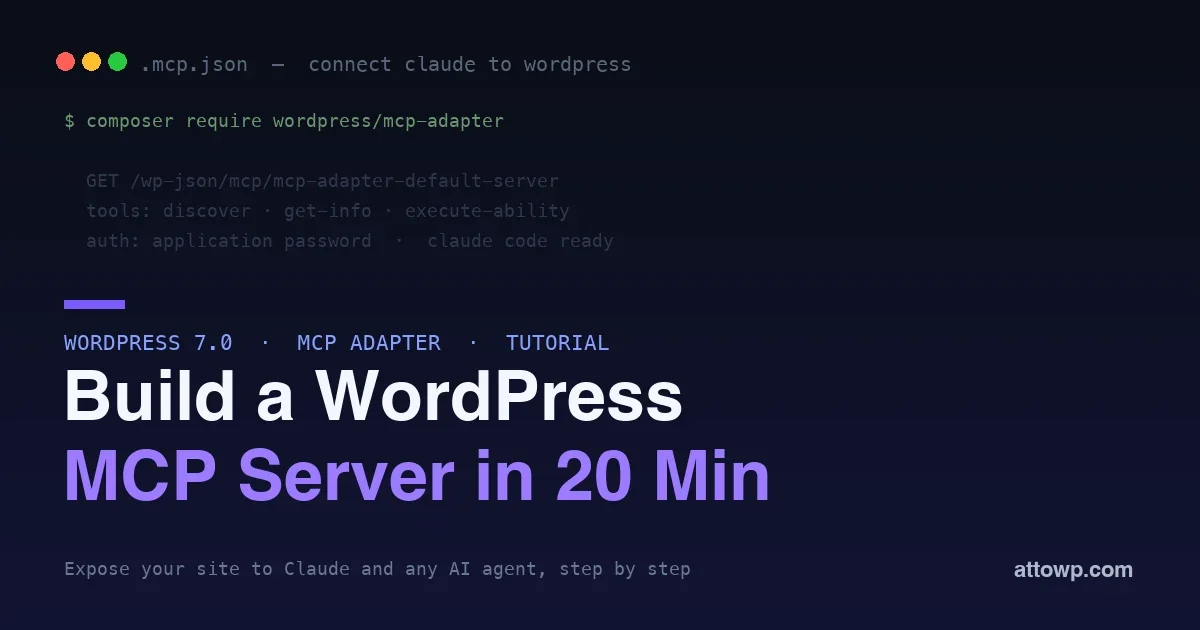
A hands-on tutorial: install the WordPress MCP Adapter, expose one Ability as an MCP tool, and connect Claude Code so an AI agent can discover and run your site's functionality - in about twenty minutes.
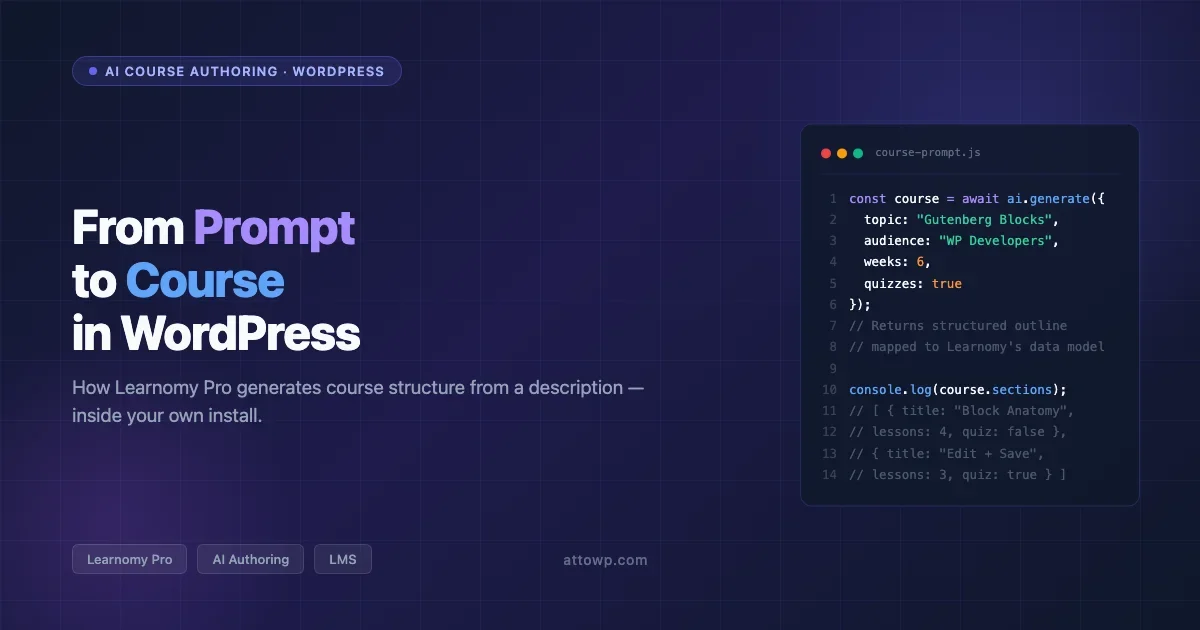
Learnomy Pro's AI Authoring generates course outlines from a prompt inside WordPress, so your course structure, student data, and payment records stay on your own infrastructure — accessible to AI agents via the REST API.
webMCP proposes turning websites into structured tool surfaces for AI agents instead of DOM-scraping targets. Here is what it means for WordPress: the opportunity, the attack surface, and a practical readiness checklist for developers.
The Model Context Protocol (MCP) defines how AI agents connect to external tools and data sources. This guide covers MCP client-server architecture, stdio vs SSE transport, building MCP servers, and WordPress use cases.