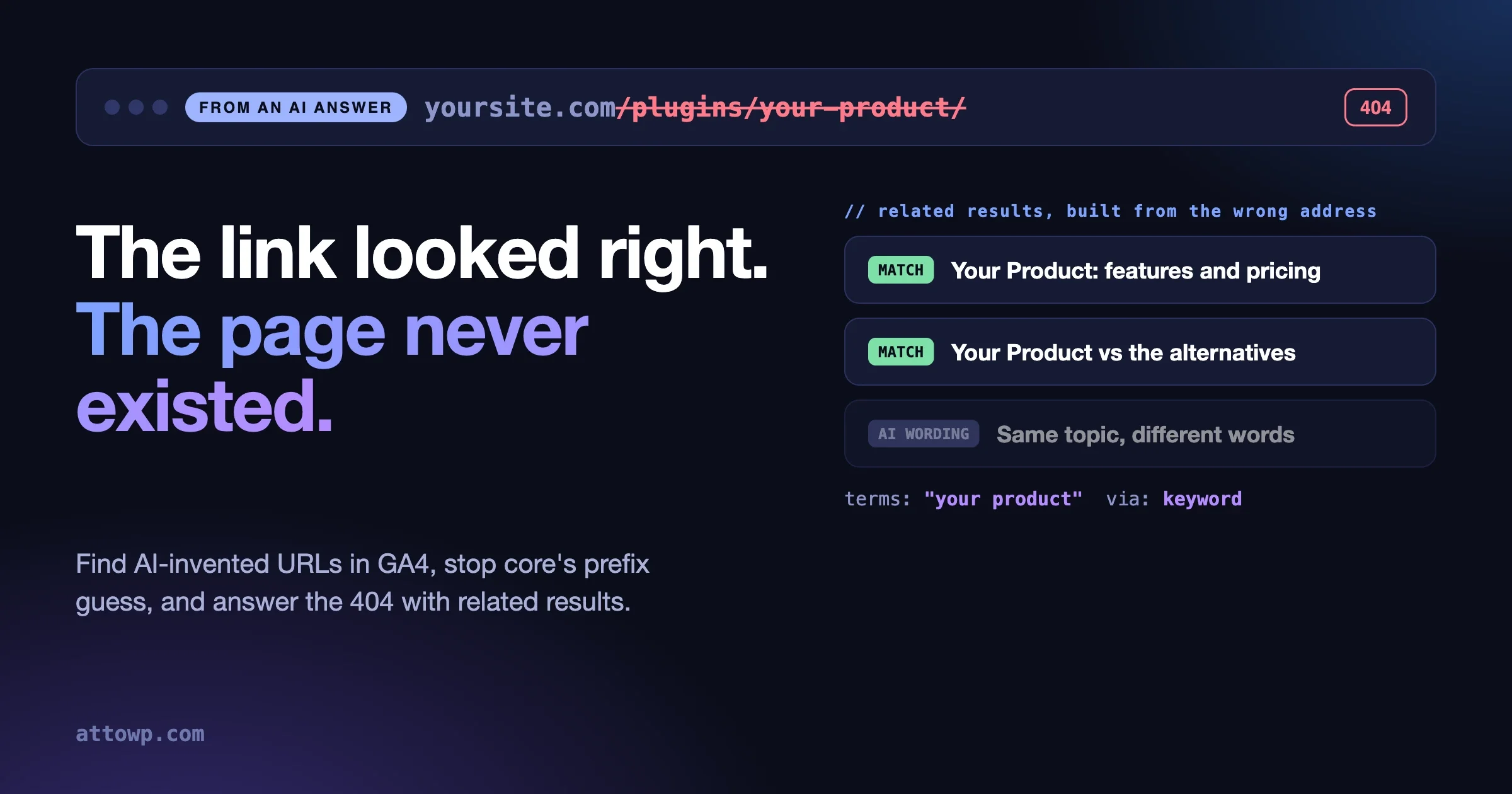
AI Assistants Send Wrong Links: Fix Your WordPress 404
AI assistants invent plausible URLs. Find them in GA4, stop core's loose 404 guess, and show related results with keyword search plus the AI Client.
AI assistants invent plausible URLs. Find them in GA4, stop core's loose 404 guess, and show related results with keyword search plus the AI Client.
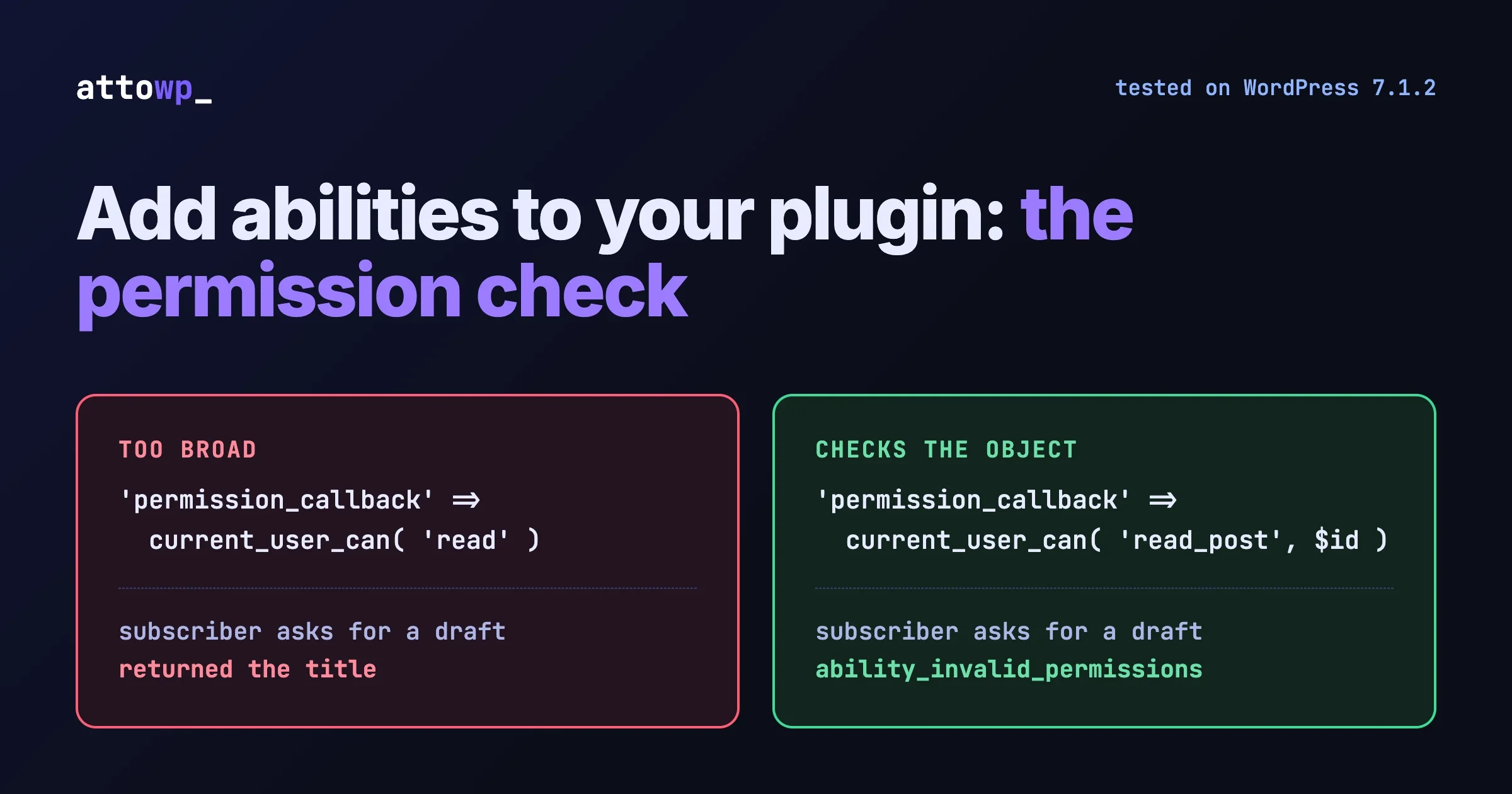
Register an ability with the WordPress Abilities API: a tested example, the permission callback mistake shown with real output, and what to return.
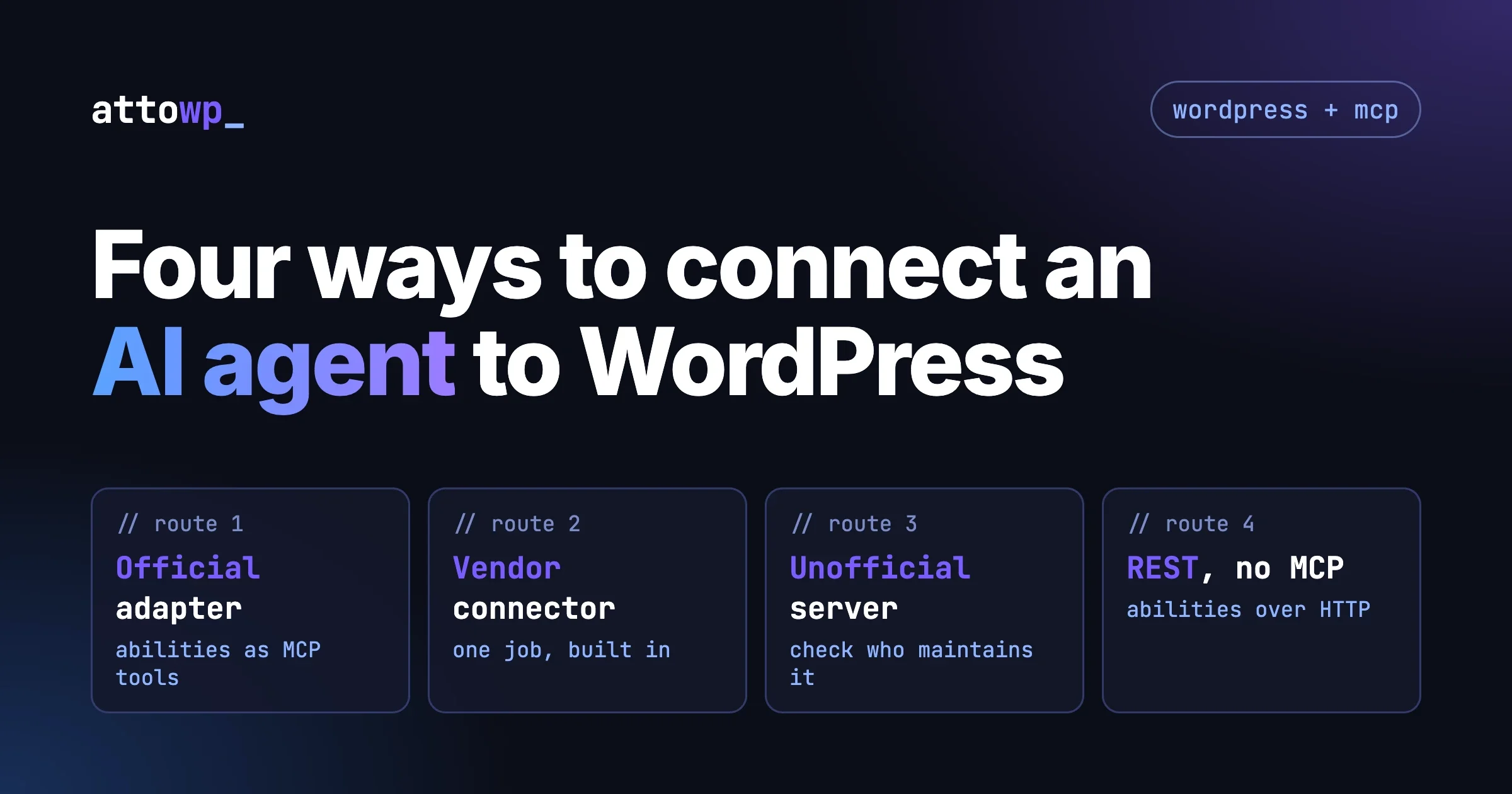
WordPress MCP compared: the official MCP Adapter, Elementor MCP, unofficial servers and the Abilities REST API, plus a rule for choosing.
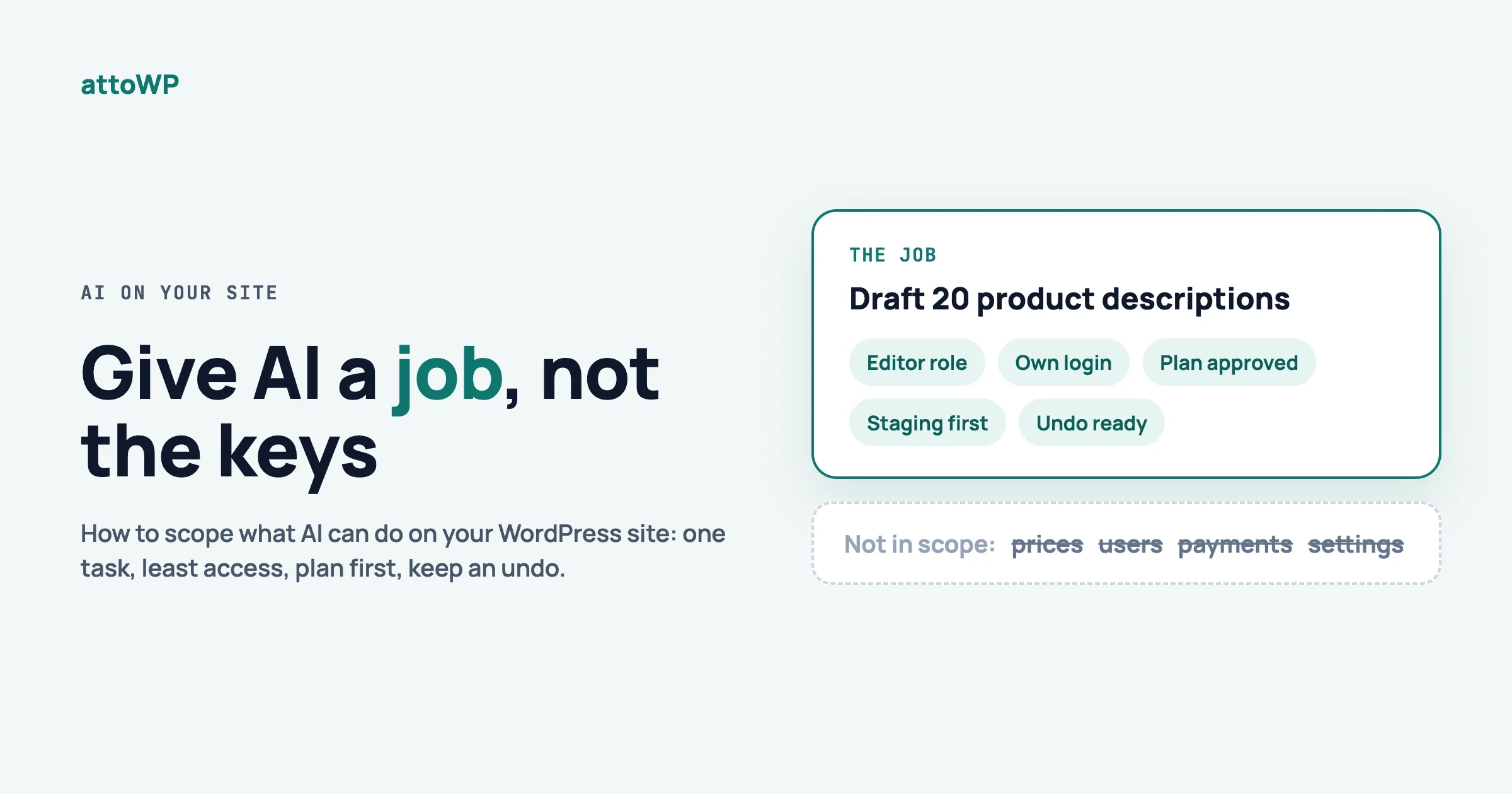
A five-step way to scope what AI can do on your WordPress site: one written job, a limited user, plan before action, staging first, and an undo. Includes what WooCommerce and common plugins allow today.
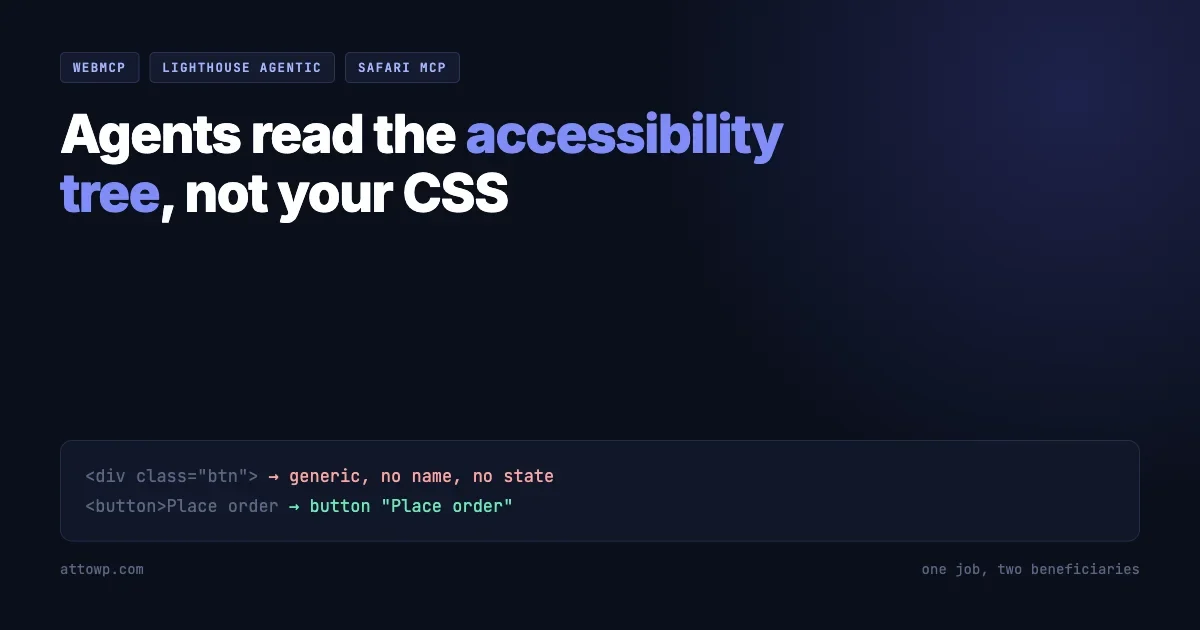
Chrome opened a WebMCP origin trial and shipped Lighthouse agentic audits. Safari shipped an MCP server. The line buried in Chrome's docs that matters most: agents use the accessibility tree as their primary data model.
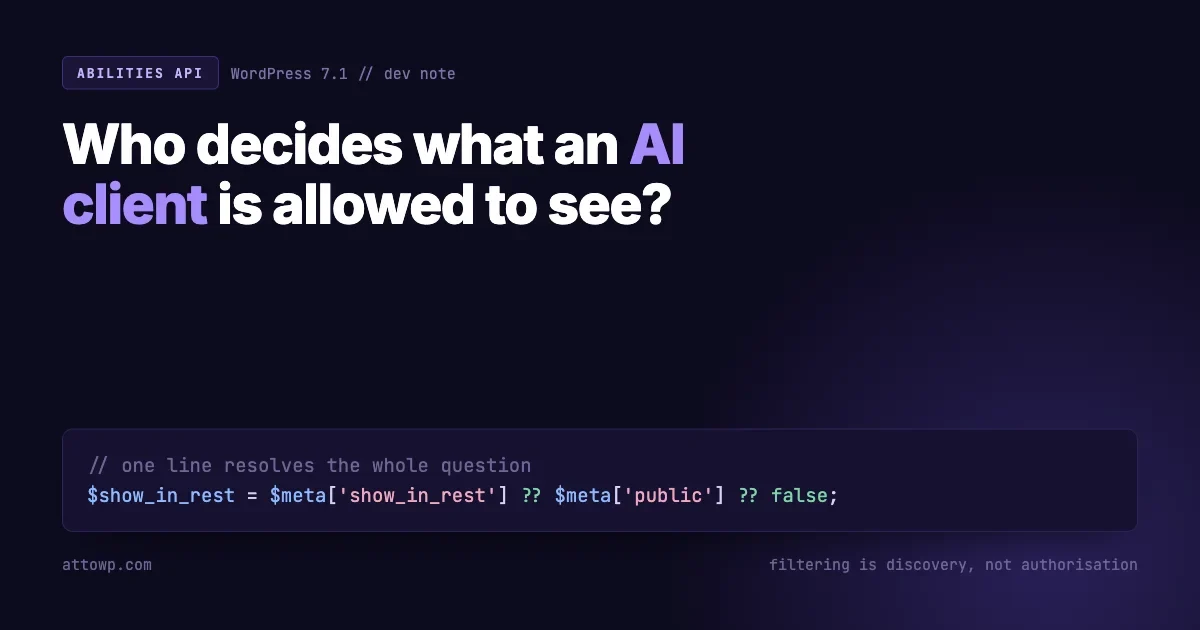
WordPress 7.1 adds a unified public exposure flag and a shared filtering pipeline to wp_get_abilities(). The resolution order, the two callbacks, the two global filters, the REST metadata trap, and why filtering is discovery and not authorisation.
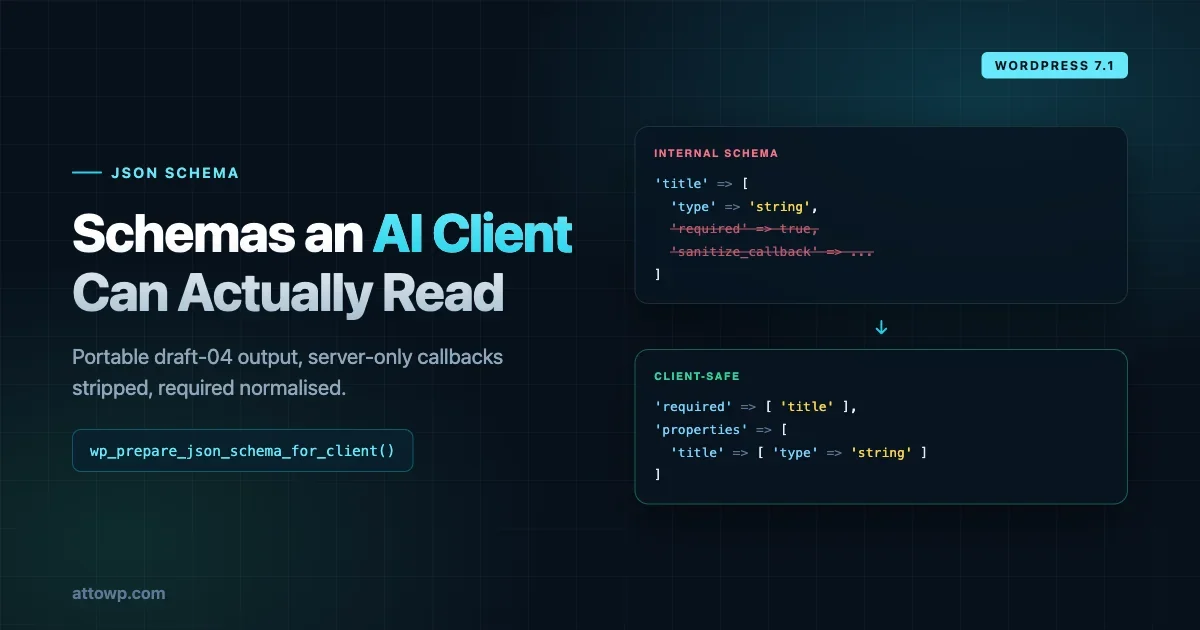
WordPress 7.1 adds wp_prepare_json_schema_for_client(), turning internal schemas into portable draft-04 output. What it strips, the two profiles, and the Abilities API changes that ship alongside it.
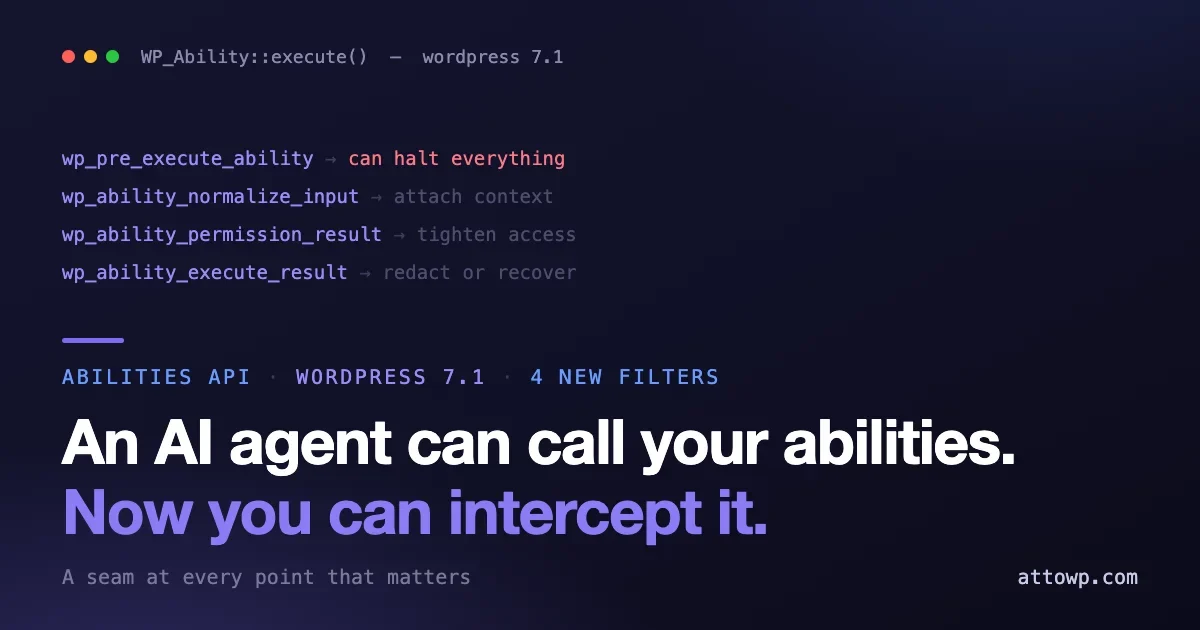
WordPress 7.1 adds four filters around the Abilities API execution pipeline, so you can short-circuit a call, enrich its input, override the permission result, or transform what comes back. What each one is, where it fires, and the patterns that matter once an AI agent is the caller.
A hands-on tutorial: install the WordPress MCP Adapter, expose one Ability as an MCP tool, and connect Claude Code so an AI agent can discover and run your site's functionality - in about twenty minutes.
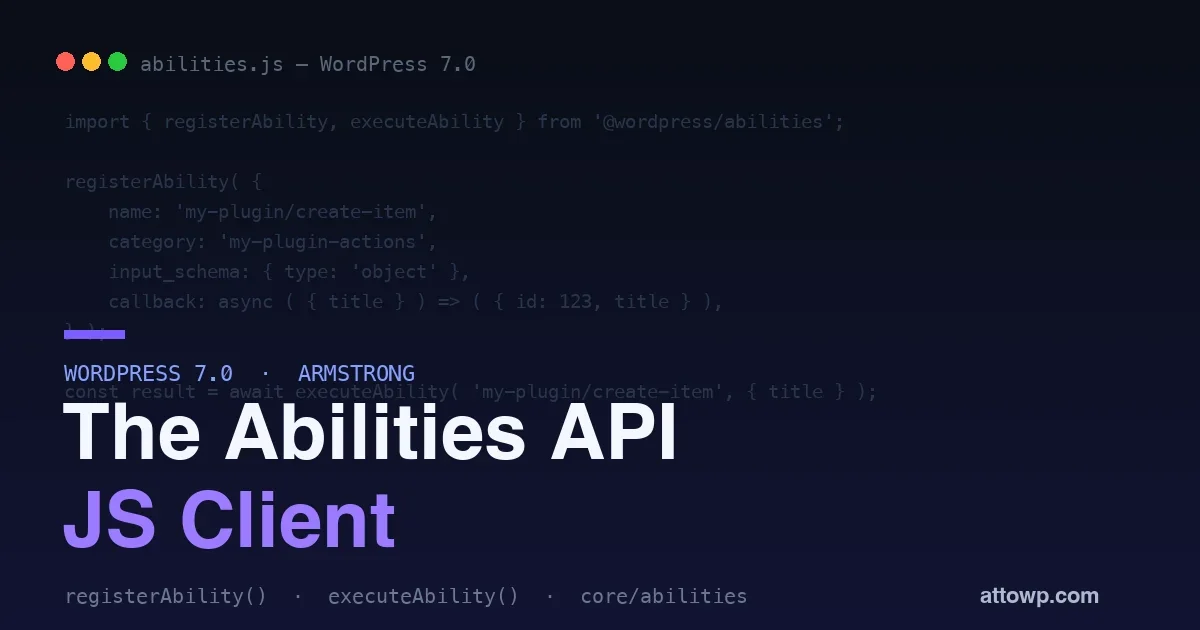
WordPress 7.0 'Armstrong' shipped the client-side Abilities API. Here is what @wordpress/abilities and @wordpress/core-abilities let you build - registering, executing, and querying AI-ready abilities in JavaScript, with real code.
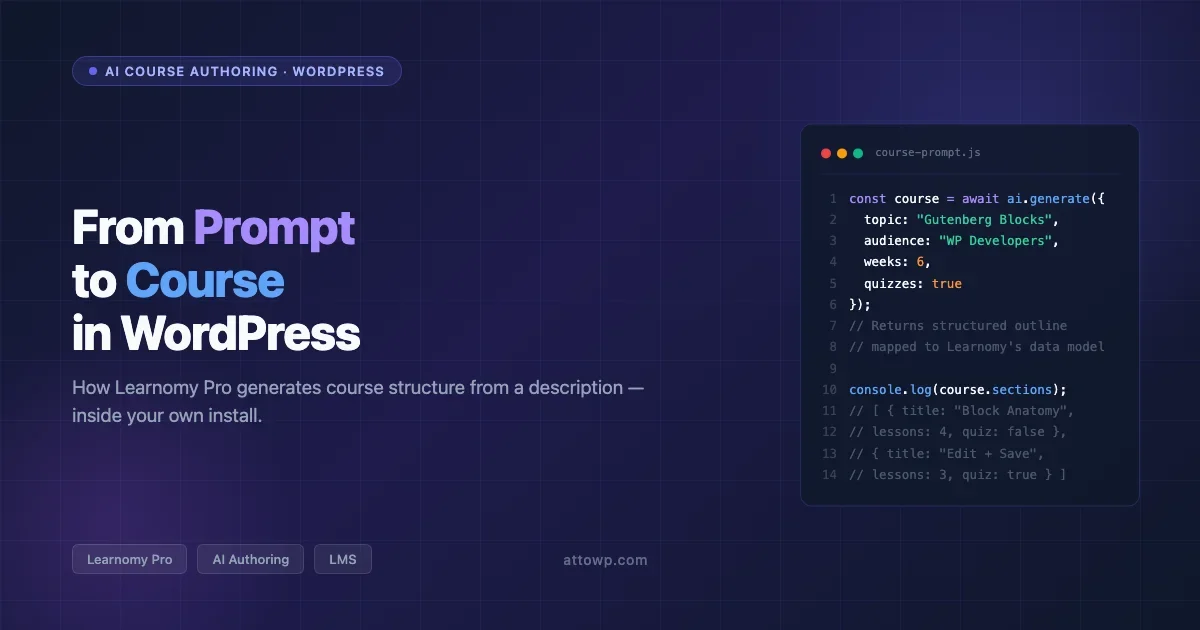
Learnomy Pro's AI Authoring generates course outlines from a prompt inside WordPress, so your course structure, student data, and payment records stay on your own infrastructure — accessible to AI agents via the REST API.
A practical CI/CD pipeline for WordPress with GitHub Actions, covering PHPCS linting, PHPUnit tests, SSH-based deployment, WP-CLI remote commands, staging to production promotion, and secrets management.

Automattic shipped an entire AI stack in under two months: OAuth 2.1 for agents, MCP Adapter, Claude Connector, Cowork plugin, AI Assistant, and a WP AI Client proposal for WordPress 7.0. Here is everything that landed and what it means for developers.
WordPress AI plugins are vulnerable to prompt injection attacks. Learn real attack scenarios from a 2026 IEEE study, OWASP mitigation strategies with PHP code examples, and a complete security checklist for LLM-powered plugins.
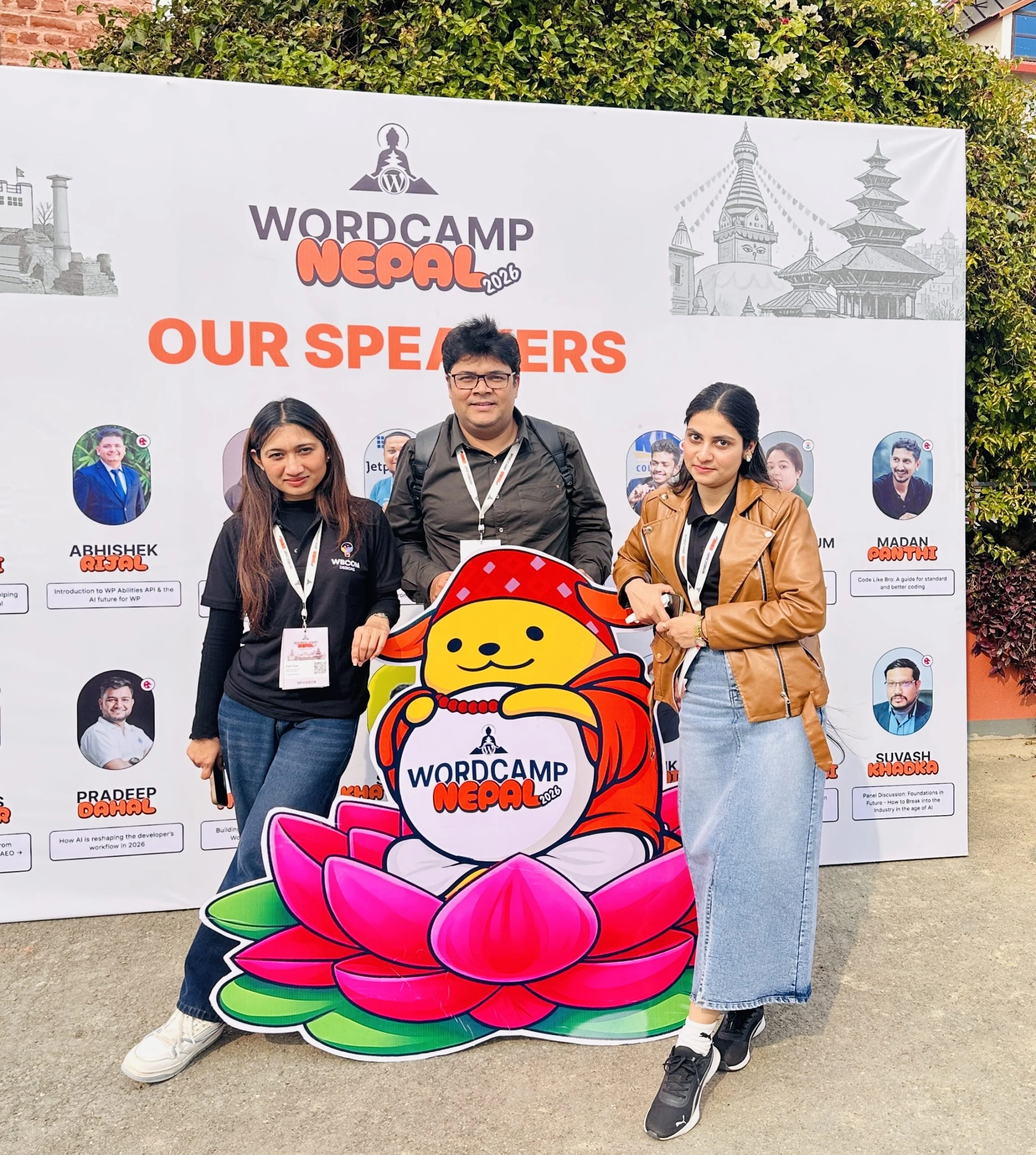
A first-hand account of attending WordCamp Nepal 2026 as a Wbcom Designs project manager - Contributor Day sessions, talks, and takeaways from a local WordPress community event.
The definitive headless WordPress guide for 2026. Learn how to build decoupled WordPress sites with Next.js 15, Astro 5, WPGraphQL 2.x, edge rendering, WordPress 7.0 Abilities API, and AI-powered content pipelines via MCP adapters. Includes step-by-step code examples, framework comparisons, deployment architecture, and FAQ schema.