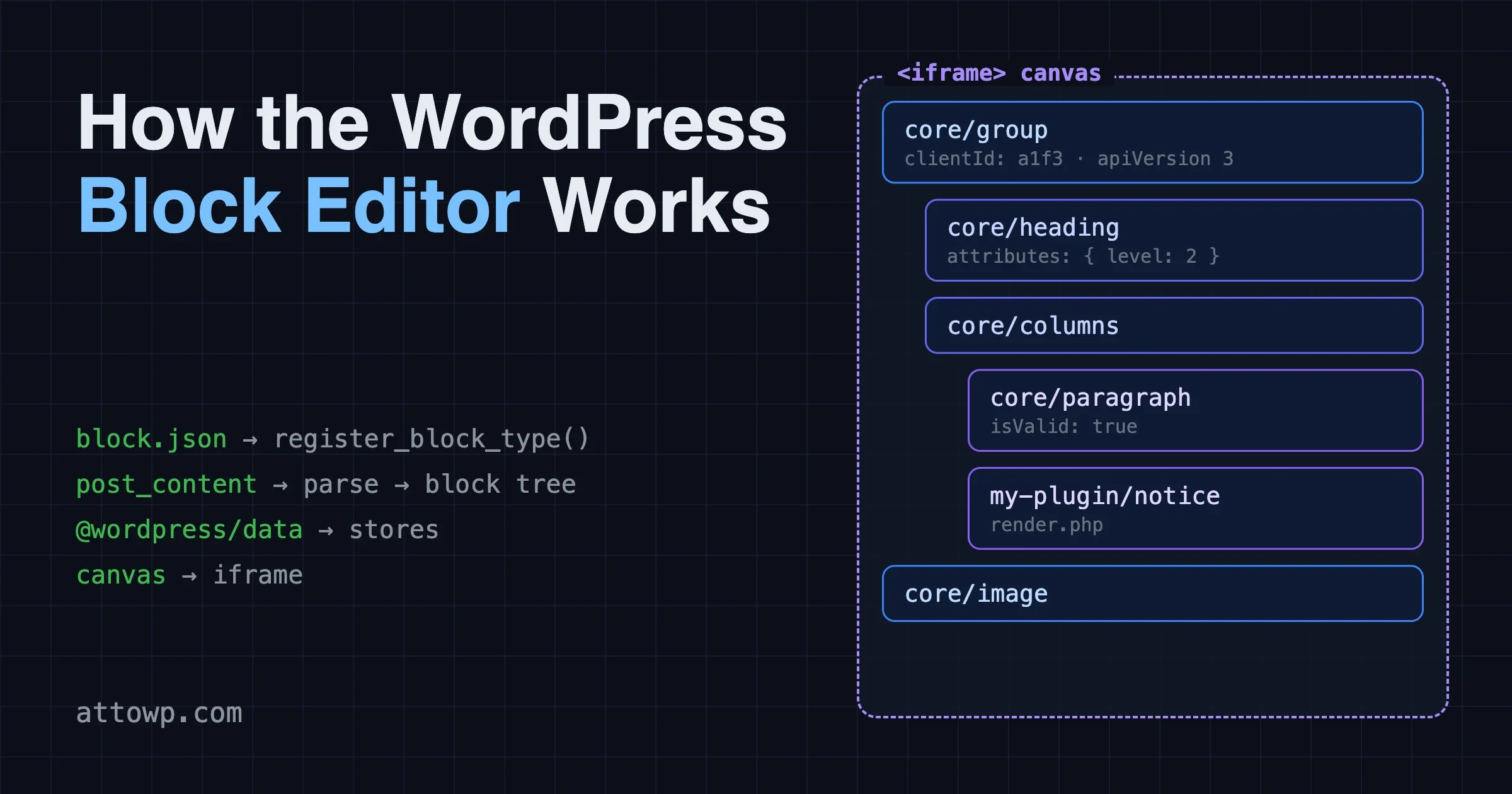
How the WordPress Block Editor Works: block.json, Data Stores and the Iframed Editor
How the WordPress block editor works: block.json, the parser, data stores and core data, and why the canvas now always runs in an iframe from WordPress 7.1.
How the WordPress block editor works: block.json, the parser, data stores and core data, and why the canvas now always runs in an iframe from WordPress 7.1.
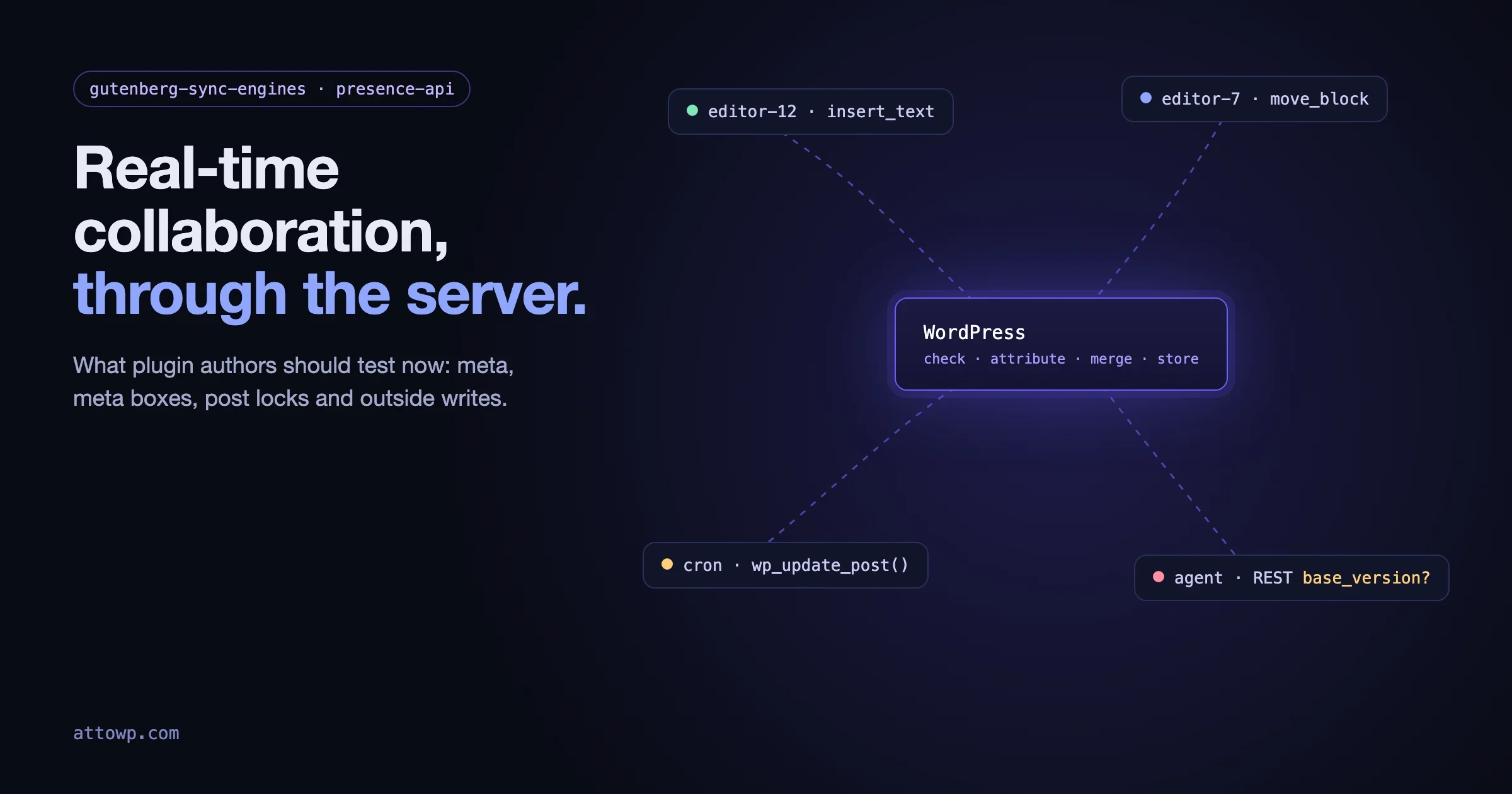
Real-time collaboration is not in WordPress 7.2, but it is being rebuilt to run through the server, and the candidate sync engines and the Presence API are testable now. A ten-point test list for plugin authors: post types, meta, meta boxes, post locks, outside writes and save hooks.
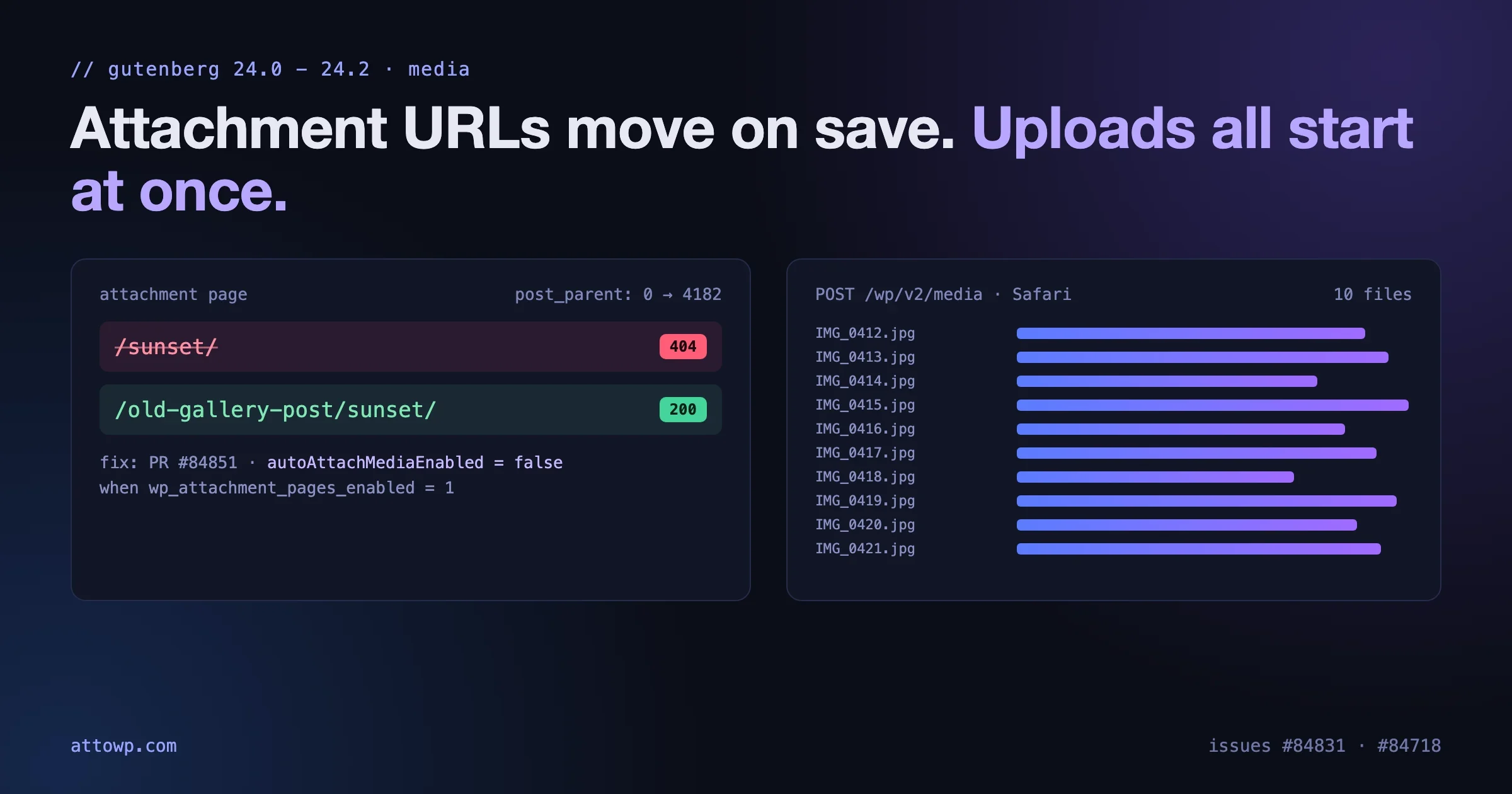
Gutenberg 24.0 started attaching media on save, which moves attachment page URLs on older sites and leaves 404s. Multi-file uploads also go out all at once in Safari and Firefox. What changed, who is affected, and the fixes to apply now.
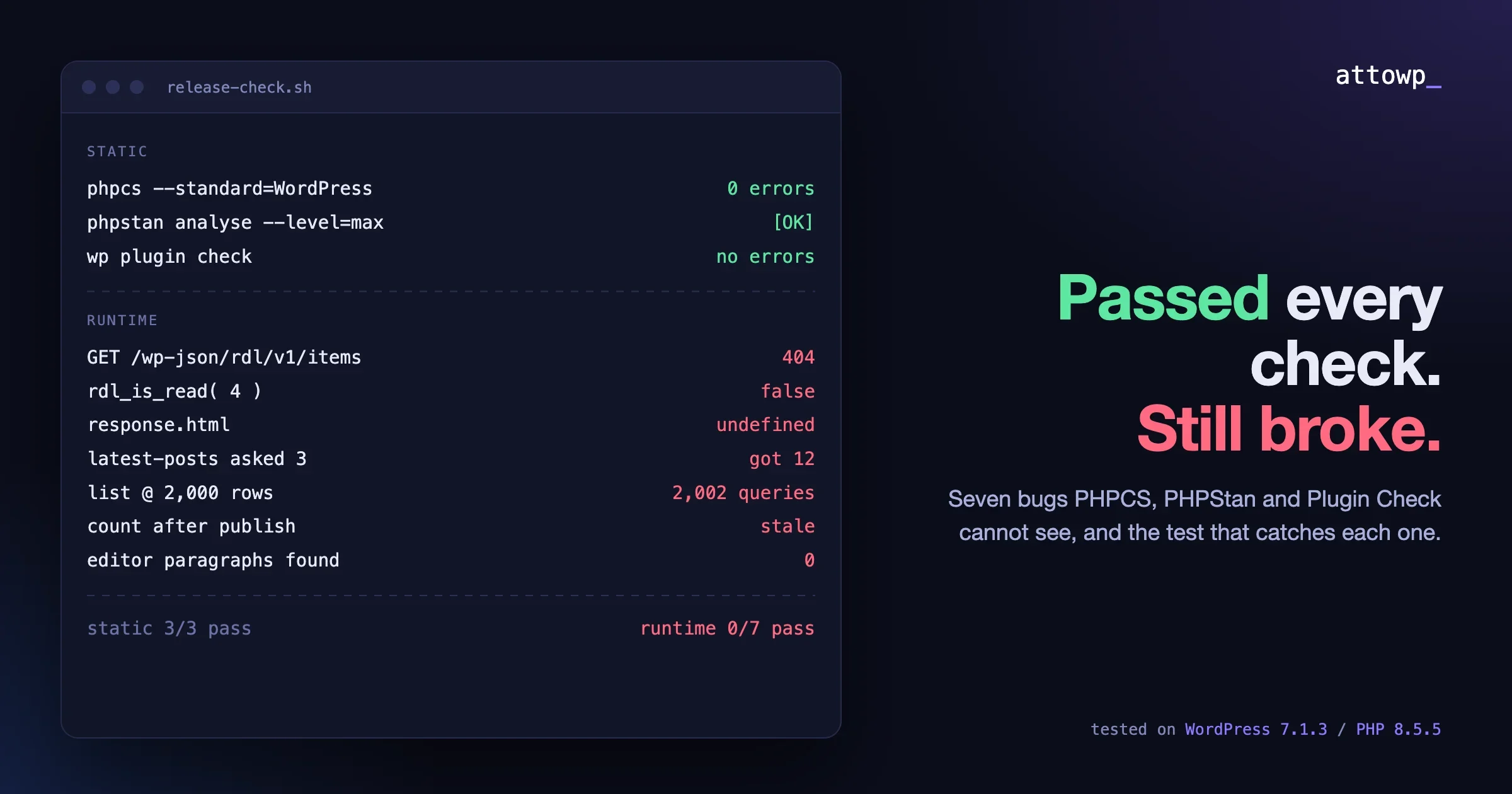
WordPress plugin testing beyond static checks: a demo plugin with seven bugs passed PHPCS, PHPStan at level max and Plugin Check. Each bug in a real request, and the test that catches it.
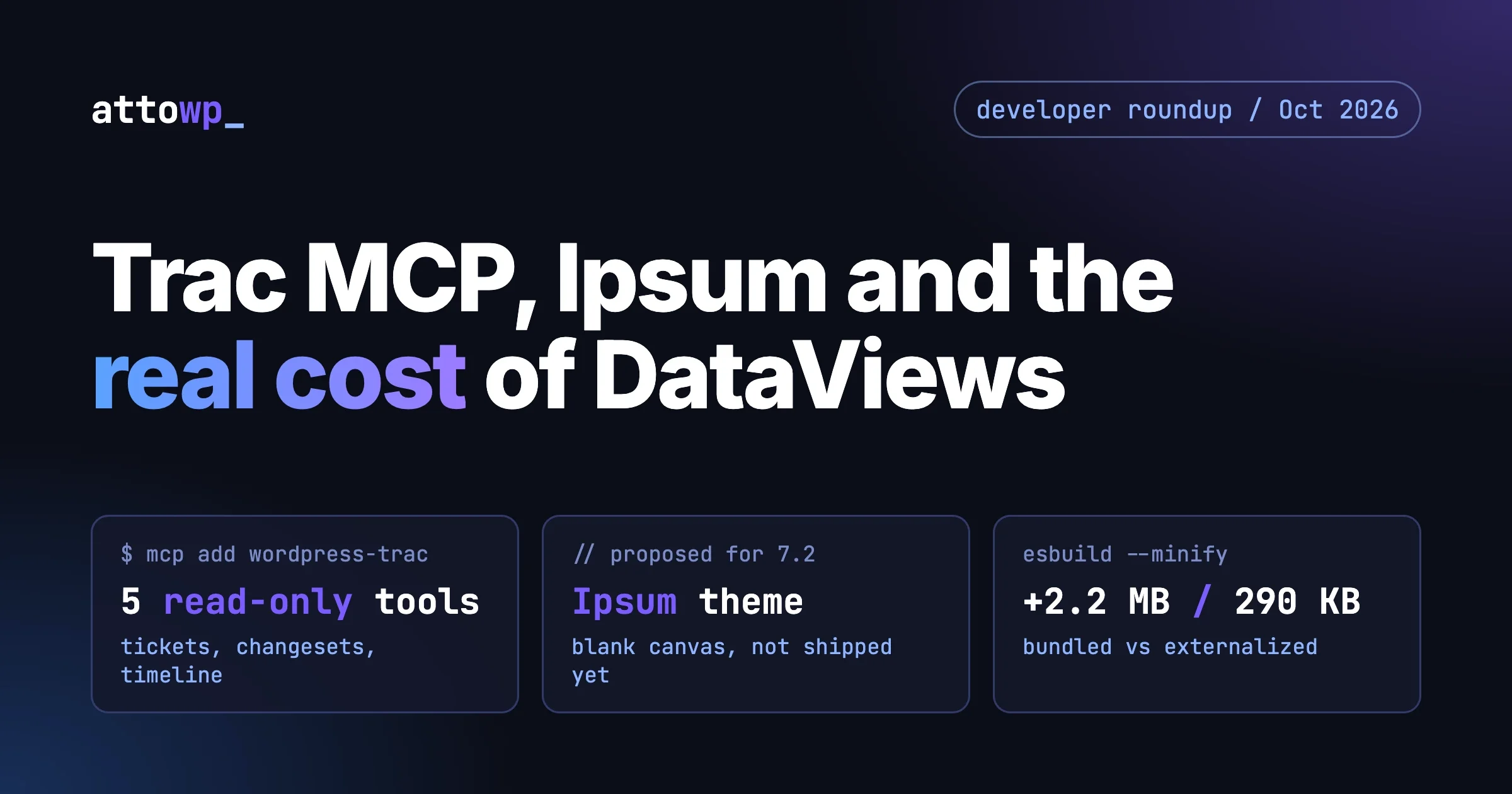
WordPress core Trac now has an MCP server, Ipsum is the proposed 7.2 default theme, and @wordpress/dataviews adds about 2.2 MB when fully bundled. What each means for developers, with the build measured.
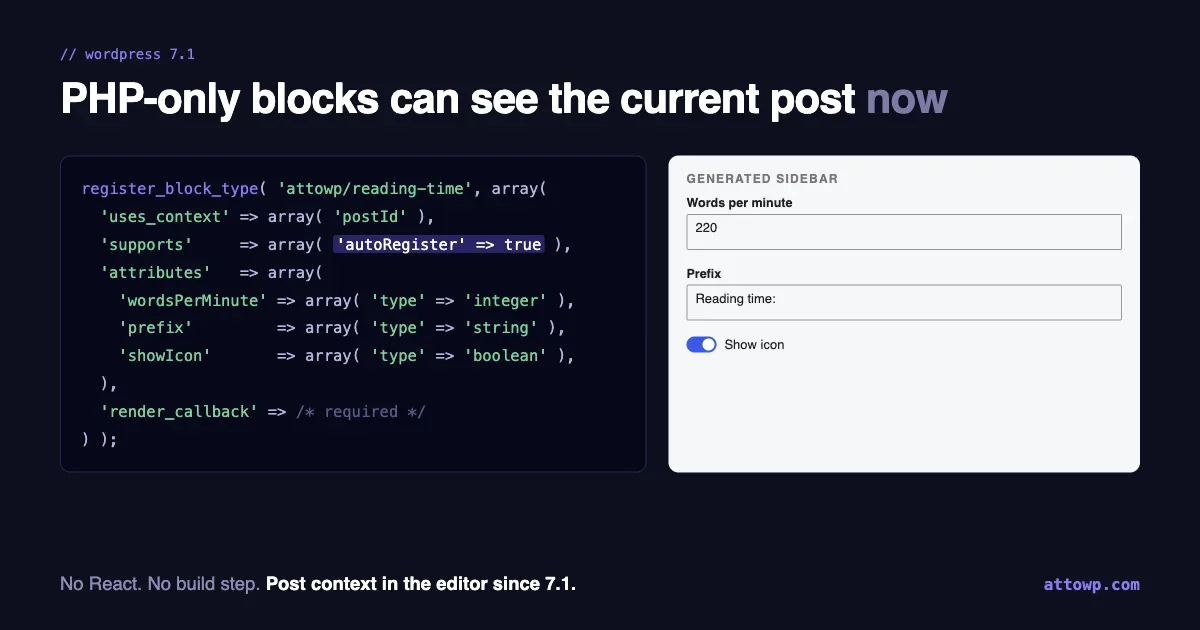
WordPress 7.1 fixed the biggest limitation of PHP-only block registration: the editor preview now knows which post it is on. The exact rules core applies to autoRegister blocks, the failures that produce no error, and when you still need React.
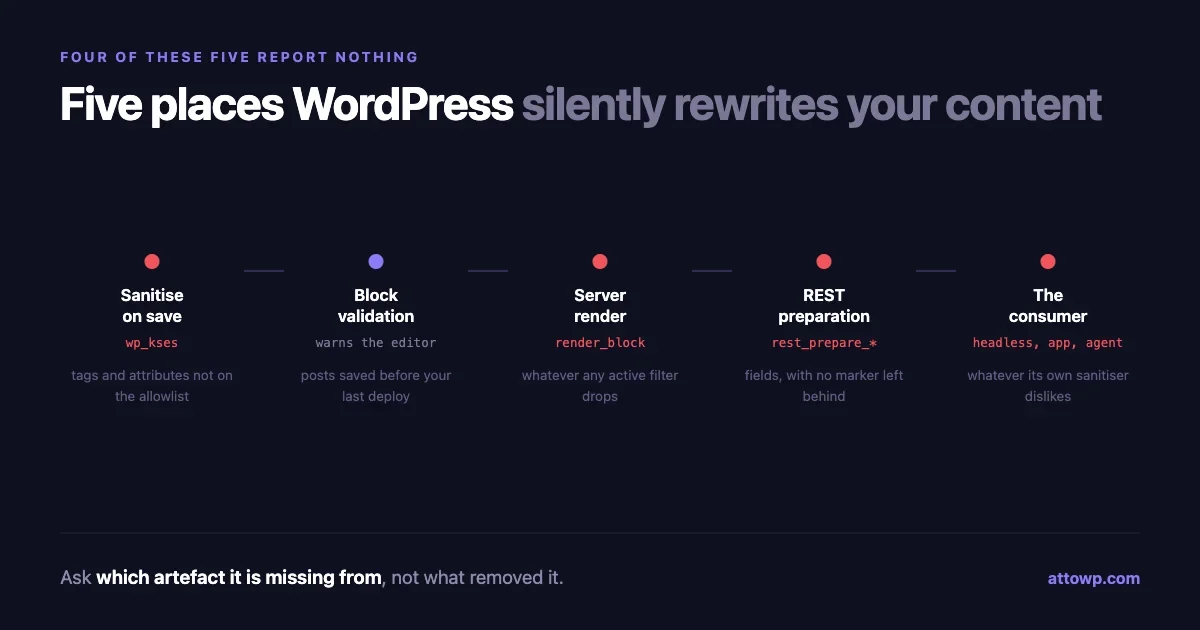
Content changes shape at five boundaries between save and render, and four of them report nothing. A map of what each one removes, plus a four-command diff harness that identifies the responsible boundary in a minute.
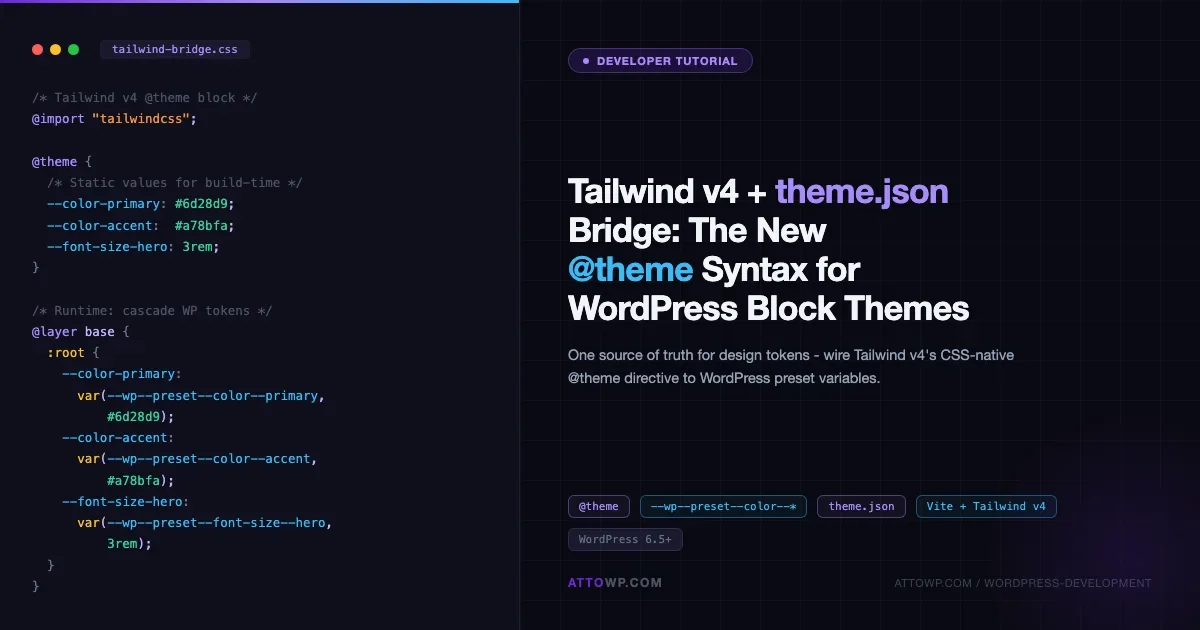
Wire Tailwind v4's CSS-native @theme directive to WordPress theme.json design tokens for a shared design token system in WordPress block themes.
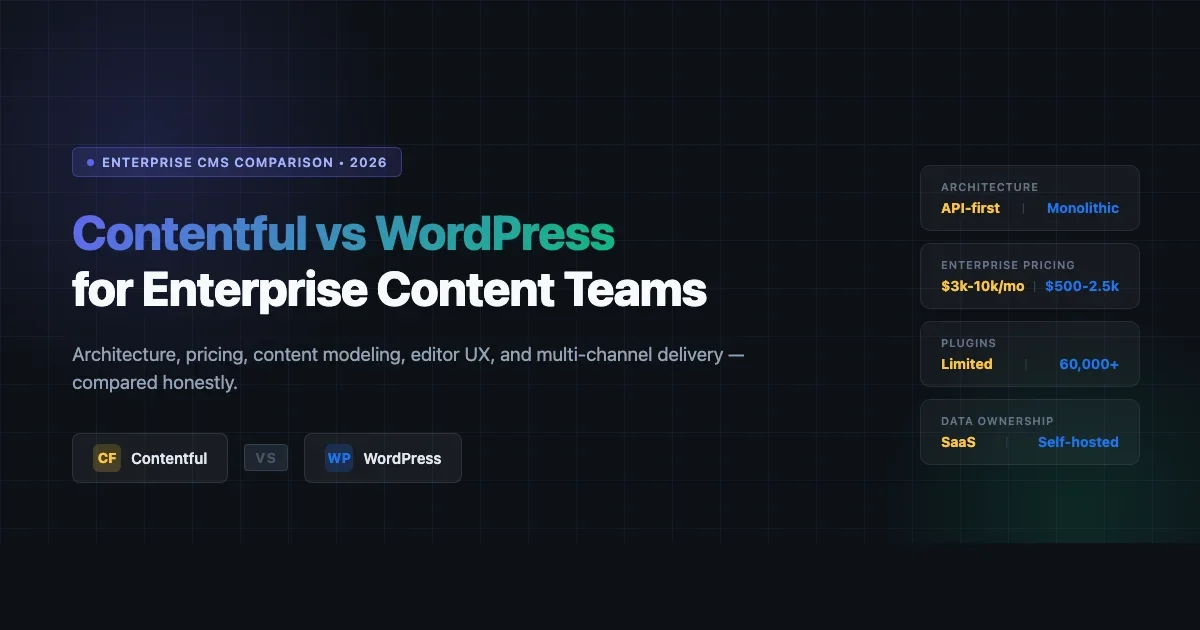
Choosing between Contentful and WordPress in 2026 depends on your architecture needs, team size, and budget. This comparison covers API-first vs monolithic CMS design, content modeling, editor UX, real pricing, multi-channel delivery, and a clear breakdown of when each platform wins for enterprise content teams.
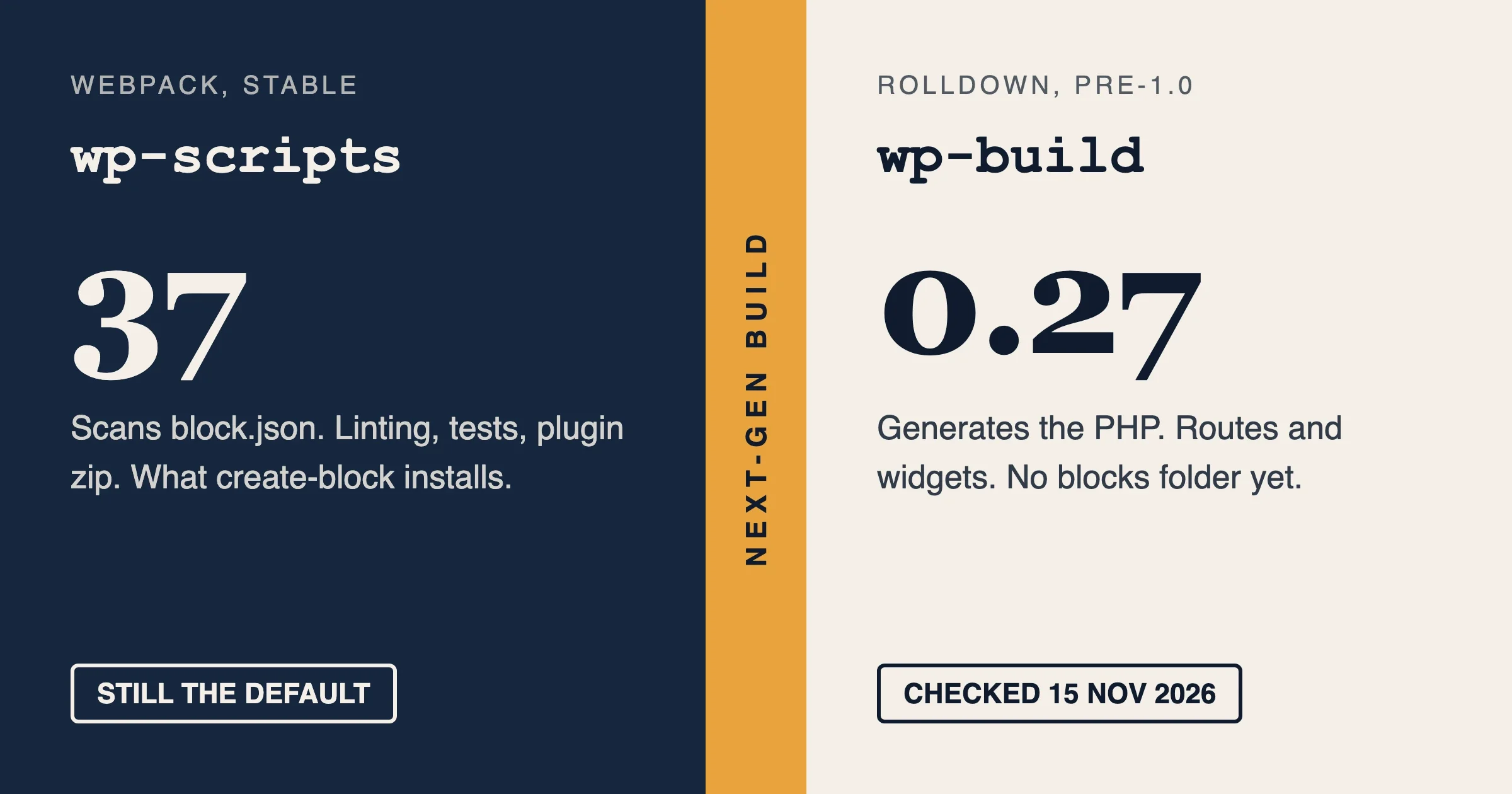
@wordpress/build is real (0.27.0) but does not replace @wordpress/scripts yet. What it does, what it lacks for blocks, and common mistakes, checked 15 Nov 2026.
<p>How React actually works inside WordPress, building Gutenberg blocks with @wordpress/scripts, creating admin screens with @wordpress/components, state management with data stores, and when to reach for the Interactivity API instead.</p>
A practical developer guide to the wordpress block theme vs classic theme decision in 2026: theme.json architecture, template parts, block patterns, style variations, the migration path from classic PHP templates, and when classic themes still make sense.
Compare the top CSS frameworks for WordPress development in 2026. From Tailwind CSS utility classes to Bootstrap components and modern vanilla CSS with custom properties, find the right approach for your next project.
Build a complete WordPress site using only core features. Learn how FSE, theme.json, block patterns, and template parts make plugin-free sites viable.

Complete WooCommerce setup guide for 2026. Step-by-step installation, payment gateways, HPOS, block checkout, FSE customization, performance optimization, and security best practices.
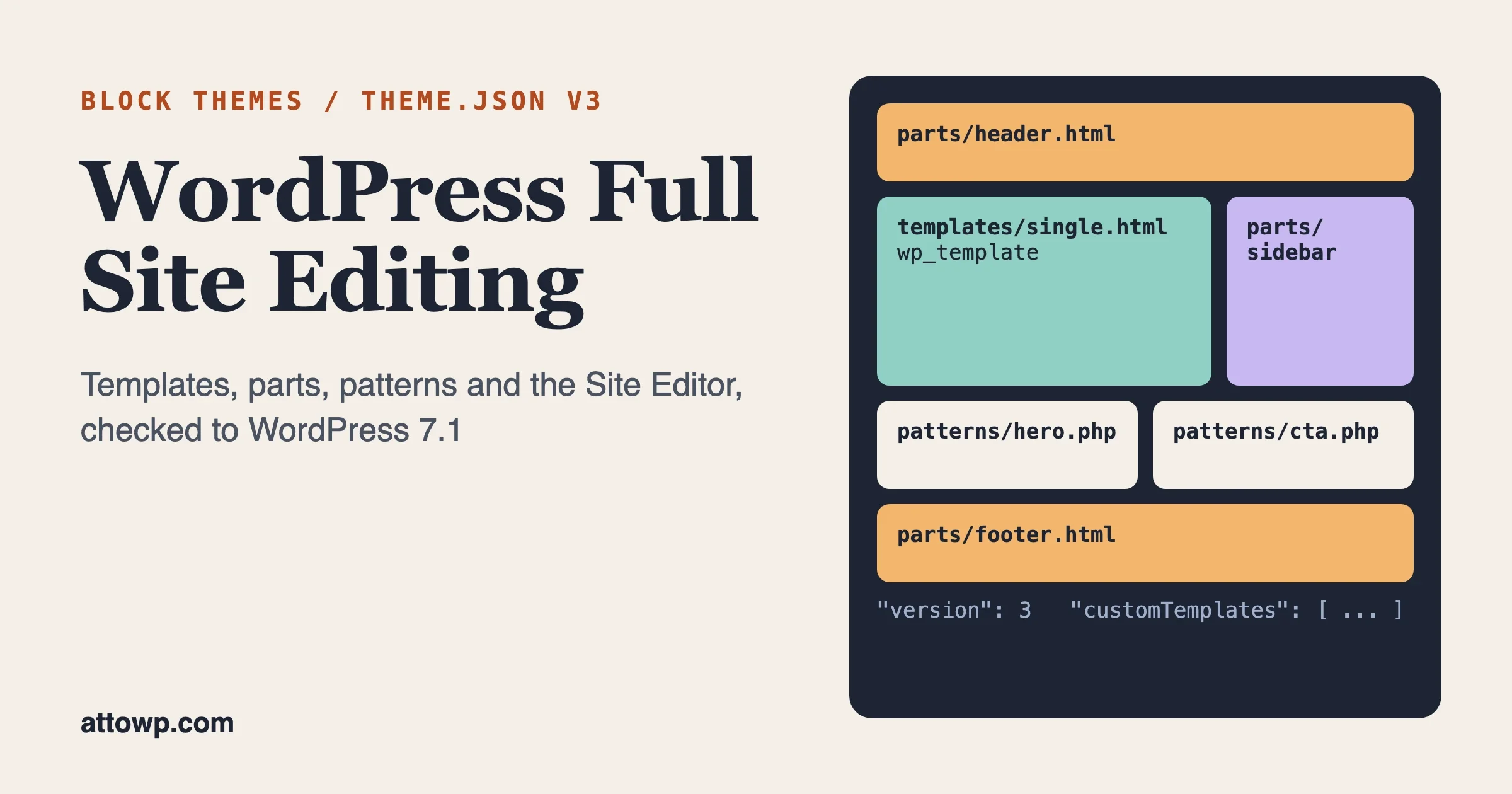
Block themes, theme.json version 3, templates, wp_template post types, custom templates by post type, patterns and Site Editor changes to WordPress 7.1.
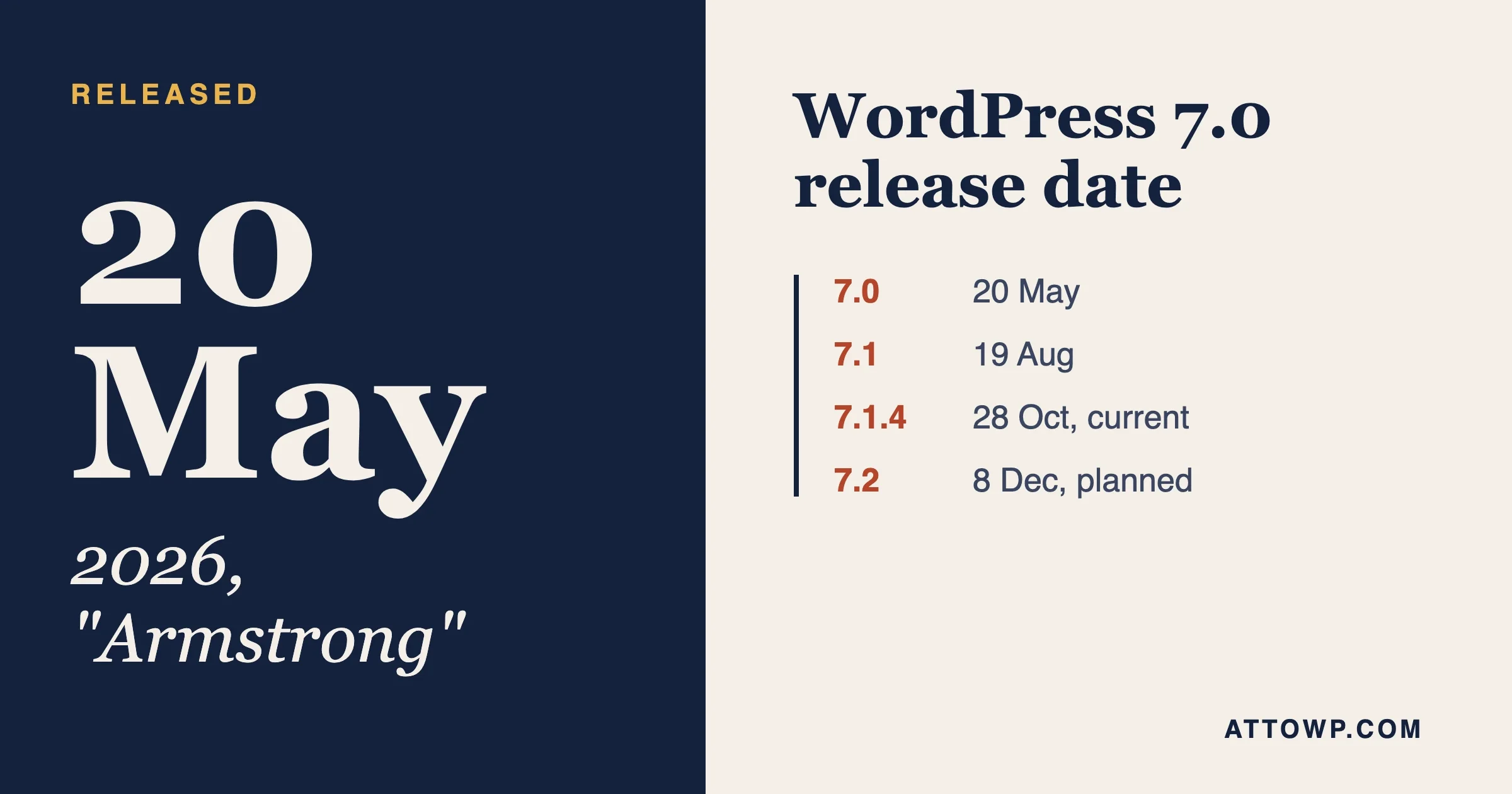
WordPress 7.0 Armstrong was released on 20 May 2026. What shipped, what was pulled, every release since, 7.2 on 8 December, and how to upgrade safely.
WordPress 6.8.2 maintenance release overview - 20 core bug fixes, 15 block editor improvements, and what site owners running 6.8 should know before updating.