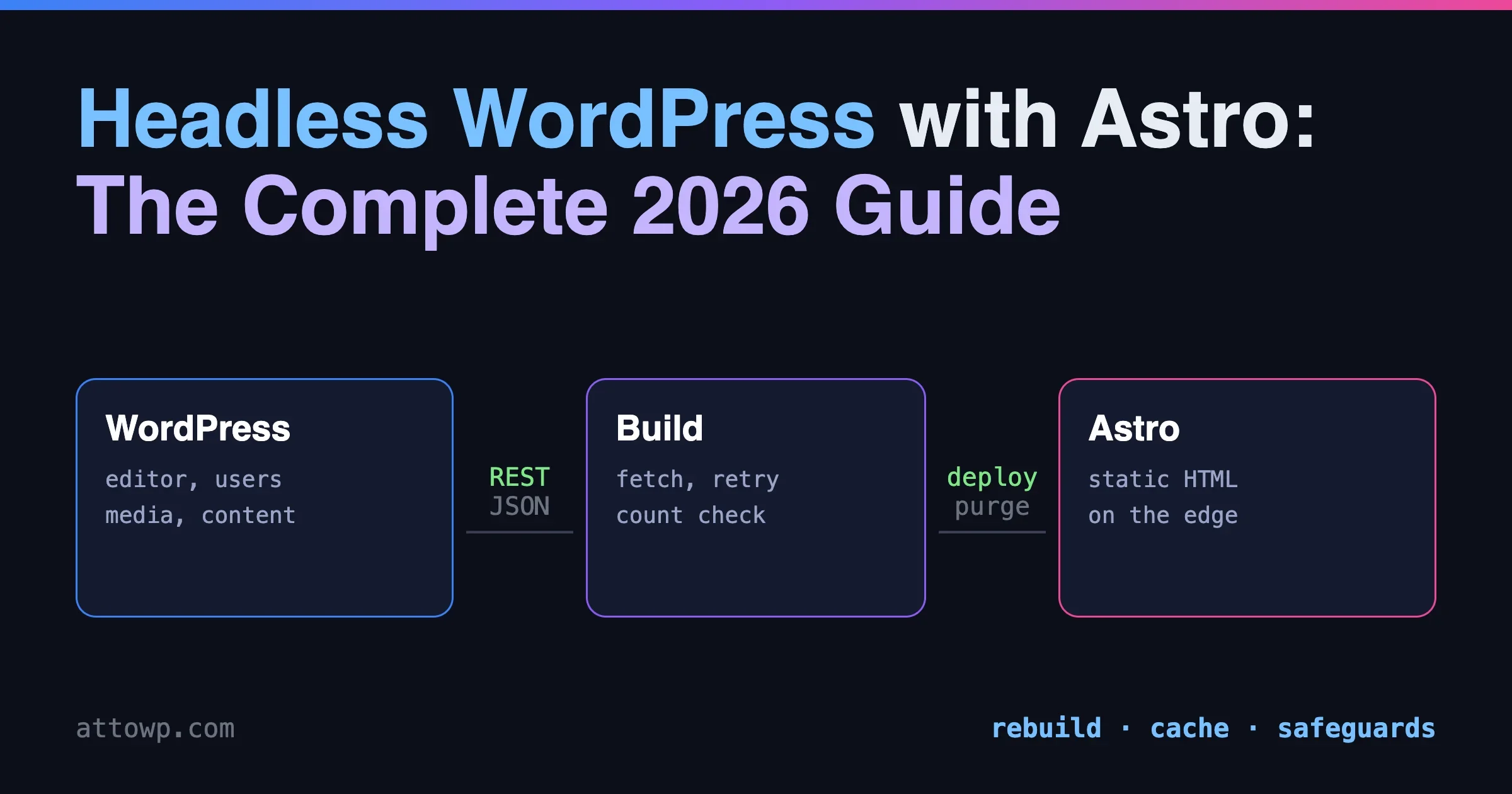
Headless WordPress with Astro: The Complete 2026 Guide
Headless WordPress with Astro, from sites we run: two build patterns, fetching that never ships an empty blog, rebuild triggers and the caches that go stale.
Headless WordPress with Astro, from sites we run: two build patterns, fetching that never ships an empty blog, rebuild triggers and the caches that go stale.
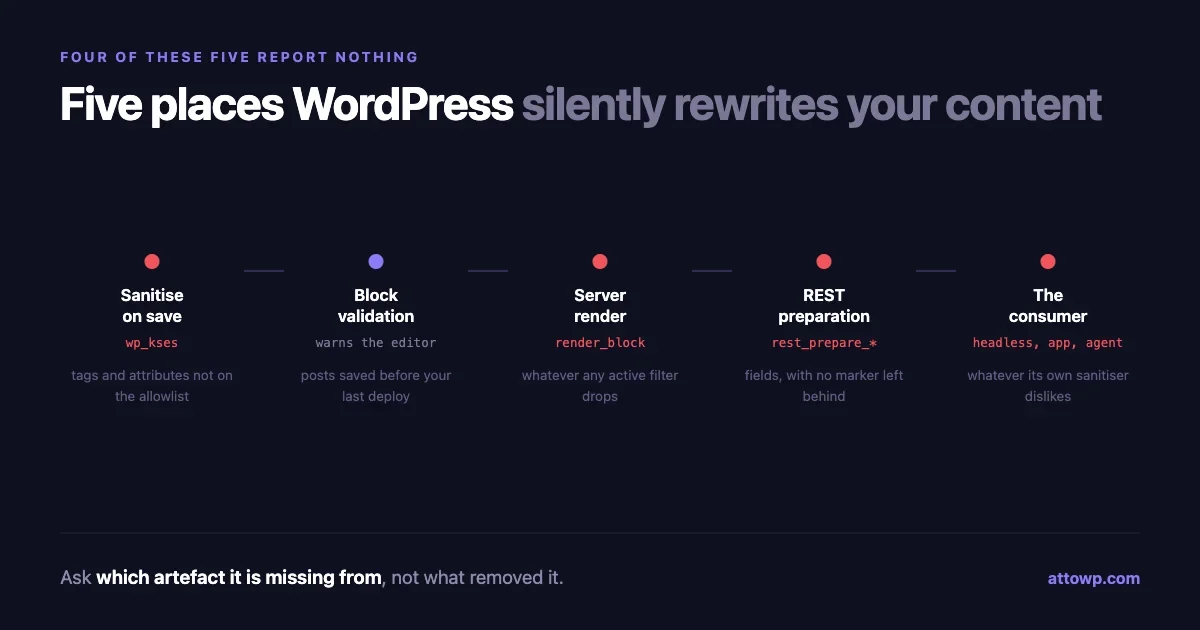
Content changes shape at five boundaries between save and render, and four of them report nothing. A map of what each one removes, plus a four-command diff harness that identifies the responsible boundary in a minute.
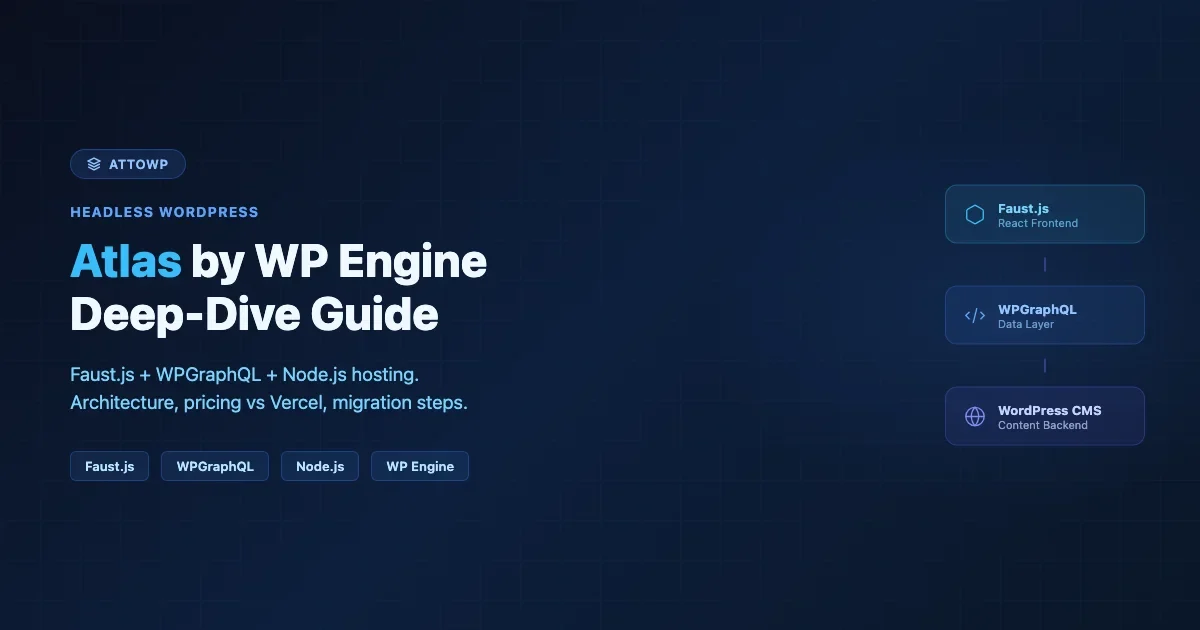
WP Engine Atlas bundles managed Node.js hosting, Faust.js, and WP GraphQL into one headless WordPress platform. This guide covers the architecture, pricing vs self-hosting, migration steps, and when Atlas makes sense over a DIY Vercel stack.
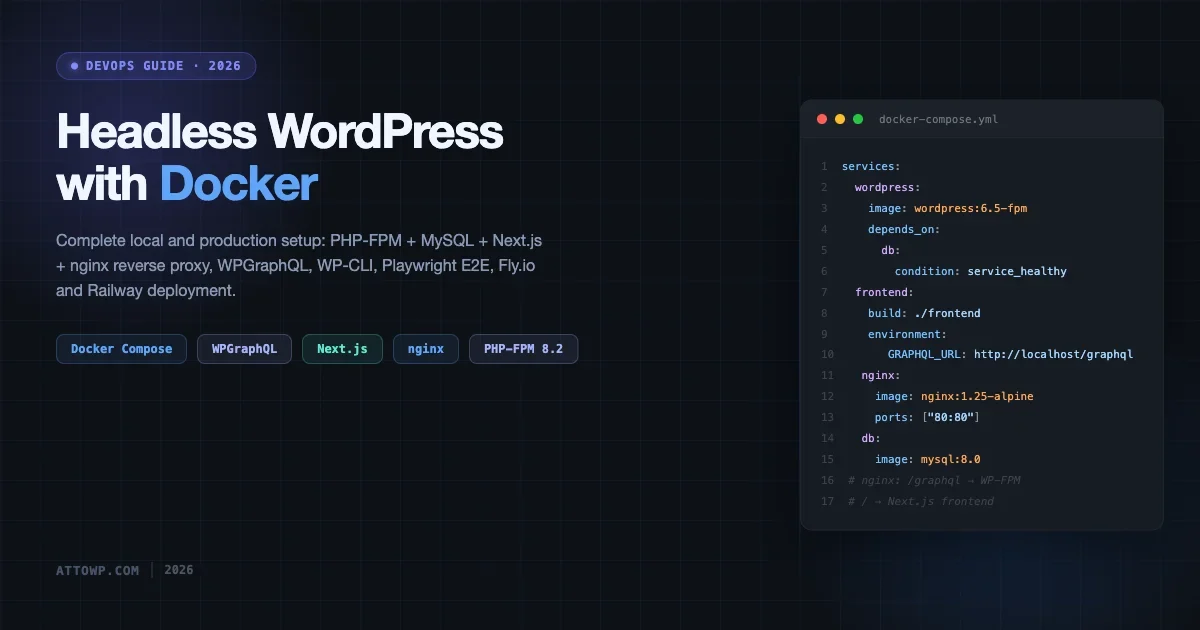
Complete guide to running WordPress as a headless CMS with Docker. Covers docker-compose.yml, WPGraphQL, nginx routing, WP-CLI, Playwright E2E, and production deployment on Fly.io, Railway, and VPS.
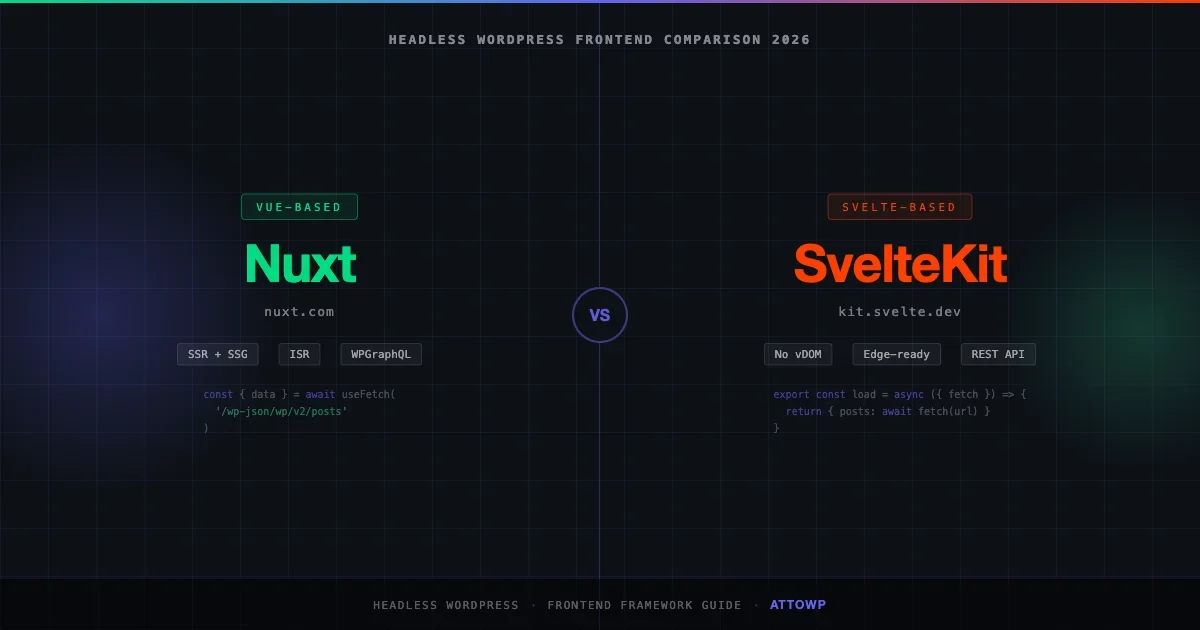
Nuxt vs SvelteKit for headless WordPress in 2026: REST API, WPGraphQL, ISR, preview mode, and when to pick each framework.
WordPress vs Payload CMS compared side by side. Architecture, performance benchmarks, content modeling, developer experience, plugin ecosystem, hosting costs, and use cases to help you pick the right CMS in 2026.
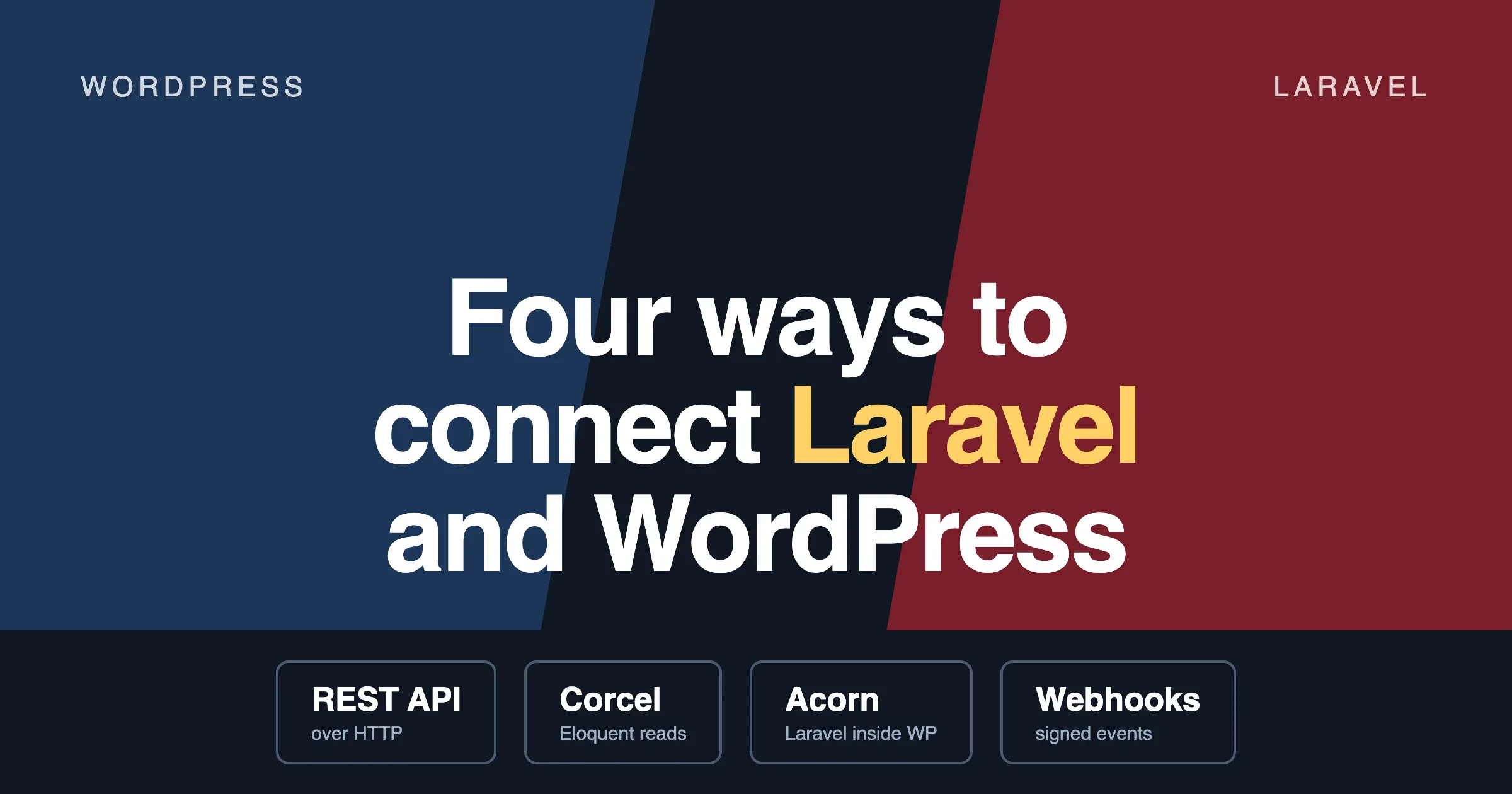
Four ways to connect Laravel and WordPress: REST API, Corcel, Acorn and webhooks, with Laravel 13 support, shared-database risks and auth options.
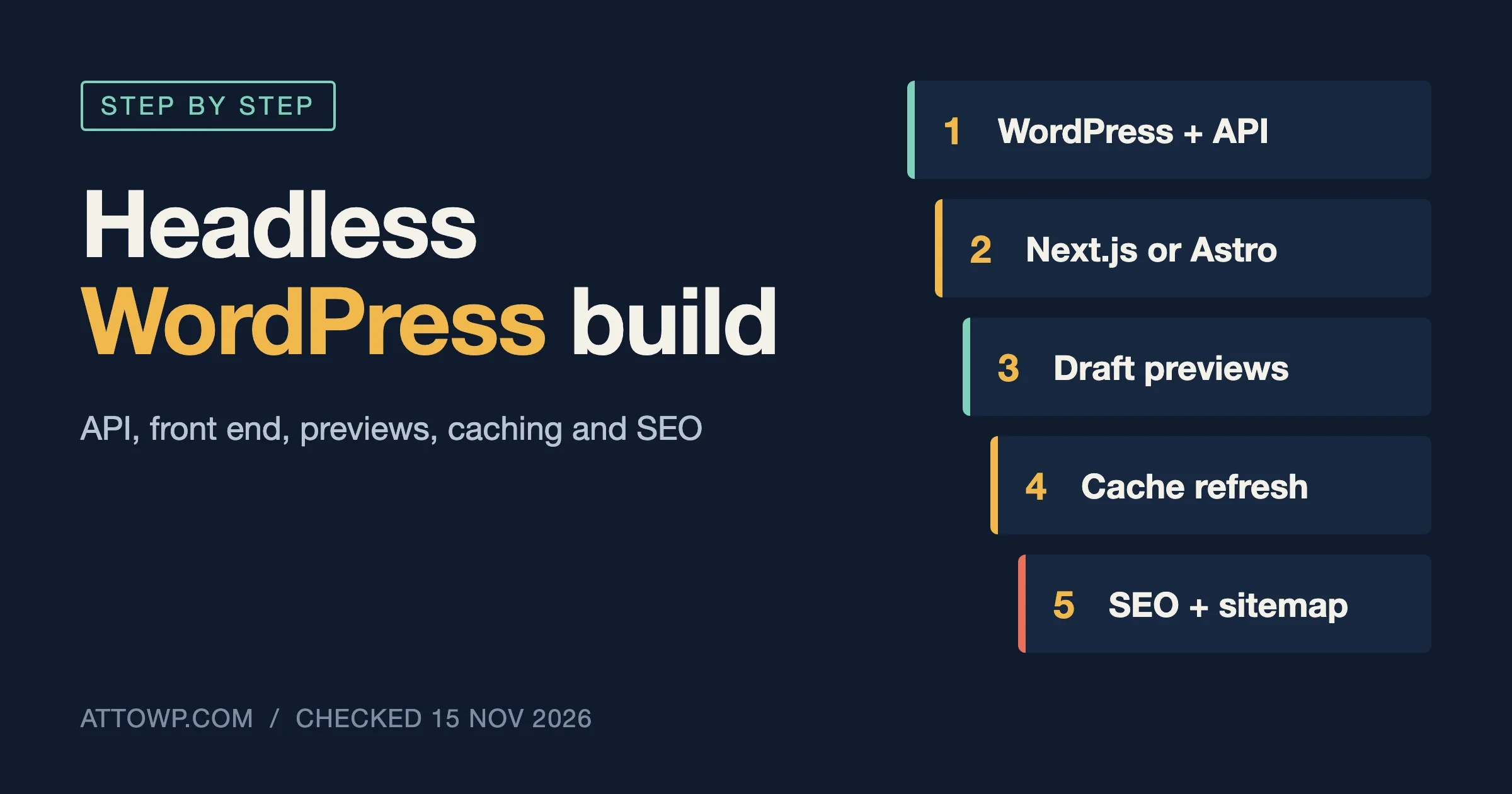
Build a headless WordPress site step by step: REST or WPGraphQL, Next.js or Astro, draft previews, CORS, ISR caching and sitemaps. Checked 15 Nov 2026.
CMS market share in 2026: WordPress at over 40%, headless platforms growing, Shopify and Wix taking e-commerce ground. A data-driven look at who is gaining and who is slipping.
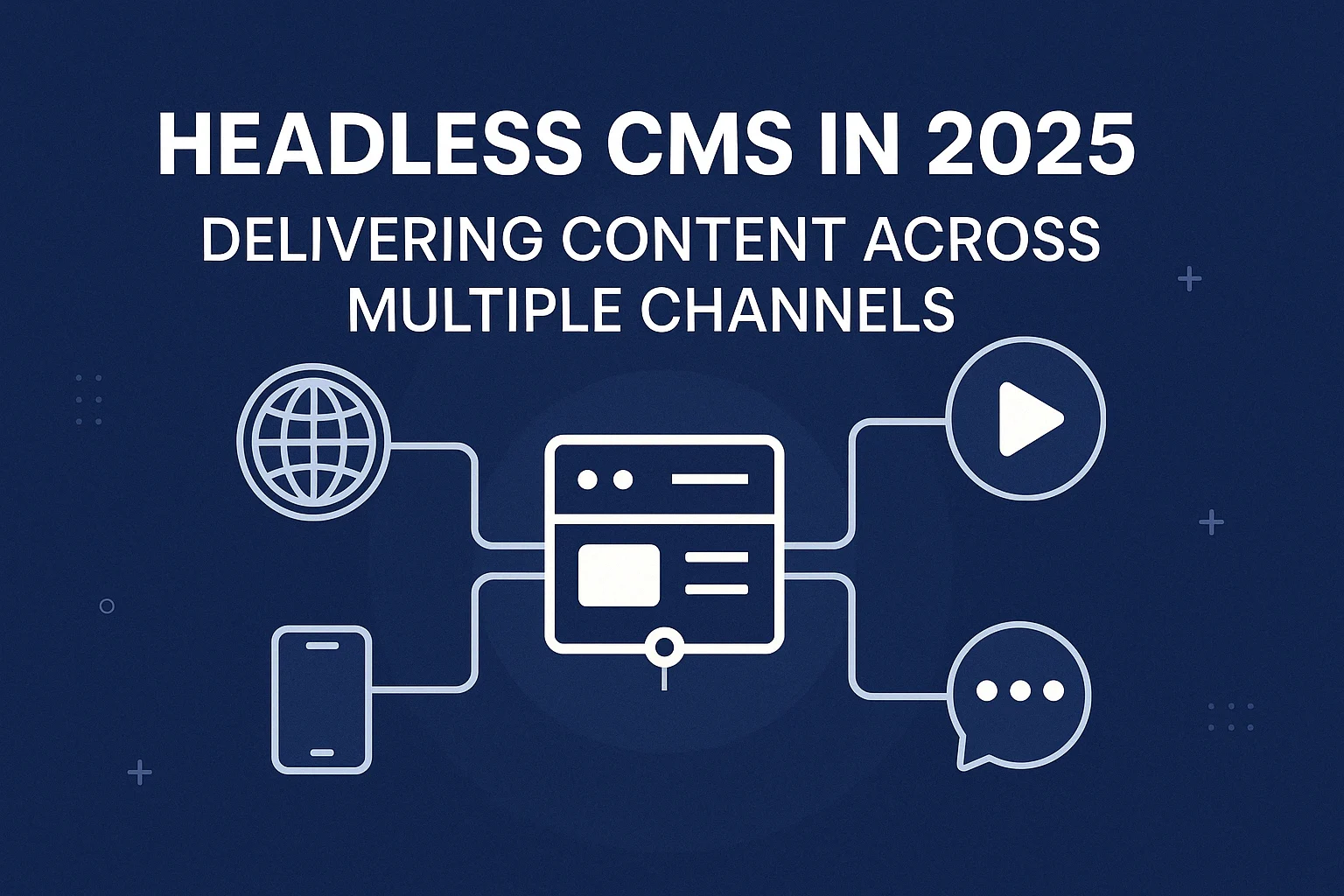
Headless CMS in 2025 - API-first platforms like Contentful, Sanity, and Strapi compared for teams delivering content across web, mobile, and other channels from a single source.