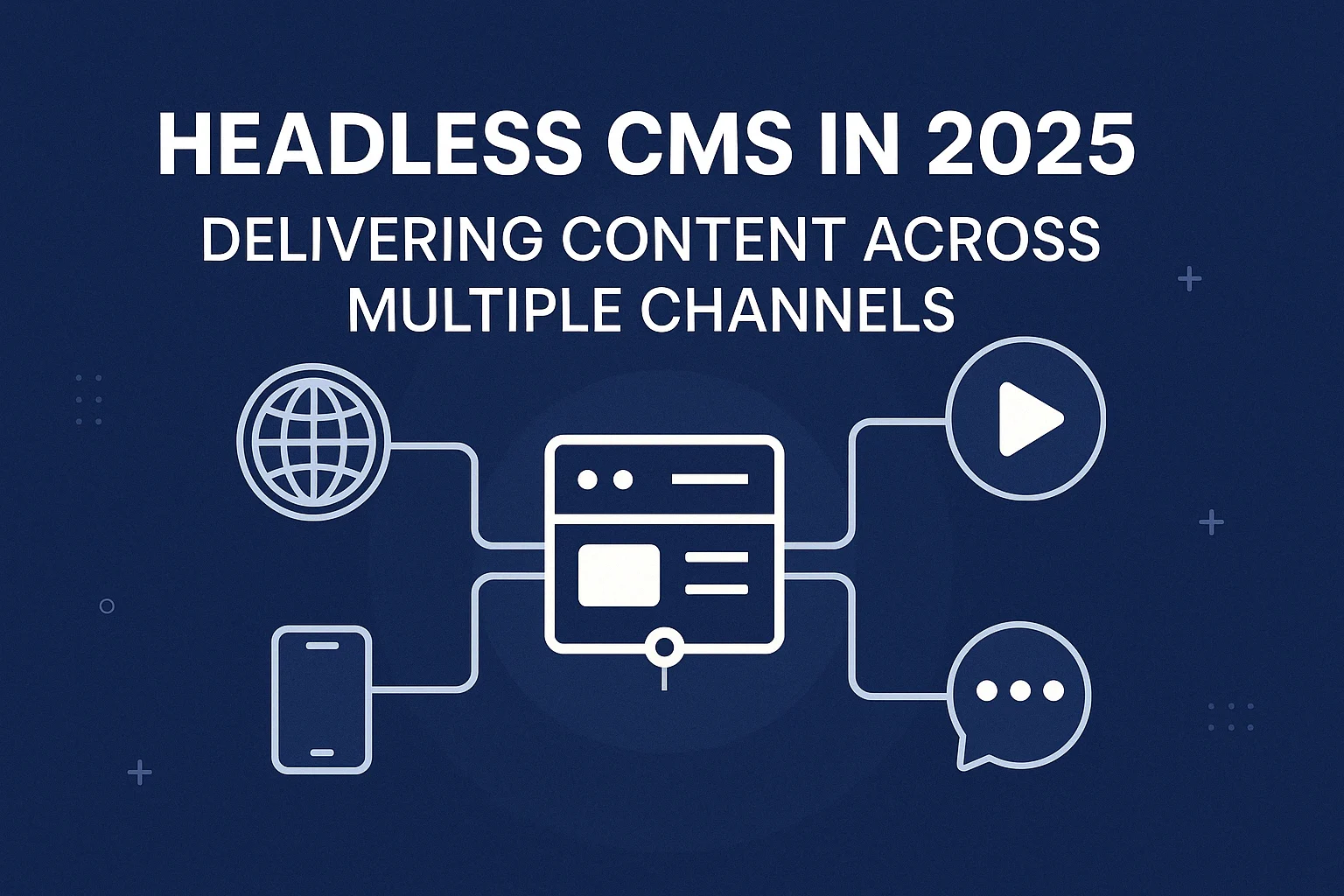
The digital content landscape is evolving faster than ever-and in 2025, the rise of headless CMS platforms is not just a trend; it’s a paradigm shift. For seasoned developers, content strategists, and digital marketers, understanding how headless architecture empowers omnichannel content delivery is essential to staying ahead of the curve.
In this post, we’ll take a deep dive into how headless CMS works, explore the reasons for its explosive adoption in 2025, and break down stats, tools, real-world examples, and expert advice to help you thrive in this new content-first ecosystem. For a broader view of the CMS landscape and how headless fits in, explore our complete guide to CMS platforms.
At its core, a headless CMS decouples the front-end presentation layer (“the head”) from the back-end content repository. Unlike traditional CMS platforms (like WordPress, Joomla, or Drupal), which tightly couple content and layout, a headless CMS offers pure content management-leaving front-end developers free to render that content anywhere using APIs.
In technical terms: A headless CMS provides content via RESTful or GraphQL APIs, allowing that content to be consumed on websites, mobile apps, digital kiosks, smartwatches, VR interfaces, and more.
Here are a few data-backed reasons why headless CMS has moved from the fringe to the forefront in 2025:
1. Omnichannel Experience Is the Standard
- According to a 2025 Gartner report, 78% of enterprise brands now prioritize omnichannel digital strategies.
- Consumers expect seamless content experiences across web, mobile, wearables, smart TVs, voice assistants, and even AR/VR environments.
2. Speed and Performance Dominate
- The average page load time for headless sites using JAMstack architecture is 2.3x faster than traditional CMS sites (source: Vercel Performance Index).
- Improved Core Web Vitals lead to better SEO and lower bounce rates.
3. Developer Flexibility and Control
- Headless enables teams to use modern frontend frameworks like Next.js, Nuxt, Astro, Svelte, and Remix.
- Developers no longer feel “boxed in” by the constraints of legacy theming systems.
4. Security by Design
- Decoupled systems mean smaller attack surfaces.
- According to a 2025 Sucuri Security report, headless CMS sites report 65% fewer security incidents compared to traditional CMSs.
Let’s break down the top players dominating the headless space today:
CMS | API Type | Pricing Model | Ideal For |
|---|---|---|---|
Contentful | REST & GraphQL | Tiered SaaS | Enterprise + Agile marketing teams |
Sanity | GROQ & REST | Usage-based SaaS | Structured content & real-time editing |
Strapi | REST & GraphQL | Open-source | Dev-heavy teams & self-hosting |
Payload CMS | REST & GraphQL | Self-hosted | TypeScript-based, developer-centric |
Hygraph | GraphQL | Tiered SaaS | Complex relationships, global brands |
Directus | REST & GraphQL | Open-source | Headless for SQL databases |
Honorable mentions: Storyblok, Prismic, Ghost (for minimalist blogs), and Kontent.ai
For a detailed comparison of headless innovation versus editorial simplicity, read our Contentful vs WordPress analysis.
✅ Pros
- Omnichannel delivery: Content can appear everywhere.
- Frontend freedom: Choose any framework.
- Better performance: Optimized for speed and scalability.
- Security advantage: Fewer public endpoints.
- Developer-centric: Built for modern toolchains.
⚠️ Cons
- Complex setup: Hosting, routing, and rendering are on you.
- Content preview challenges: Editors often lack real-time visual previews.
- Learning curve: Non-dev users may struggle without UI familiarity.
“With great flexibility comes greater responsibility. We love headless at our agency, but it requires dev-discipline.”
- Lara J., Tech Lead at DevForge Studio
1. eCommerce (B2B and DTC)
Brands like Nike and Glossier use headless CMS to power their global eCommerce platforms, offering region-specific experiences with blazing-fast performance.
2. Media & Publishing
The New York Times and Forbes utilize decoupled architecture to publish to web, apps, newsletters, and smart devices from a single content hub.
3. SaaS Platforms
B2B SaaS companies use headless to deliver dynamic content, product documentation, and support material across web apps and native apps seamlessly.
4. Multilingual + Multi-Site Support
Brands operating globally leverage the API-first model to localize content across markets without duplicating infrastructure.
- Define Content Model in Sanity (posts, authors, categories)
- Fetch via GROQ/GraphQL on build or runtime
- Render with Next.js using ISR or SSR
- Host on Vercel or Netlify for edge speed
- Preview Mode + CMS Hooks for live collaboration
Absolutely-if done right.
Key tactics:
- Use SSR or ISR (Incremental Static Regeneration)
- Pre-populate meta tags (title, description, OpenGraph)
- Structured data with JSON-LD
- Sitemap and robots.txt via server config
Remember: Google’s crawler does parse JavaScript now, but rendering it efficiently still impacts rankings.
- AI-integrated CMS: Intelligent content suggestions, auto-tagging, and personalization.
- Composable DXP (Digital Experience Platforms): Headless CMS as the content backbone for unified digital experiences.
- Content federation: Aggregating content from multiple headless sources into a single frontend.
- No-code bridges: Empowering marketers with visual builders layered over APIs.
“The future is composable. Think of CMS as just one API in your stack, not the centerpiece.”
- Raj Patel, VP of Product, Hygraph
Yes, if you:
- Want full control over frontend technologies
- Serve content across more than just a website
- Are building scalable, global digital products
If you’re ready to get started, follow our step-by-step guide to building a headless WordPress site.
Stick to traditional CMS if you:
- Need quick, all-in-one setup
- Don’t have dedicated frontend resources
- Rely heavily on WYSIWYG workflows
Headless CMS isn’t a silver bullet-but in 2025, it’s a power tool that, when wielded correctly, unlocks unprecedented flexibility, speed, and reach. It’s not just for developers. It’s for forward-thinking teams that want to build once and publish everywhere.
Whether you’re a solo dev, an agency lead, or an enterprise architect, embracing headless architecture will prepare you for a future where content goes far beyond the browser.
No comments yet