
WordPress powers more than 40% of the entire web, a number that continues to stand out even as newer CMS architectures gain attention. With conversations around headless, composable, and hybrid CMS platforms becoming more common, many teams are re-evaluating their choices. For an overview of all CMS types and how they compare, see our complete CMS platforms guide.
Yet despite all the noise, traditional CMS platforms still power the majority of content-driven websites, and WordPress remains the benchmark among them.
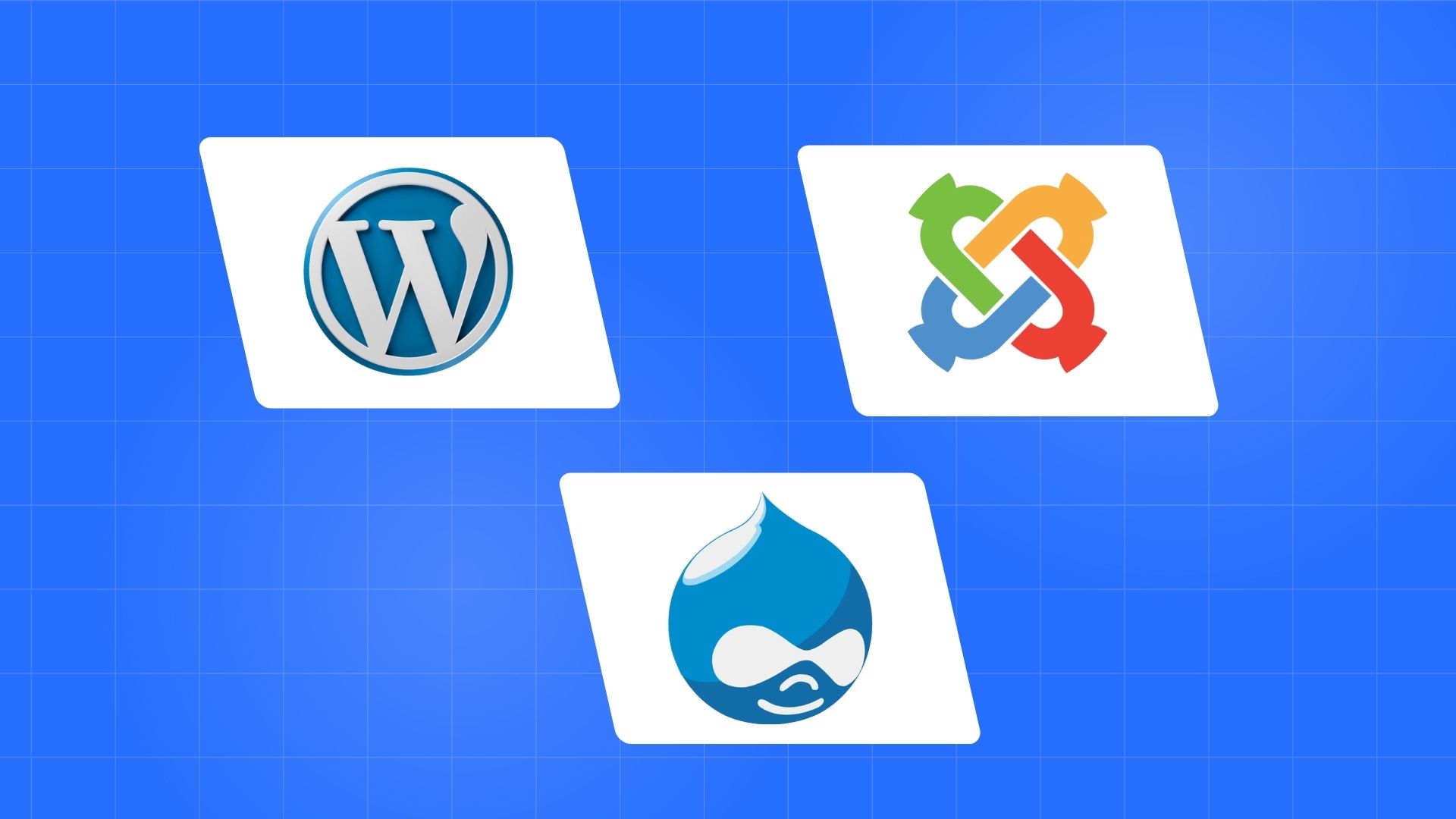
In this blog, we’ll explore what a traditional CMS really is, why it became the default choice for so many years, and how WordPress, Joomla, and Drupal compare in terms of strengths, limitations, and ideal use cases.
A traditional CMS, often referred to as a monolithic CMS, is a system where content creation, management, and presentation are handled within a single platform. The backend and frontend are tightly coupled, meaning the same system controls both how content is stored and how it is displayed to users. For a breakdown of how traditional CMS compares to headless, hybrid, and enterprise models, see Types of CMS Platforms Explained.
Content is typically created through an admin dashboard, stored in a database, and rendered on the website using predefined themes or templates. This integrated approach makes traditional CMS platforms easier to manage, especially for non-technical users.
For many organizations, this simplicity is still a major advantage. Traditional CMS platforms are predictable, mature, and well-suited for websites where content publishing and editorial workflows are the primary focus.
Traditional CMS platforms share a few defining characteristics that explain their long-standing popularity.
They use a coupled architecture, meaning content and presentation are closely connected. This allows editors to see how content will appear while creating it. Most platforms rely on template-based rendering, where themes control layout and styling.
Another key characteristic is a built-in admin interface designed for non-technical users. Editors, marketers, and content teams can publish and update content without needing developer support. Traditional CMS platforms are also extensible, using plugins or extensions to add features such as SEO tools, security layers, or eCommerce functionality.
Traditional CMS platforms are often grouped together, but each serves a very different type of project. Understanding these differences helps explain why WordPress became the benchmark.
“Most teams don’t choose a CMS for its architecture, they choose it for how easy it makes their daily work.”
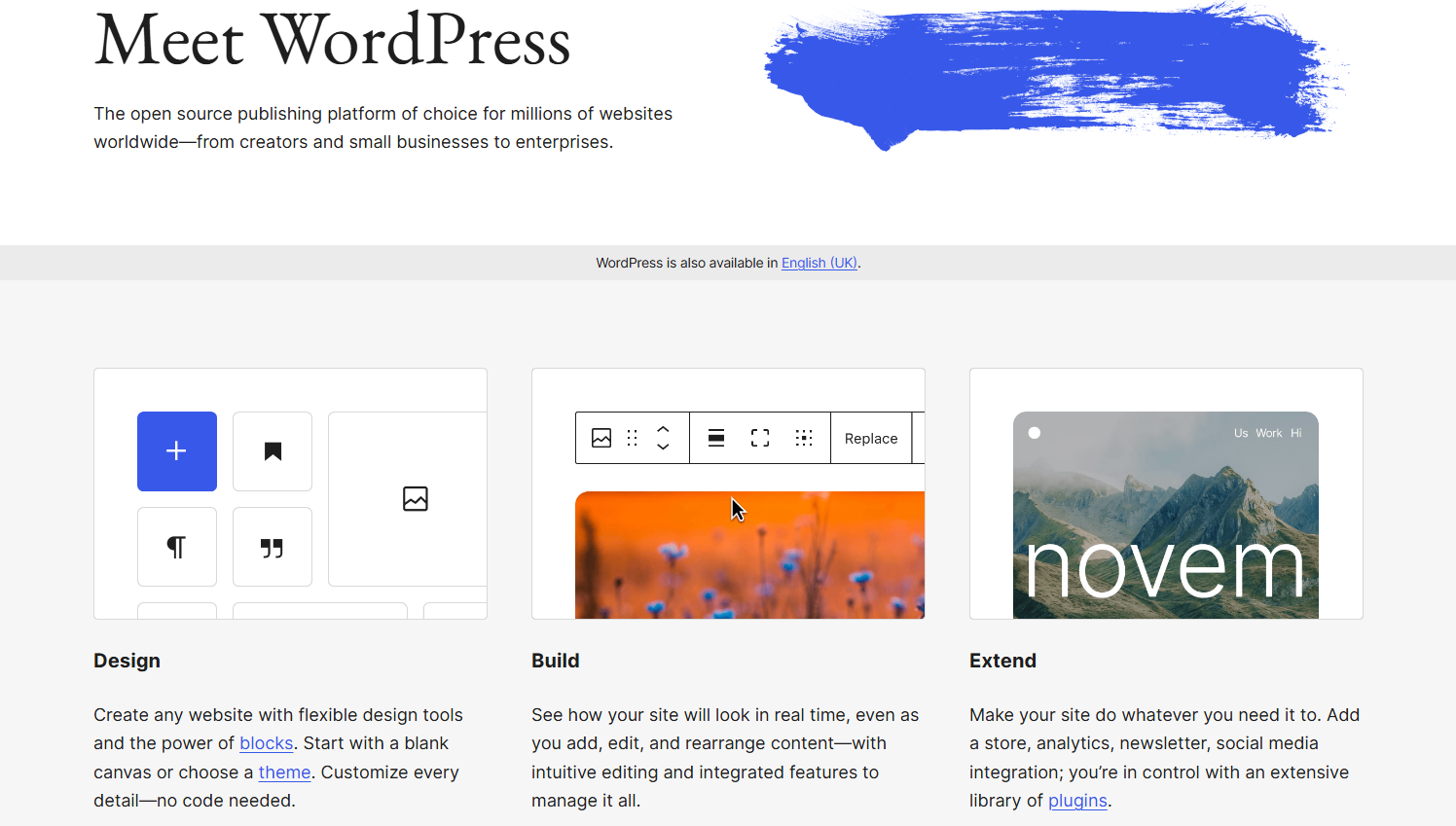
WordPress is the most widely adopted traditional CMS in the world, powering more than 40% of all websites globally. What began as a blogging platform has evolved into a flexible content management system capable of supporting everything from personal blogs to large business websites.
At its core, WordPress is built around ease of content creation. The admin dashboard and publishing workflow are intuitive, allowing users to create posts, pages, and manage media without technical expertise. This simplicity is a major reason WordPress became the default choice for content creators, marketers, and small businesses.
The introduction of the block editor (Gutenberg) strengthened WordPress’s usability by enabling visual, block-based content creation. It offers a balance between simplicity and control, making it accessible to beginners while still useful for more advanced users.
Another key strength of WordPress is its extensive plugin ecosystem. Thousands of plugins allow websites to add SEO, security, performance, and eCommerce features without rebuilding the platform. Combined with support for custom themes and APIs, WordPress remains flexible enough for most content-driven use cases.
Strengths
- Beginner-friendly content management – Intuitive editor and dashboard make publishing easy for non-technical users.
- Massive plugin and theme ecosystem – Features can be added quickly without heavy custom development.
- Strong SEO and marketing support – Easy integration with SEO, analytics, and marketing tools.
Limitations
- Plugin dependency for advanced features – Requires careful plugin selection and maintenance.
- Performance needs optimization – Poor hosting or excessive plugins can affect speed if unmanaged.
Best suited for: Blogs, marketing websites, small to mid-sized businesses, and content-focused platforms.
Joomla was once one of the most prominent CMS platforms, particularly before WordPress became dominant. It gained popularity by offering more built-in functionality for content organization, user management, and multilingual websites, positioning itself between WordPress and Drupal in terms of complexity.
Joomla provides greater structural control than WordPress but expects users to understand how articles, menus, and modules work together. This makes it more powerful out of the box, but also slightly harder to learn.
Strengths
- Advanced user and access management – Strong built-in permission controls suitable for membership and community sites.
- Built-in multilingual support – Multilingual functionality is part of the core system.
- Flexible content organization – Structured layouts using articles, categories, and modules.
Limitations
- Steeper learning curve than WordPress – Requires more initial understanding to use effectively.
- Smaller ecosystem – Fewer extensions and themes compared to WordPress.
- Fewer beginner-friendly resources – Less learning material for new users.
Best suited for: Medium-sized websites, membership platforms, and multilingual projects.
Drupal is a powerful and highly flexible traditional CMS designed for complex, large-scale, and data-heavy websites. It follows a developer-first approach, prioritizing structure, scalability, and security over ease of use. For a detailed comparison of Drupal and WordPress capabilities, read our Drupal vs WordPress analysis.
Drupal treats content as structured data, allowing teams to create complex content types, relationships, and workflows. This makes it a strong choice for organizations with advanced requirements and dedicated technical teams.
Strengths
- Enterprise-grade security – Strong security practices and a dedicated security team.
- Highly customizable content structures – Ideal for complex data-driven platforms.
- Scales well for large systems – Designed for high-traffic and enterprise use cases.
- API-first capabilities – Supports multi-platform content delivery.
Limitations
- Very steep learning curve – Not suitable for beginners or non-technical teams.
- Higher development and maintenance costs – Requires experienced developers.
- Slower editorial workflows – Content management can feel complex for editors.
Best suited for: Government platforms, universities, large enterprises, and complex digital ecosystems.
A traditional CMS is still the right choice when content publishing, editorial control, and ease of management are the primary requirements.
- Blogs and editorial websites – Ideal for frequent publishing, structured content, and collaborative editorial workflows.
- Business and corporate websites – Suitable for brand presence, service pages, and ongoing content updates managed by non-technical teams.
- Marketing and landing pages – Strong SEO capabilities and fast iteration make traditional CMS platforms effective for campaigns.
- Content-focused platforms – Educational resources, portfolios, and documentation sites benefit from mature CMS workflows.
If your primary focus is content publishing, SEO performance, and managing everything within a single platform, traditional CMS solutions continue to excel.
“Traditional CMS platforms earned their place by making content workflows simple and repeatable.”
Traditional CMS platforms have limitations mainly due to their tightly coupled architecture. As websites grow in complexity, flexibility, performance optimization, and multi-channel content delivery often require extra effort.
Performance and security can become concerns if themes, plugins, or updates are not managed carefully. Poor optimization or outdated extensions can affect stability over time.
These constraints don’t make traditional CMS platforms obsolete, but they explain why newer CMS architectures exist for projects with advanced or multi-platform requirements.
WordPress remains the benchmark for traditional CMS platforms because it closely matches how most organizations build and manage websites. Rather than optimizing for extreme complexity, it delivers a balanced experience that works well for content teams, developers, and business owners.
Its low operational friction allows teams to publish faster without constant technical involvement, while its flexibility enables gradual scaling as requirements evolve. Combined with a massive ecosystem and long-term community support, WordPress continues to set the standard for traditional CMS platforms.
Traditional CMS platforms still power a significant portion of the web, and they remain highly relevant for content-driven websites. Among them, WordPress continues to dominate, not because it is the most complex, but because it delivers the right balance of simplicity, flexibility, and ecosystem support.
While Joomla and Drupal serve important niches, WordPress remains the most practical and widely adopted choice for most organizations building and managing content on the web.
cms trends 2025 digital experience platform
Last modified: March 8, 2026